Palais de Tokyo
I don't go there often, but every time I do, I come out transformed.
I never read the blurbs: the author, the artistic approach, the family traumas that led them to make ceramics on cows, I couldn't care less. I switch off my brain.
And every time, I'm overflowing with gratitude to live in a country where, for €9 (SACD author rate, €11 otherwise), you can feel so much freedom in a public place where human beings are welcome. At a time when train stations have more billboards than benches, that's no small thing.
Three things I liked – among many others:
1. No need for an audience
The statues look at the artworks while the mannequins discuss the exhibition. Makes you wonder what the audience is for.
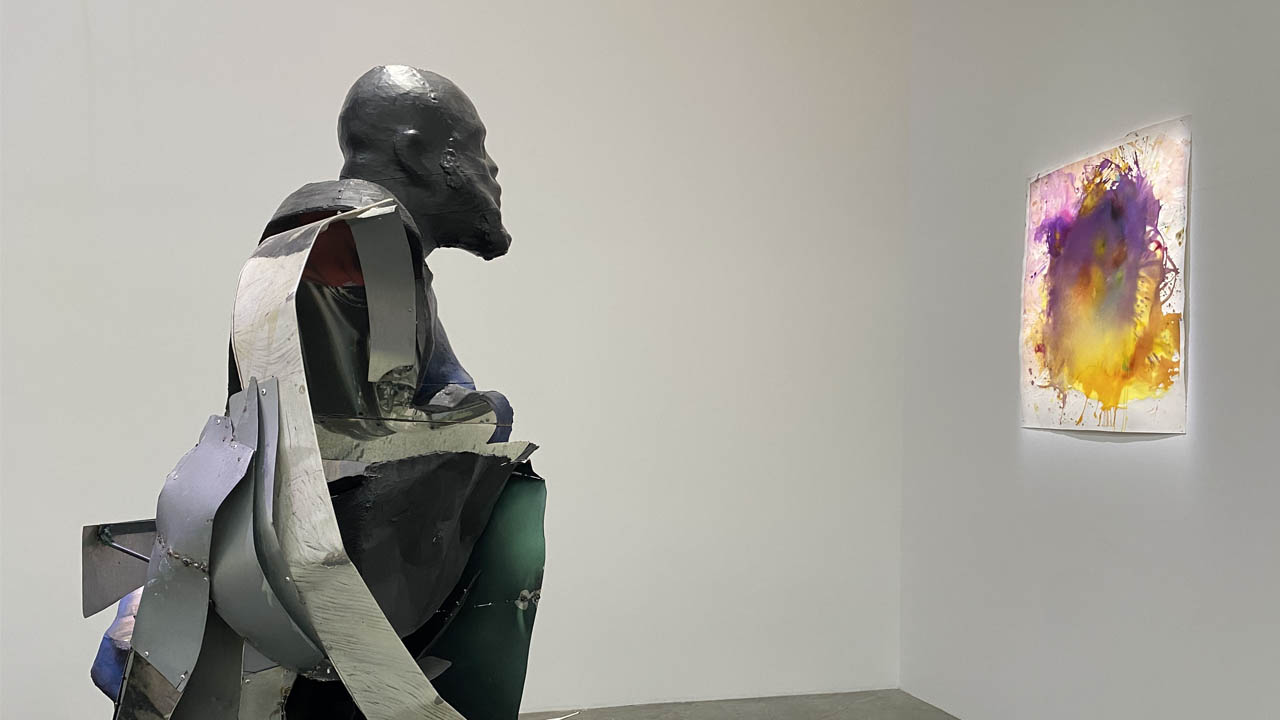
Lenin contemplates the painting that will inspire Sovietism.
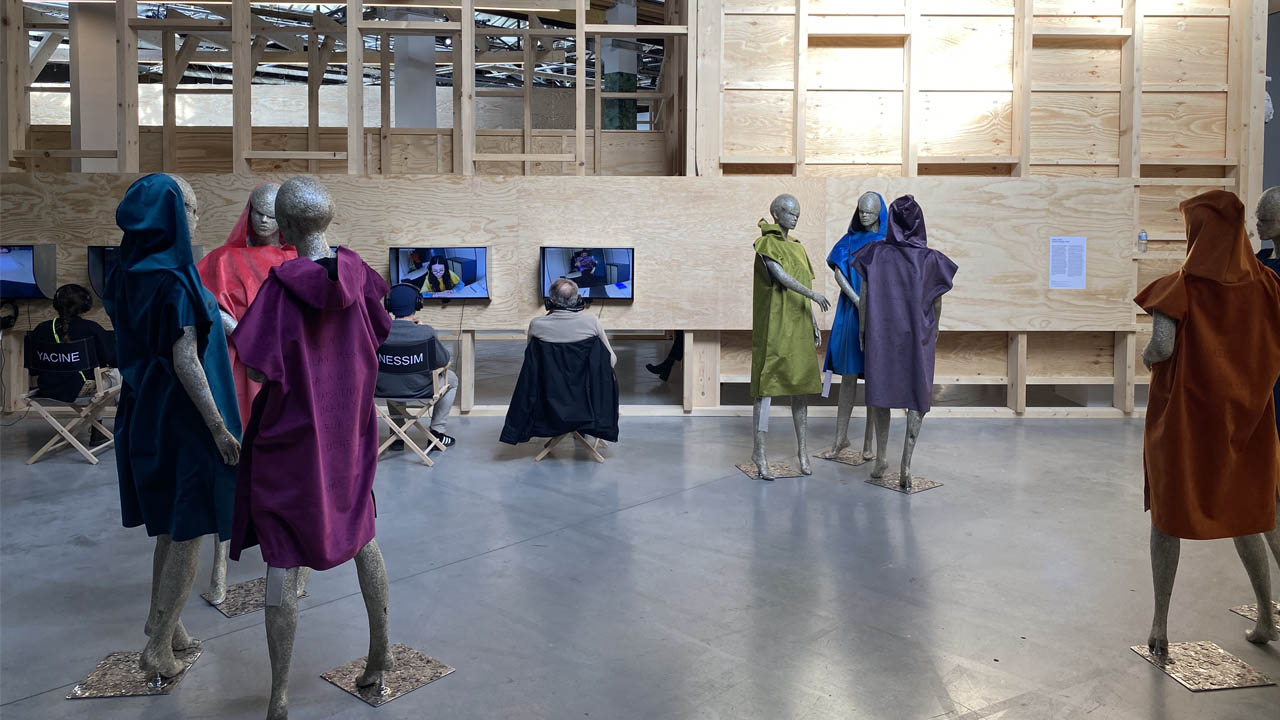
Mannequins in ponchos discussing the relevance of modern art.
2. It's meta
There's always some thinking about the medium. You don't just paint on paper, you think about the limits of paper, how it relates to ink, how it relates to the viewer. And every time, you think: "Wait, you're allowed to do that?"
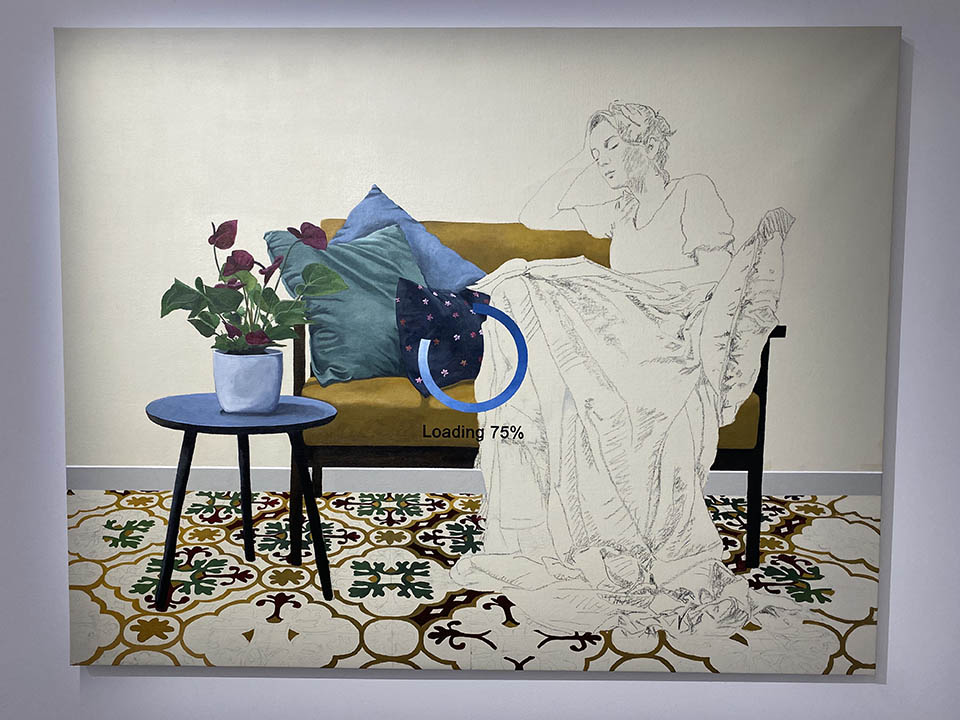
Painting Loading, by May Murad.
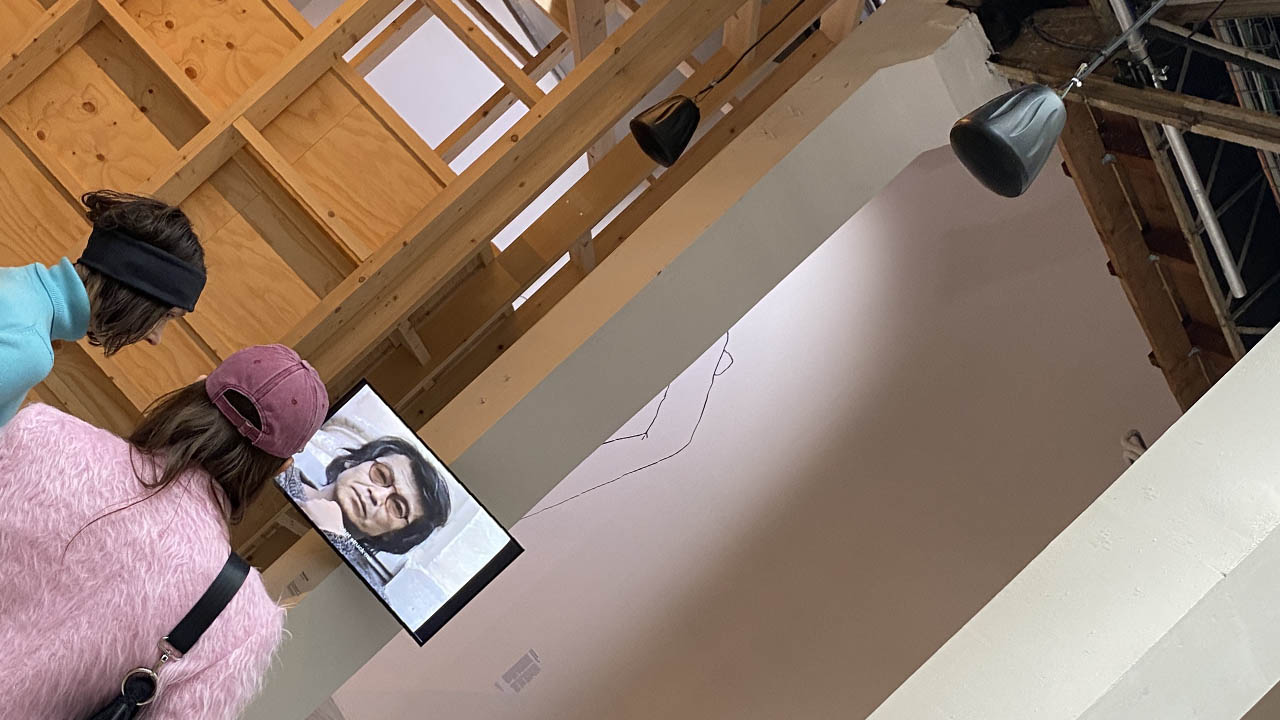
I've dubbed it "video showers": the speaker only sprays sound on the people underneath, so you can have several films in the same space.
3. The bookstore
Every time, I pick a book at random by looking at the pictures or reading a paragraph in the middle. Over ten years ago, I picked up "On the Inside of Jokes" by Nik Christiansen.
This year, I picked up "The Waterfront Journals" by David Wojnarowicz – apparently, he's quite well-known. I'm halfway through. This book blows my mind.
An afternoon... and everything changes.