One note per day 👇
Blog
My Life on Mars
Yet another abandoned project (for now).
Animated science fiction short film about the life of the first human on Mars... who happens to be a 7-year-old child.
Image
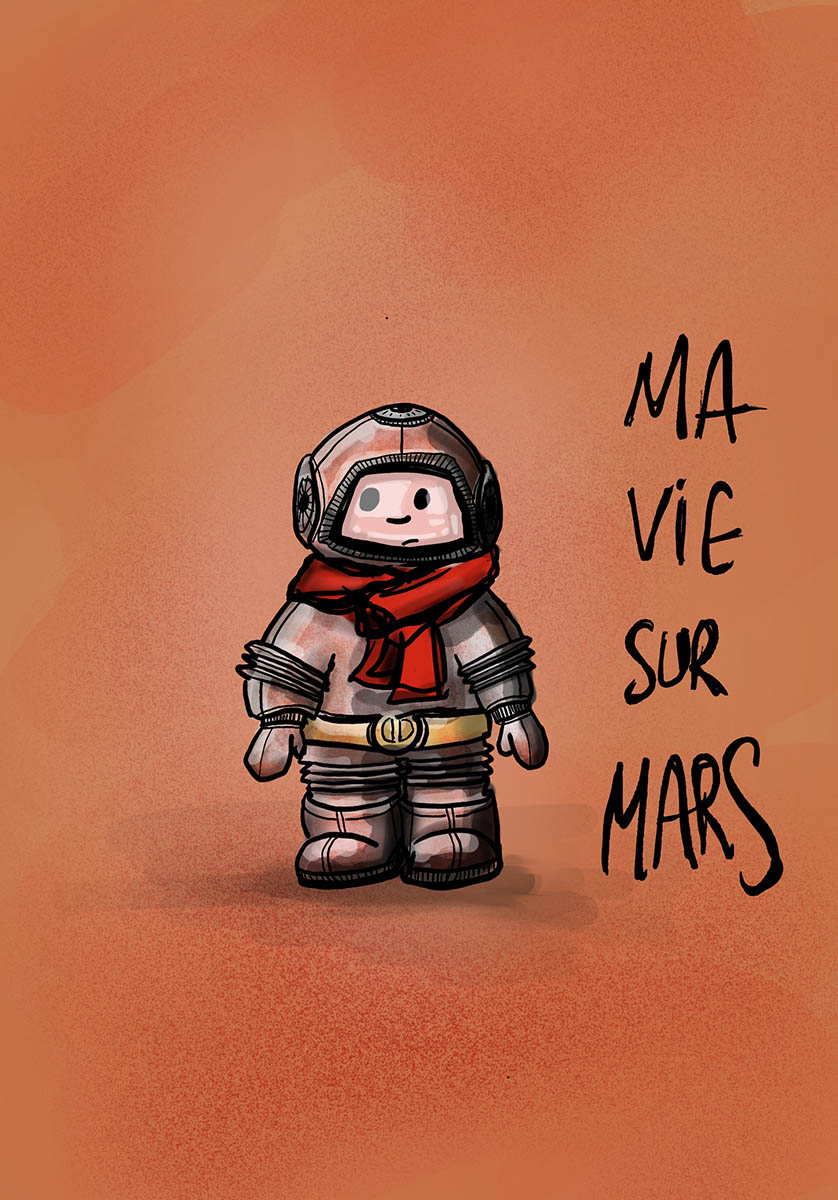
When technology became advanced enough to reach Mars, every government on the planet wondered... "Who should we send?"
"I know!" someone answered. "What if we sent a child?"
And everyone thought it was a brilliant idea.
But if you ask me...
It was a crackpot idea.
Being a Race Car Driver
Race car drivers want to drive race cars at 300 km/h on tracks. To win.
To achieve this, they need to know how to do other things: prepare physically, be mechanically savvy, build a network of partners, etc.
But a driver who only prepared physically, day after day, wouldn't become a driver: they'd become an athlete.
Another who was interested solely in mechanics would become a designer or mechanic.
As for the one who invests all their time in networking, they'll end up an agent or manager.
You must never lose sight of the goal.
What you do now is what you'll do later. Preparation can become your entire life.
The whole game is finding a way to do it now, even when conditions don't seem right.
Best Album Review
I couldn't find the original source (even though I searched for at least 30 seconds), so I'm telling you from memory.
It was a music critic who was talking about a new track:
"Anyone eating alphabet soup would shit better lyrics to a better tune."
Which begs the question: how many people eat alphabet soup and shit out works of art without ever knowing it?
L'Aigle Noir Is About Incest?
In the "everyone knew except me" series, subsection "pretty song about birds but actually not," I give you Barbara's L'Aigle Noir, which is actually about the incest she experienced as a child.
A friend mentioned it in passing, so I went to check.
The lyrics take on a whole different meaning.
My god.
Seum - part 3
A music video I absolutely love shot by Camille Tardieu in a single take during this year's Off Courts festival:
The musician is Édouard Pons (who composed the music for my film Migrul, also shot at Off Courts this year). And the video is directed and animated by Camille Tardieu, who makes amazing stuff.
Shaping Your Day
When I wake up in the morning, I don't know.
I have things to do ("what"), like everyone else, but I have no idea how I'm going to go about it.
And I think that's the secret.
Obligations are like contracts made with the outside world: we commit to a result.
But we're entirely free on the manner and form.
So every morning, I take stock. What emotions are present? What desires? What's the weather like outside? What is this day telling us? What occurrences spontaneously manifest?
We identify these disparate ingredients and then invent a recipe that didn't exist the day before.
Ignorance is key to the process.
Without a pre-established plan, we have no choice but to open our eyes, improvise, dance with what arises.
Otherwise, why get up? Isn't that what life is all about?
"If you know exactly what you're going to do, what's the point of doing it?" – Pablo Picasso
--
Related:
4000 followers 😯
Image
Three or four of my daily videos did really well on Instagram and BOOM: my followers more than doubled in just a few days.
I was happy to reach 2500 followers but I was at 4000 two days later.
It feels like when several videos went viral on TikTok earlier this year: I couldn't put my phone down without coming back to 99+ notifications. Right now, I'm gaining followers every minute.
What's nice: it's my most sincere videos that perform best, the ones where I expressed something I truly believe. I must be starting to find "my people."
Obviously, it's on Instagram. So it's bad. I'm starting to think about alternatives.
UPDATE : 5200 the following morning 😯
--
Related:
Enshittification - Part 2
Image
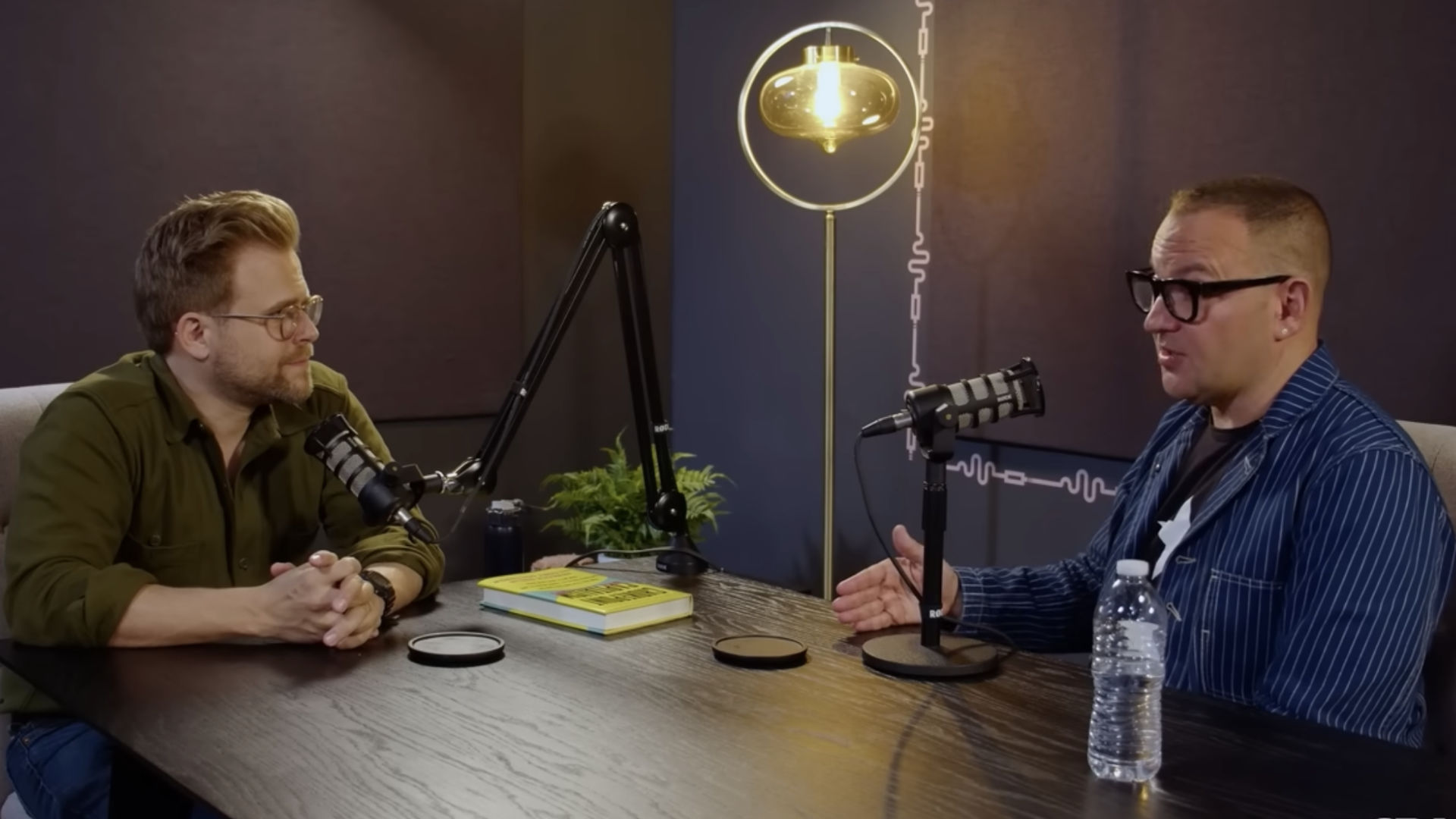
I enjoyed the first podcast with Cory Doctorow so much that I listened to a second one : "Capitalism ruins everything".
It covers much of the same ground as the previous podcast, with a particular focus on mergers and acquisitions that give rise to giants, effectively becoming de facto monopolies.
Here are a few new ideas that stood out to me:
- The "chickenization," which describes the horizontal and vertical integration of certain industries, based on the model of chicken farmers : the large agribusiness corporation tells them what breed to raise, how to feed them, how to organize their space, what time to turn the lights on and off... The farmers have no power. Without knowing it, they can be part of an "experiment" : overnight, the chickens die. For the farmer, it's a tragedy; for the corporation, it's a data point to gain even more control.
- When buyers consolidate to form large corporations, sellers have no choice but to do the same to compete, creating even less choice for the end consumer.
- Amazon lost $100 million in one month by giving away free baby diapers... to sink a competitor that had launched a diaper delivery service. A cautionary tale for all entrepreneurs.
- Individual artist copyrights are not enough to protect them from large corporations where the negotiating power is too unbalanced. Collective rights seem to be a better path.
- Even though Microsoft won its 2001 antitrust trial, Bill Gates's deposition was devastating for him and his company. The punishment is the process, not the outcome. For this reason, most large corporations prefer to settle. Despite this, it's necessary to find more immediate solutions than lawsuits that can sometimes take decades.
- Just because there is no map doesn't mean there is no path. Sometimes you have to navigate by sight to find the openings: that is the foundation of hope.
This guy, Cory Doctorow, a former science fiction author turned activist, is fascinating. I'm going to follow his work more closely.
One Thing Done Right
Tired, a bit rushed, so I'm looking to throw something together quickly for this blog.
Maybe an old video? Something from the archives?
Then I remember:
If I cut corners here, I'll cut corners afterward. Then again after that. And soon enough, the entire day will be done half-heartedly.
Do, or don't do. But if you do, do it right.
Take the time to ask yourself: what do I really want to say? What comes naturally?
It doesn't need to be long, or clever. Only true.
It's my experience that one thing done right, sincerely, all the way through, pulls everything else along and can change the course of a day.
The dishes. A drawing. A blog post.
And there we are, reconnected.
--
Related:
It (re)starts today
I'm restarting my "Today" document.
It's a short note on my phone that I read every morning.
It contains:
- What I do each day if possible (meditation, mini-workout, daily video, post for ChezFilms) with advice or an idea if needed.
- Long-term directions: ideas to implement regularly regarding presence, social life, creativity.
- A few short-term ideas and reminders, for work or ongoing projects for example.
There's no point accumulating notes if they're not being used. In this sense, the "Today" note is a way of communicating with myself. I keep everything in it that seems important and that I don't want to let myself forget.
It's a very short, living note that I update regularly: what remains has been polished through multiple readings and rewrites, and is therefore generally very strong and very clear. New ideas are added from time to time—which either stand the test of time or don't.
--
Related:
Without a Voice in Your Head?
It happened to me for the first time the day before lockdown.
I'd been meditating for two years and that morning, almost by accident, I stopped the voice in my head.
No more inner chatter, no more constant judgment, no more anxious rumination. Silence.
I was stunned.
It had surely happened to me before but this was the first time I noticed it—and that it lasted. I could maintain this silence.
I spent the day wandering the streets, exploring this new way of experiencing things.
So it's possible to interact with the world without a little voice judging everything? It's possible to look at an object without hearing "I like it or I don't"? To choose the next direction without verbal deliberation? To make a decision without the verdict of an inner judgment?
Exploring further, I understood that verbal thought wasn't the source of action. It's not what "thinks out loud (in your head) to make a decision." Decisions are made elsewhere. It only comments.
And it's perfectly possible (desirable?) to live without this commentary.
Enshittification
Image
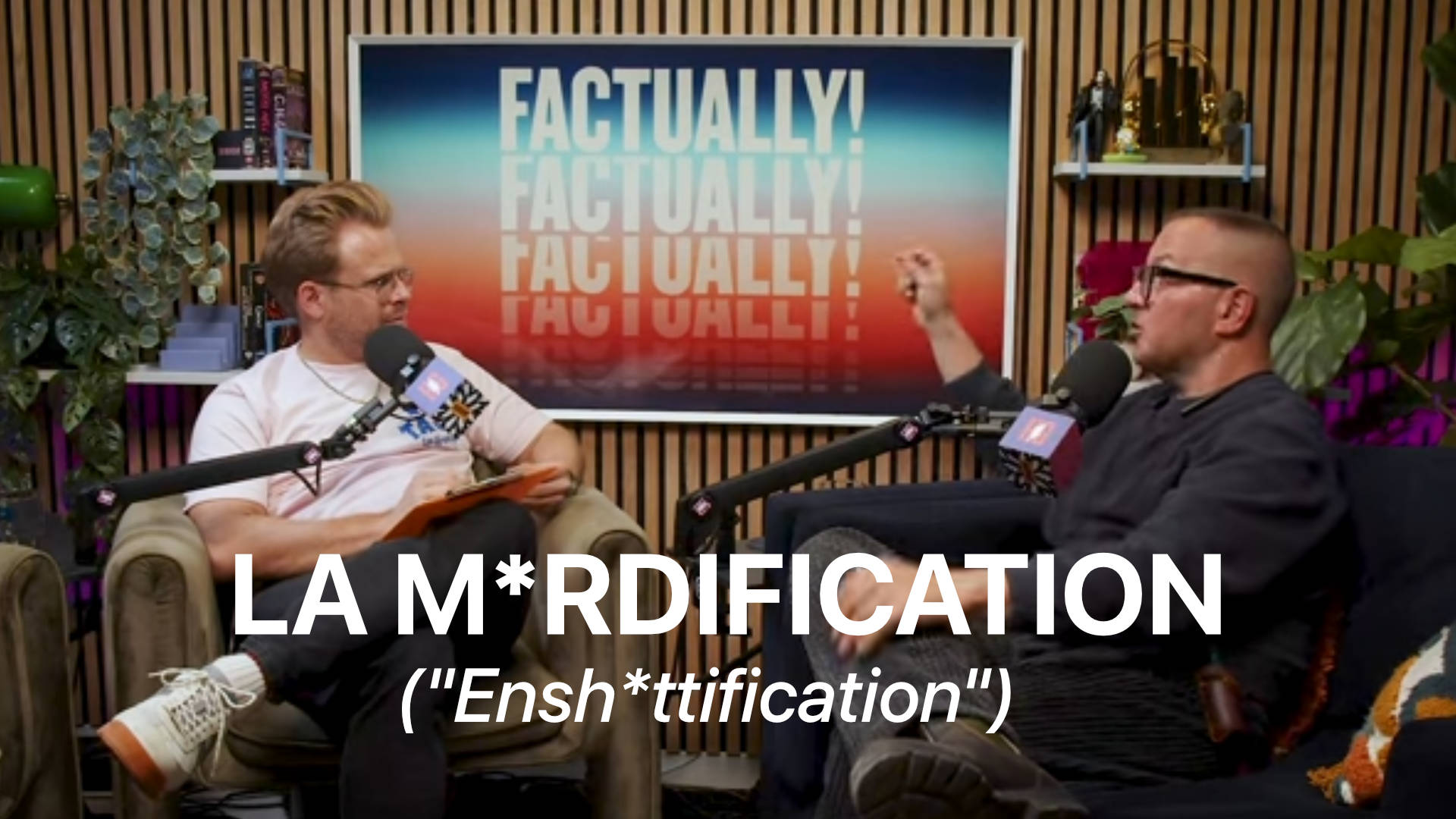
Cory Doctorow coined the term "Enshittification."
On Adam Conover's podcast, I thought he'd give a brief overview, plug his book of the same name, crack a few jokes, and that would be it.
What I found instead: one of the richest and most relevant discussions on technology, intellectual property, and the modern world I've heard in a long time.
Cory explains that the process of enshittification happens in five stages:
- Create a great product to attract users.
- "Lock them in" by making it difficult or costly to leave.
- Degrade the user experience to make it more attractive to business customers.
- Lock in the business customers in turn, due to a lack of alternatives.
- Degrade the experience for everyone to capture the remaining surplus value.
Much like banks ("too big to fail"), large platforms derive their power from how hard it is for their users to leave ("too big to care").
This gives them free rein to transform—and ultimately degrade—the customer experience for their own exclusive benefit. Here are 3 examples:
- Google intentionally degraded the relevance of its search engine to multiply ad impressions (+ searches to find a result = + ads).
- In Finland, prices on electronic shelf labels in supermarkets change around 2,000 times a day to ensure the adjusted margin is never lost.
- In the USA, most nurses are freelancers who find work through a platform. The app has access to their credit score, allowing hospitals to offer lower wages to nurses in financial difficulty.
In this process, an app is, according to Cory, a "website wrapped in intellectual property": the law strictly forbids customizing, extending, or adapting an application, under penalty of heavy fines.
Therefore, the user has no way to fight back and "de-shittify" their experience. They are a prisoner.
"Imagine if the person who built your house was the only one allowed to repair it."
Solutions?
The EU's efforts to regulate technology (particularly regarding interoperability) are a good start, he says. But the so-called "Euro Stack" meant to replace the GAFAMs will only be useful with the right migration tools that allow public services to avoid starting from scratch—tools that are impossible to design without reverse engineering.
Ultimately, he believes that large corporations are obsessed with IP (intellectual property) under the illusion that it allows them to bypass the less controllable human factor. But:
"The recipe for making something is far less important than the knowledge needed to follow it."
Paper Test
In the "old abandoned projects I'm finding images of" series:
Image
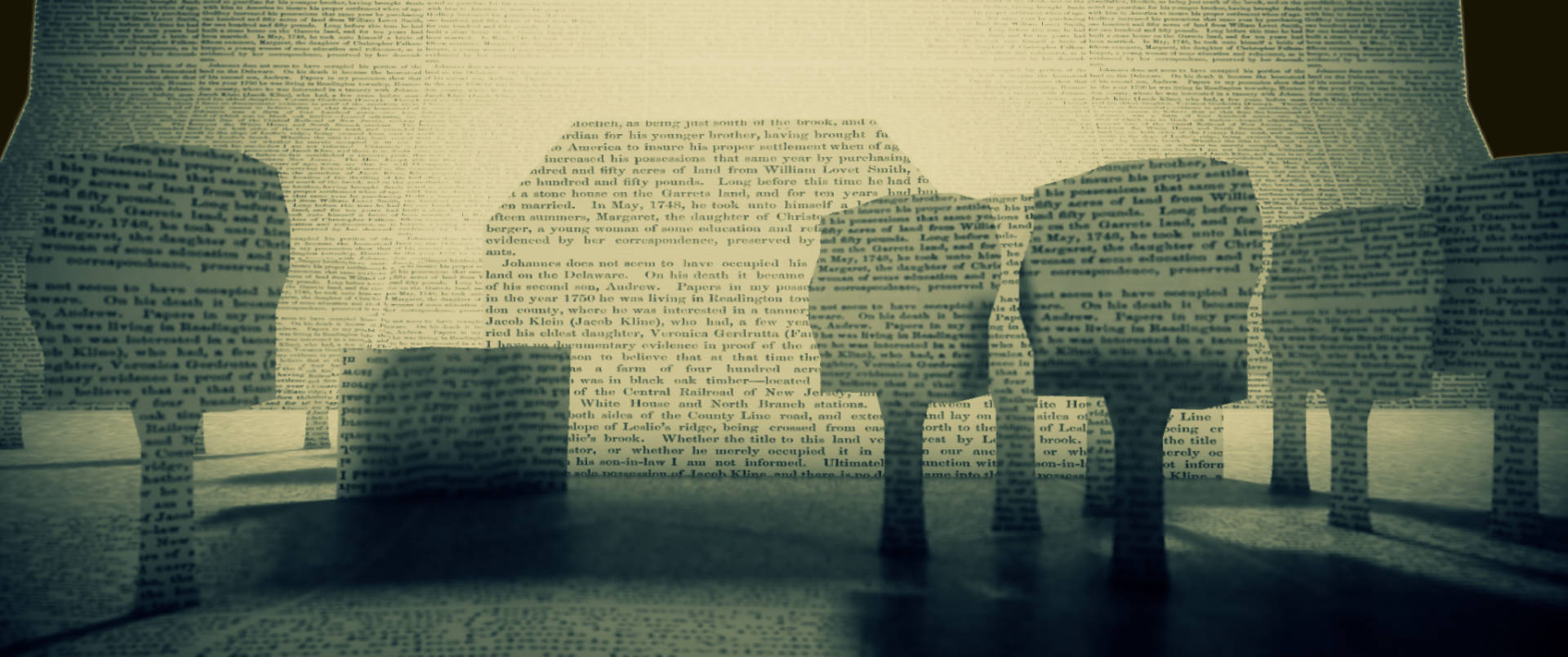
I wanted to make a series (yes, I was ambitious when I was young) of animated short films called "Tales for Sad Children," the first installment of which would have been titled "The Password."
The idea was to use 3D (Maya, back then) to create a paper world where the story would take place.
"Some evenings, as a game, Bastien's dad would turn into a monster. And when Bastien's dad got too scary, or hurt too much, there was a password. When you said it, Bastien's dad would stop being a monster. But one day—it was evening—Bastien forgot the password."
Controlling Is Resisting
You don't know the future.
You don't know whether your plan will work or not.
And if it works, or if it fails, you don't know whether you'll feel what you expected to feel. ("This is everything I wanted but I feel empty.")
And even if everything went as planned, you don't know the consequences of the consequences. The positive or negative occurrence that transforms over time. The blessing that becomes a tragedy, or vice versa.
So much so that it's almost presumptuous to claim we know.
Saying "I'm going to take this action" or "I'm going to go in this direction" because we imagine it will have such and such consequences in the future... is an illusion.
Control is an illusion.
You don't know what inexplicable detour, seemingly useless, will be necessary to lead you where you need to be.
The true guide seems to be instinct. Excitement.
Ignoring these calls to stubbornly push toward what's planned, toward what's reasonable, toward what's well-regarded, is to oppose the flow. To swim against the current. To resist.
And to resist is to suffer.
--
Related:
How I Manage LinkedIn (and Everything Else)
I'm allergic to anything that isn't genuine.
Ever since I was a kid, I can't stand ads. ("But some of them are good!" – that's not the point.) I also struggle with certain TV news programs, certain speeches, certain networks.
My problem: the chasm between the stated pretext (I'm entertaining you, sharing a tip, giving you information) and the real motivation (I want your money, your attention, or your likes). It’s not a conscious decision: it just doesn't register. A real mental block.
So when I wanted to grow my business, this became a source of anxiety. Would I have to do the same? Had I been sheltered until now, but, now that I was a business owner, would I have to bite the bullet and churn out fluff?
After a long detour, the answer is... NO. (Phew.)
Not only is it not mandatory, but in my opinion, it's not the right path.
At first, I tried to force it, and it was awful: the smileys, the artificial calls to action, using LLMs to make my posts "more LinkedIn-like." It felt fake. Not my style. And it didn't work.
Then I did some deep work.
For the past two or three years, I started producing videos and articles. Not for LinkedIn, not for work, no: for myself. For (almost) no one to see. (It's working better now 🙂)
My only rule: be absolutely sincere. No hiding behind technique, behind humor, or behind any kind of obligation. And believe me: there's nothing harder than sharing personal ideas in public when nobody asked you to.
So today, I post one article and one video a day (not here). Over time, this has had two consequences: First, it reconciled me with the sound of my own voice. I speak how I speak, and that's going to be just fine.
But above all: this content allowed me to connect with people who like what I do naturally. People who share similar doubts, the same humor, converging interests. These are my peers, my connections, my collaborators.
Then it became clear that it was no longer about the platform: I could find these people everywhere. At a cocktail party. On the street. On LinkedIn. So much so that, little by little, the line between my personal content and my professional posts began to blur.
I express myself the same way whether I'm with a friend, a stranger, or a client.
Some of my LinkedIn posts are now taken directly from my personal blog. Not everyone gets it. That's okay: they're meant for the ones who do.
This new way of doing things has made my communication more aligned, and therefore easier.
And, ultimately, more effective.
"Be yourself so that the people who are looking for you can find you." – Harlan Hamilton
--
Related:
- Done with the BS
- Being yourself isn't a luxury
- Pour mieux écrire (French Instagram Reel)
Arch and Resilience
An architecture professor shared this quote with us during a structural engineering seminar back at École des Ponts.
Once the final stone is in place (the "keystone"), an arch stands on its own. No need for nails, concrete, or supports. Not only does it stand, but it can also bear weight. Hence this quote from Primo Levi:
"Why, I asked myself, doesn't the arch collapse, when it has no support? It holds, I answered, because all the stones want to fall in the same motion. This thought brought me great comfort, and I keep it with me for the decisive moment, hoping that I, too, will know how to hold on when everything inside me wants to collapse."
– Primo Levi, The Truce
An unexpected application of the stress tensor to human resilience.
Marc Maron's Final Podcast with Barack Obama
After more than 1,600 episodes over 16 years, American comedian Marc Maron released the final episode of his podcast this week. His last guest: Barack Obama.
I love Marc Maron, his humor, his conversations, and I'm going to be sad that he's stopping. He was one of the first to launch this long-form format at a time when podcasts weren't cool yet.
I found some powerful ideas in this conversation that connect with what I've been thinking about lately. Here are a few of Obama's remarks that struck me:
- At the end of the day, you don't need to agree on everything to work with someone.
- Know what you truly believe in. That's the starting point.
- The post-World War II period wasn't perfect. But at least there was a shared story.
- You have to be tolerant of people. As long as they're not actively trying to harm you, you have to be tolerant.
- Sometimes you win and you're happy. Sometimes you lose and you step back for a while to lick your wounds before coming back. But we're not going to try to destroy you because you lost.
- One of the necessities of liberal democracies is accepting partial victories, not just perfection. The only question is: is it moving in the right direction?
- We're probably going to overshoot the 2-degree Celsius target. Because it's very hard for humans to change their primary energy source in one generation. But we've made progress.
--
Related:
- A Bit Depressed by the World
- People who make me believe (French Instagram Reel)
I Keep My Promises
I still haven't added Google Analytics to know how many people read this blog.
And I'm not going to.
Oh, I'm not deluding myself, far from it! I have no secret hopes about the traffic.
Besides, I don't want to know.
This is what the Bhagavad Gita calls "fruitless work": working without expecting any results. I do the work, I do the work, I do the work, as best I can, and then... that's it. The work is the reward.
The upside: my work isn't conditioned by an audience. I don't cut corners on the pretext that "nobody's reading it." I don't rehash the same post just because "the first one did well."
I do the work. Every day. What I know how to do.
Just like everyone else, really.
--
Related:
5 Ideas for Crisis Management
Image
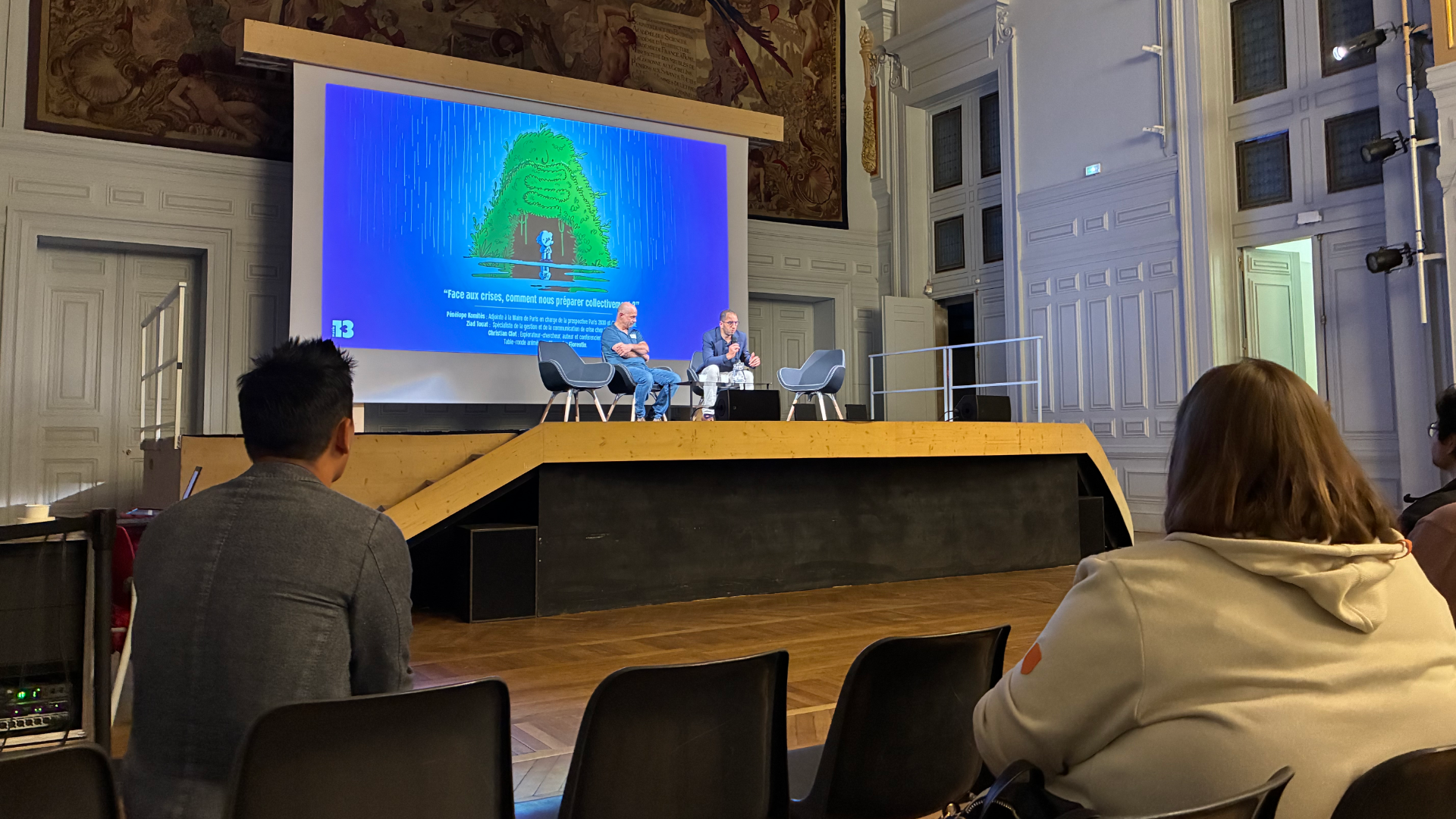
Last night, I was at the round table "Facing Crises: How to Prepare Collectively," moderated by Alexandre Florentin with Ziad Touat, a Crisis Management Advisor, and Christian Clot, an explorer-researcher.
Here are the key takeaways I got from it:
- Crisis management used to be primarily a military affair and was reserved for qualified personnel. Now, the goal is to involve researchers, citizens, and children as much as possible. Developing the right reflexes in those who will face the problem can make all the difference.
- Your ability to manage a crisis depends on your capacity to accept the reality of the situation. The more you are in denial ("this isn't real, it can't be happening"), the harder it will be to take steps to manage the crisis as it truly is. Mental preparation can be crucial.
- The noise level in an ideal crisis room does not exceed 80 decibels. People speak calmly; information is received, verified, and then processed, with the goal of offering the most relevant alternatives to the person who has to make a decision.
- Humility is fundamental. Be wary of those who see the crisis as an opportunity to shine and become the heroes of the situation. Also, be wary of excessive homogeneity in some groups: a crisis room full of engineers will produce an engineering solution. The same goes for soldiers. Cognitive diversity is essential.
- Social connection is the key. If you watch my videos, you know this is a subject that's on my mind. We need to be able to create social bonds at the street, neighborhood, and city level. We must be able to work with people we don't particularly like—or even don't like at all—to achieve common goals when those goals are vital for everyone.
And what about me, am I ready to face a crisis?
Transitions Don't Exist
Probably one of the main illusions that prevent presence.
Transitions: this idea that the current moment doesn't count "for real," that it's merely the passage to a future we're waiting for.
For example: the journey before the destination—by subway, by plane, on foot. It's not a trip, not an experience, no: its only virtue is to get us somewhere. Nothing positive can happen, nothing is worth paying attention to, except for the bad surprises that will cause delays.
The wait before an event—a meeting, an appointment, an anticipated moment. It's already wasted time, where nothing interesting will happen. We're already in what comes next, in what must happen.
Because in reality, of course, these moments are just as much "the present" as any others.
They could be just as rich, just as vibrant, just as transformative.
Especially since sometimes the destination is disappointing. Or never comes.
That's what I tell myself when I put my son in the car to get on the highway: "Our vacation together starts now." This journey is fully part of it.
And who knows? It might be the best part.
--
Related: