Strategy, strategy, strategy

You can optimize the wrong things.

You can speed up in the wrong direction.

You can be swamped by work that leads nowhere.

Remember: every bit of ground covered in the wrong direction will have to be covered again the other way. That effort won't just have been wasted, it will have taken you further from your goal.

So don't throw yourself into action right away.

Stop for a moment. Feel which way the wind is blowing. How strong the current is.

See what desire drives you. What direction is calling you.

Because once you're on your way, how easy or hard each step is will depend entirely on that first push.

Comment

Migrul - A Few Photos

Thanks to Guillaume Cloux for these photos from the Migrul shoot.

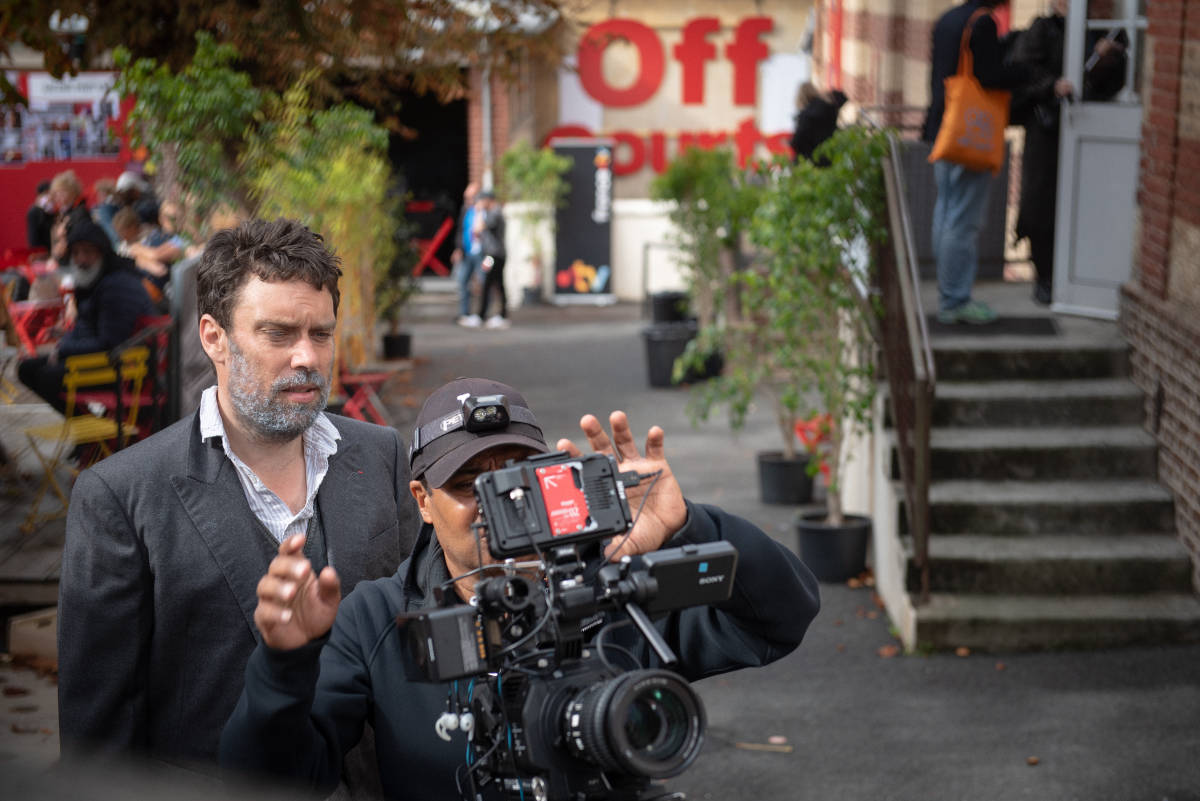
Migrul - School festival shoot

When I make a film, I dress up as Spielberg. It inspires me. With Jean Ratsimbazafy, DP.

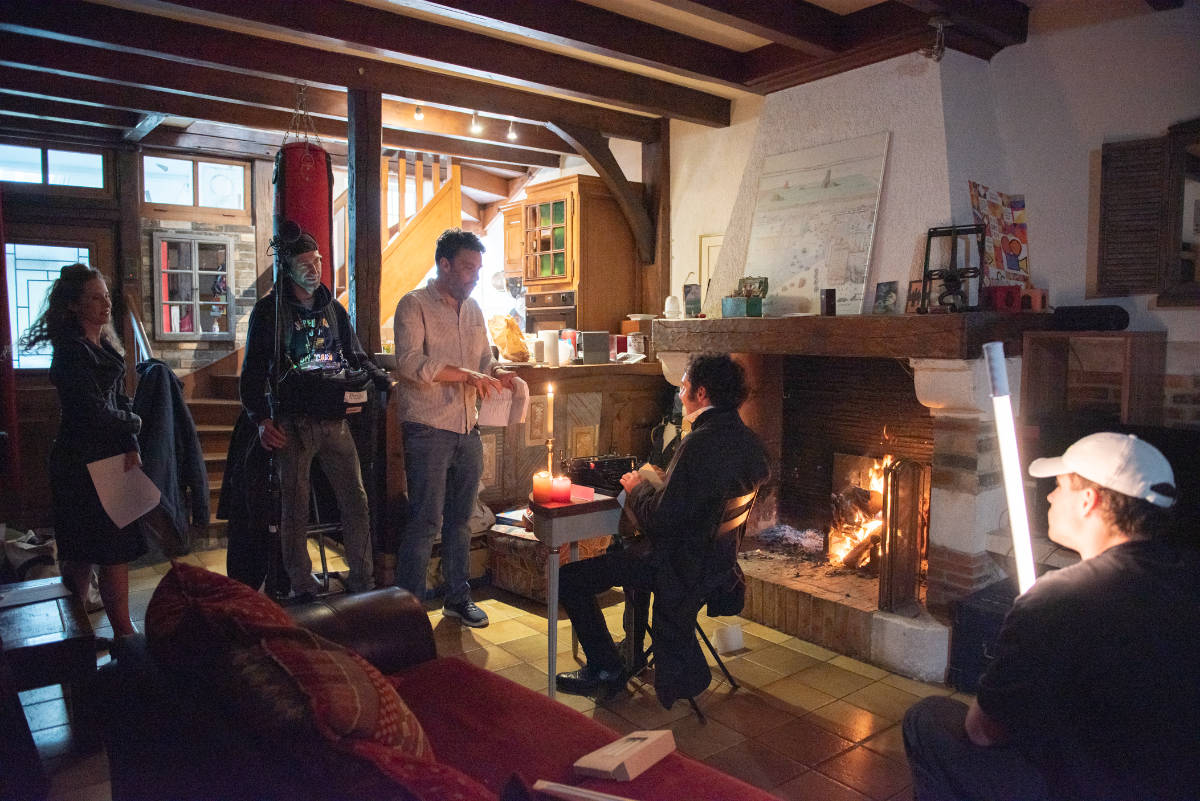
Migrul - Shoot at the house

Marianne Fisch (actor), Vincent Robidou (sound), Nicolas Boulenger (filmmaker), Léo Grange (actor) and Mathis Recondu (assistant) during the shoot at the house.

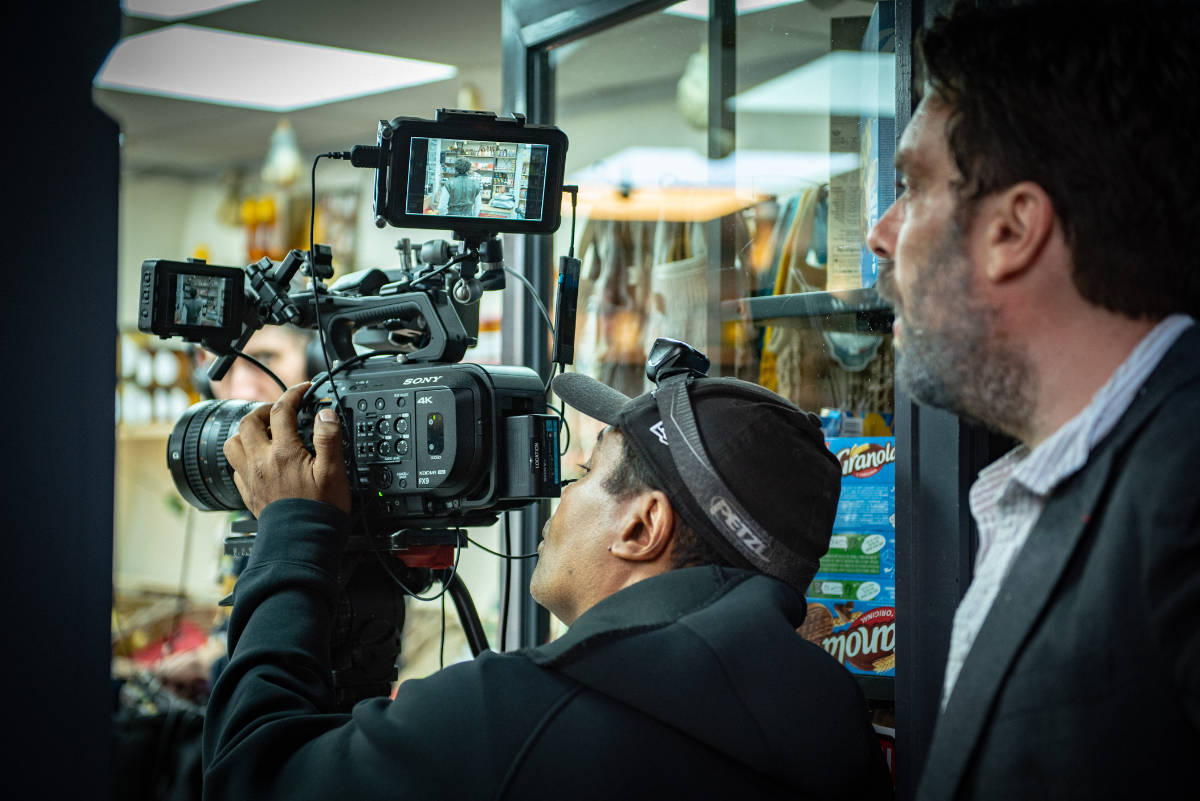
Migrul - Shoot at Ahmed's

Jean Ratsimbazafy (DP) and me watching Léo Grange (actor) and Ahmed (shopkeeper) on the screen.

Comment

New office

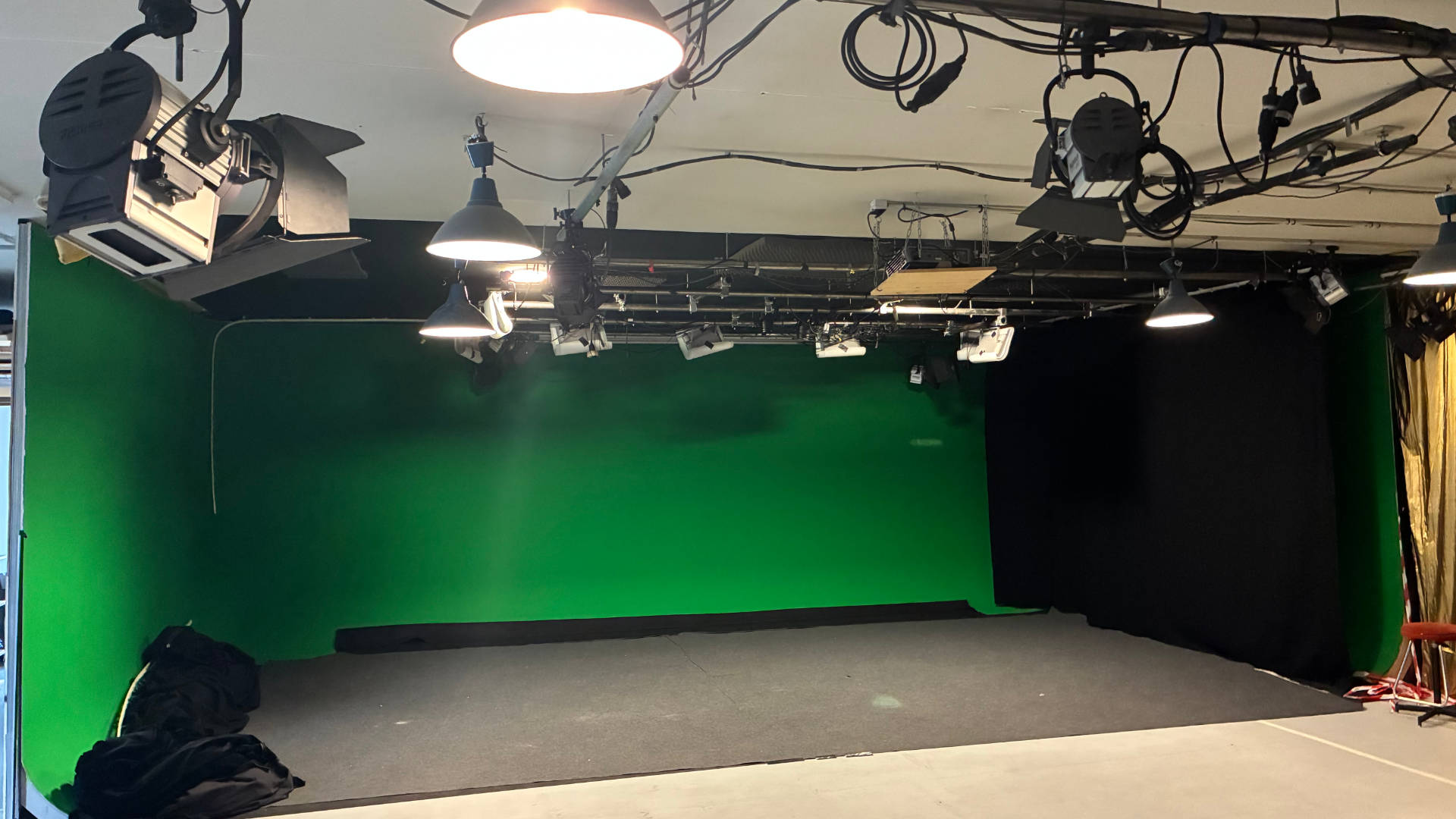
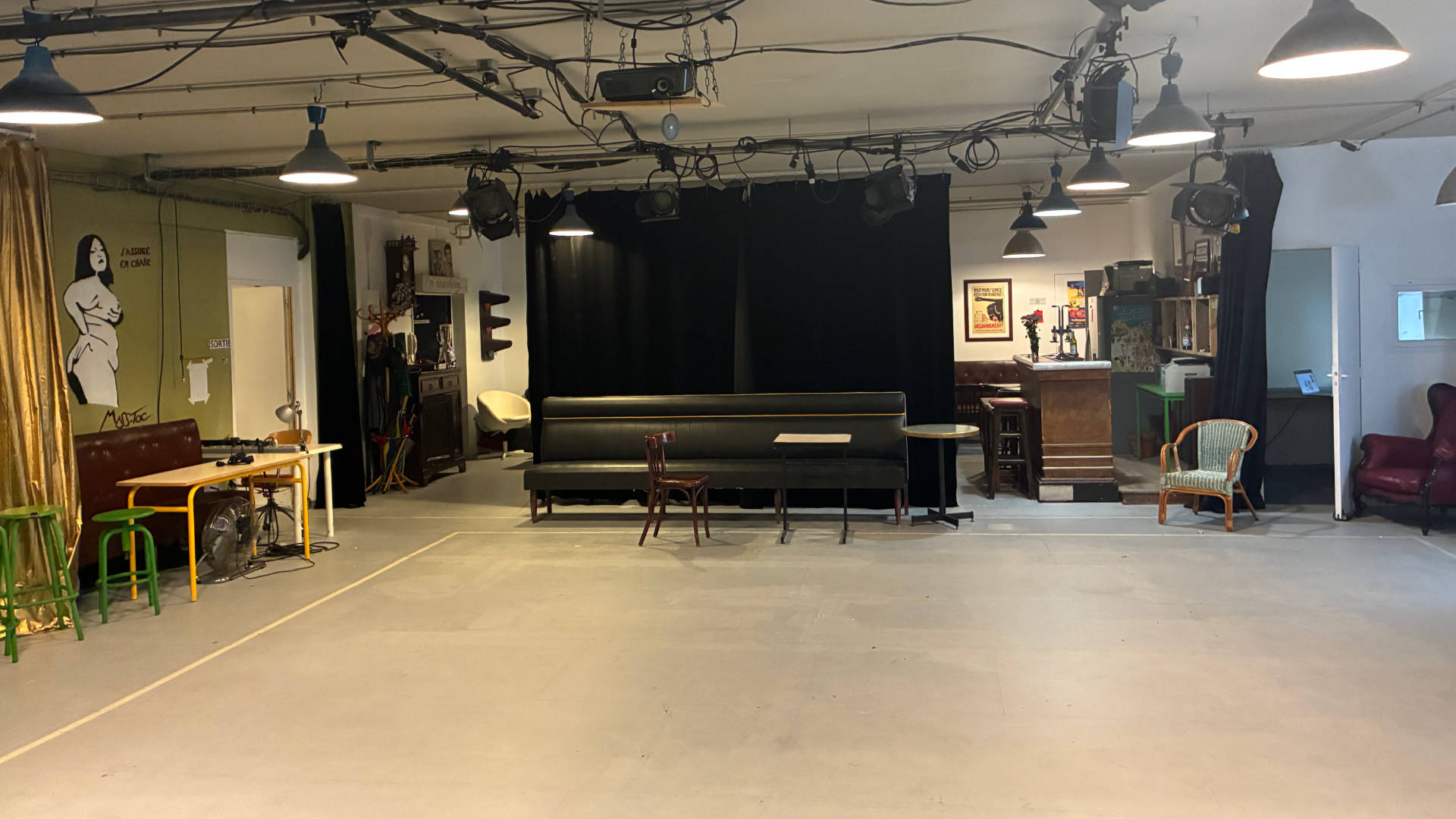
ChezFilms is moving into Télé Bocal's space in Belleville!

TV Bocal - set

TV Bocal - set from behind

Very happy with this new place. All the more so since I've also moved to a new pied-à-terre in Paris and I sleep close by. (I realized it this morning when I walked over and got here much, much earlier than planned.)

Comment

A Bit Depressed by the World

So today, to sum up:

  • The flotilla bringing food and water to people starving in Gaza has been stopped.
  • Trump tells his generals that the enemy within (roughly, the Democrats) will now have to be treated like a foreign enemy.
  • Jancovici explains that the mechanisms regulating the climate are passing points of no return faster than expected.

What makes me sad?

I think it's time to let go of the illusion that we lived in a society of progress where people of good will worked for the common good.

The age of abundant energy that is now ending has left us hooked on a comfort we no longer know how to live without. Now that the ground is shaking under our feet, we turn our anxious eyes to the most unhinged among us to save us.

The time of peace is over.

Comment

Not Even One Drink?

I'd stopped drinking. Almost.

It had tapered off on its own, and then, when I became aware that it runs in the family and how much room it took up in my social life – groups are built on addictions, I realized – I stopped almost completely.

I drink now and then. "For special occasions."

But I'm realizing that even then, it does nothing for me.

The strongest and funniest conversations I've had lately happened without a drop of alcohol.

And if you need to drink to enjoy the people around you, it's the people around you that need changing.

Comment

If You're Setting Up a Screening Room

If you're a company, a school or an organization setting up a small screening room, don't make this mistake I often see.

I've just come out of a test screening of my film in a corporate auditorium, and I saw the same problem there as in many other rooms:

The sound comes from two (or more) speakers placed on either side of the room.

People think this will give stereo sound "like at the movies." But that's forgetting that the main speakers in a movie theater are the "center" speakers: the ones placed right behind the screen, which make voices and dialogue come from the characters. Stereo speakers are a "bonus" – not necessarily present in the smallest theaters. (That's actually the principle of so-called "5.1" sound: the center and the stereo channels are separate.)

When you put speakers on both sides with no center, people on the right and left of the room get sound from only one side (the right ear or the left ear), which quickly gets exhausting. And it's disorienting to hear a voice coming from the side when the character you're watching is in front of you.

So when in doubt: start with the center. Good speakers placed at the front (under the screen, or on either side of it, but always at the front) will give the audience a much more even and pleasant result than stereo with no center.

And I have plenty of films to offer for your room's opening night :)

Comment

Ugh, whatever

That's what I think when I watch the latest videos I've posted. (I post a video a day on social media.)

I'm getting on my own nerves.

It's a good sign: when I can't stand what I'm doing anymore, it means I'm about to move up a level.

It already happened to me with photography: I couldn't stand my pictures anymore, and when I picked the camera back up after a break, I did something radically different. More personal. Better.

I'm already thinking of setting myself some rules:

  • One take. No more retakes.
  • No more intro or conclusion. Just the heart of it.
  • Never "say again" something I've already said – on camera or not.

We'll see how it goes.

Comment

A Project Down the Drain

Still rummaging through old hard drives, I found this:

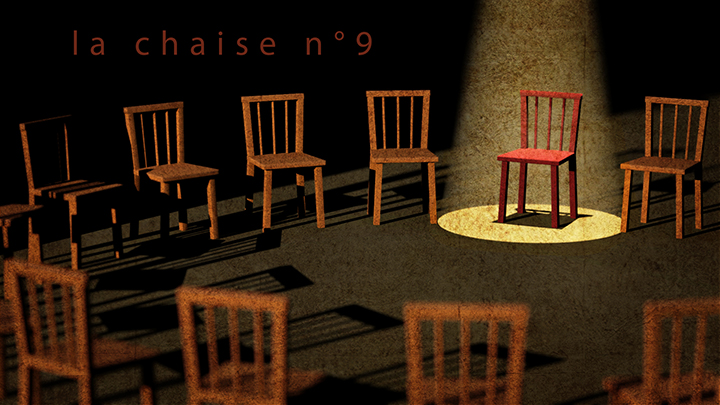
Chair number nine

It's the poster for a short film project that was supposed to be produced – we had France 2 and a co-producer – but it never materialized.

It was based on a true story (?) that I had read in Planète magazine:

In the 1970s, a group is seated in a circle in a community hall for a workshop. At the end of the session, two men enter; nobody is expecting them. They walk toward one of the participants to ask him "were you sitting in this chair?" The participant nods.

The two men then bring in a cart with a television and a VCR to show him a video. They are researchers and, a few weeks earlier, they filmed an interaction with a person in this very same room.

In the video: "Can you tell us something about one of the participants in the workshop that will take place here?" The person, who turns out to be a psychic, goes through all the empty chairs until stopping at one in particular. Voice-over: "The subject has indicated chair no. 9."

The psychic then begins to make revelations about the future occupant of the chair, which the participant in question follows on the television screen, stunned.

In my version, this was only the first layer of the story. The second layer was that the psychic's statements, while impossible to verify, sowed discord between the young woman (sitting in chair no. 9) and her father who was also present, ultimately forcing her to admit a truth she had always hidden.

Or how the false (or the undecidable) can have real consequences.

Down the drain. For now.

Comment

John McSpace - The horrors I uncover

Édouard Pons, who composed the music for Migrul, had brought up this old piece of silliness I shot in one afternoon at Off Courts five years ago.

I just found it on an old hard drive, and it's worse than I remembered.

<script src="https://player.vimeo.com/api/player.js"></script>

Then again, I think it's the ancestor of my web series Panic in Space, which is coming out soon. So maybe it was a necessary evil.

Comment

All in the Body

Yes, it's a very New Age idea.

But lately I've been realizing how true it is.

When you watch how the physical and the mental work together, you realize the body is a kind of notebook for thought.

Look at it this way: thoughts are extremely short-lived. They go by at full speed without leaving a trace. We think about tomorrow, lunch, the present for our mother, the toe that hurts... From association to association, we jump from one concept to the next with no real direction.

A string of brain farts.

But when the brain decides an idea is important, that it's worth coming back to, it makes a reminder. A kind of inner bookmark that forces the thought to resurface. To do that, it ties it to an emotion.

Because it's embodied, an emotion has a much longer half-life than a thought. The knot in the stomach, the grip of stress or anxiety, the adrenaline of fear or joy... All of it lasts several minutes, even several hours.

The emotion works like an anchor that holds the mental boat in the same area. As soon as we drift away, the body reminds us that something's wrong. And the thought comes back.

But sometimes it's the other way around.

When I started meditating a few years ago, I realized the anxiety I felt in the morning came from... my digestion. I had a knot in my stomach, and the first idea that came along would latch onto it. So the problem I was thinking about wasn't the real problem.

I stopped eating before bed, and the anxiety went away.

Comment

Taking Notes to Move Forward

I've taken notes all my life, and it's been almost no use to me. Until recently, because I changed my system.

First, to be clear: I've been using Obsidian for 3 or 4 years (after Apple Notes, Airtable, Notion...), and even though I love it – I'll come back to it – it isn't about the tool. It's about the process.

I used to hoard notes.

Like an obsessive with Diogenes syndrome, I was afraid of losing an idea, of letting the providential thought slip through my fingers. So I piled them up, and piled them up. And once they were in my vault, I did nothing with them.

Over time, I found technical ways to use my notes more – mostly by putting them in front of my eyes – but it wasn't enough.

What was missing? Pressure.

The most important part isn't writing a note: it's the work you do afterward to fold it into a body of knowledge you use every day. Putting pressure on a set of ideas so they fuse and form a diamond.

So now, this is how I do it:

  1. I write a note in a catch-all file (Inbox).
  2. Later, I move it into the relevant file (e.g. productivity, presence, creation, family...).
  3. In that file, I group related notes into large sections, each with a subheading and a summary.
  4. At the top of the file, I write (or maintain) an overall summary of two or three sentences that gives the essence of the subject, often in the form of a clear, concrete piece of advice.
  5. Rinse and repeat.

So the end goal is to produce that targeted advice, which I can apply right away and which I make sure to reread regularly. Having compiled it from several sources makes it personal and concrete.

That was one of the things I did this morning.

Comment

The Battle to Exist

I've noticed that the times I got angriest were when someone acted as if I didn't exist.

As if where I stood, there was no one.

The driver who nearly runs me over. The fellow passenger who plays their music as if they were alone. The colleague who completely disregards what I say.

I've noticed it in others too. The strongest emotions arise when we feel ignored.

So much so that much of what we do seems designed to prove that we exist.

Work, conversation, creation, social media... Everything seems unconsciously orchestrated to prove to the rest of the world that we're really here.

As if our deepest fear were being a ghost. The existential dread of being nothing but a specter that has to thrash about to be seen.

And when someone ignores us, it's as if they were exposing that emptiness. As if, with a gesture or a remark, they wiped out all the effort we put in every day just to be.

Comment

Small victories

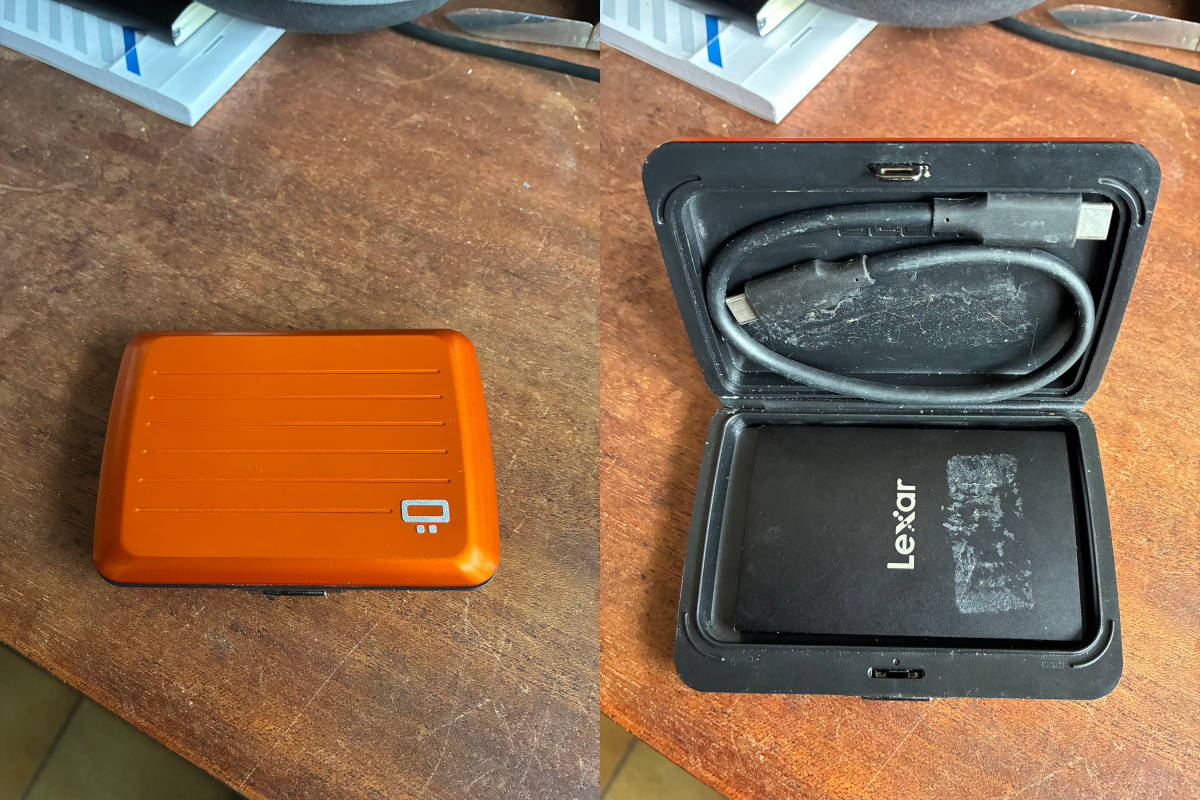
A year ago, I bought an SSD hard drive to edit my films anywhere. But it didn't come with a sturdy case. So I bought this card holder (which cost an arm and a leg) at a stationery store.

I couldn't check the size because it was full of plastic sleeves, which I tore out.

When I discovered that not only was it the perfect size, but the cable fit just right inside to stabilize the whole thing... small victory.

It goes everywhere with me now.

Hard drive holder

(No, that's not dirt inside, it's dried glue residue.)

Comment

Zen & Creation

I think the festival went so well, both in terms of the connections I made and my film, because I was fully available.

I decided I would continue meditating every morning, regardless of my schedule. I stuck to it.

I even meditated at noon the day before the shoot, when I was stuck on the prep. Result: the answers fell out of the sky.

I came with no idea, no script, no crew.

When something resisted, I let go.

When a rejection or an event stung, I noticed the emotion and did my best not to act reactively.

I listened to everyone, all the time. Without forcing it. I was happy to be there.

Every aspect of my film – ideas, locations, crew – came naturally, through chance encounters.

Neither the shoot nor the edit was easy. Yet I can't imagine how it could have gone better.

The difficulties and stress were part of the ideal path.

Comment

Zero Film Ideas

I'm going to shoot a kino (72-hour film) on Tuesday at the Off Courts Film Festival and I have no idea what I'm going to do.

This isn't bad news, quite the opposite.

When I show up butt naked and empty-handed, it means I'm confident.

Confident in the process. Confident that by meeting people, feeling the vibe, seeing the locations, something will come. Or not – and if not, too bad.

Right now, I'm listening to sounds on Ableton. Maybe I'll start with the music.

To be continued.

Comment

Death, death, death!

If we worried less, death would be the great liberator.

I'm not talking about suicide. I'm talking about how we see life.

A large part of the anxiety we accumulate comes from our tendency to take everything seriously. As if every action were important and serious.

Except that it all ends on an equal footing.

The billionaire and the homeless person, the beautiful and the ugly, the pleasure-seeker and the worrier, all end up the same way, and a few decades later no one remembers them. At best (or at worst), a few stories remain that have little to do with who they really were.

Everything matters less than we expected.

Nothing is as serious as we think.

The point was never to last.

Let's be free.

Comment

Dogs on the Beach

When I walk on the beach holding something in my hand, there's always a crazy (but happy) dog who runs up to me and asks with his eyes:

Hey, what've you got there?
Is it a ball?
Is it a treat?
Is it a rock?
Is it for me?
Ok bisou gotta go!

And off he goes. 🤷‍♂️

Comment

Seeing the System

Tabloid newspapers wouldn't exist if nobody bought them.

Fanatical TV hosts wouldn't stay on the air if they didn't represent anyone.

Corrupt politicians wouldn't rise to power if their rhetoric didn't resonate with a large portion of the population.

Getting angry at the figurehead means forgetting about the entire ship floating behind it – which wasn't built overnight.

Yes: it feels good to get angry, sometimes. And it's convenient to be able to focus your anger on the visible, obvious part of the problem. But by overlooking the underlying system, we only have a very partial understanding of the situation.

And we indirectly become part of the problem.

Comment

Typing Faster

I now type relatively fast, around 70-80 words per minute, with good accuracy.

For someone who spends all day writing, that's handy: I can almost "dump my thoughts" onto the screen without looking at my fingers or falling behind.

The best site I've found for practice: keybr.com. It introduces letters one by one and lets you practice with punctuation, capitals, etc.

My advice:

  • Set it to French with capitals and punctuation.
  • Don't try to go fast. The goal is accuracy. Stay above 95% accuracy with the right fingers.
  • Don't look at your fingers. When in doubt, slow down.
  • Ten to fifteen minutes a day.
  • For variety, you also have 10fastfingers and Monkeytype.

It's quite a zen activity that clears the mind when you need to step back (from a piece of writing, from work). I recommend it.

Comment

What do you do when you're doing nothing?

That's the million-dollar question.

For most of us, I can answer: we stress.

We think about what we should be doing. We accept a few hours or a few days of inactivity (what we call "rest"), but very quickly, if the inaction persists, guilt takes over.

Then we switch to "reactive" action: the kind whose sole motivation is to silence the guilt.

We act "for the sake of acting," to avoid being seen as a slacker, to dissolve anxiety through movement.

People often joke that "if they could, they would do nothing, always on vacation!" But that's not true. Most would be unable to face the anxiety created by this void and would be back at work within the week. Not out of financial need: out of internal and social pressure.

So we always skip the most important step: idleness. The real kind. The kind that allows for introspection.

Keep doing nothing. Embrace the anxiety and guilt that rise up. Look them in the eye. Then watch them quietly fade away. Followed by a gentle feeling of emptiness. Then, when you least expect it...

Action. The real kind. The kind that builds something.

Comment

Time and Productivity

Strangely enough, it's easier for me to make one video per day than one video per week.

In the first case, I get into a flow that makes the process easier and easier. Ideas come thick and fast, the process is well-oiled, my brain has internalized the deadline. Everything clicks.

Today, for instance, I'm almost five videos ahead. And it was a breeze.

Whereas with weekly videos... I forget. It becomes just another constraint on top of everything else. I never find the time.

I'd already noticed this counterintuitive link between time and productivity: sometimes, a more intense task is easier.

For example, when I'm procrastinating on work that bores me, I ask myself "could I get this done in fifteen minutes?" I'm not talking about a tiny task, no, I mean writing a report or revising an edit, something that would normally take several days.

But my brain says "yes, let's do it in fifteen minutes!" and this unrealistic idea changes my relationship with the task. It suddenly seems more manageable, less of a big deal.

And easier to start. That's all that matters.

Comment

What does it mean to "meditate"?

We picture a Buddhist monk sitting in lotus position in a quiet room with candles and running water.

In reality, you can meditate while walking through a construction site.

Meditation is simply bringing your attention to the present moment rather than to your thoughts.

Now, there's always something happening in the present. The sound of a car. The light from the sky. A breeze on your face. The sensation in your foot, in your torso, in your neck.

Like many people, I started meditating by focusing on my breathing.

We tell ourselves "easy"! But quickly, we realize we're bombarded with thoughts, ideas, anxieties. The game is to acknowledge their existence and greet them without getting hijacked.

And when a thought wins and we "wake up" after five minutes lost in our head, calmly come back to the breath. This isn't a failure, quite the opposite.

It's this back-and-forth that builds presence, like a muscle you train.

Comment

99% of a Machine

We work in one direction. We fail. We give up.

We tell ourselves "this wasn't meant for me, I'd be better off focusing on what I know how to do."

But some machines aren't resilient. A single missing part, wire, or gear, and nothing works. It won't even start, like a device with a blown fuse.

So it's possible to build 80, 90, or even 99% of a machine and, because of one oversight, get 0% of the result. Dead in the water, as if we'd done nothing (or done everything wrong).

It's true: the last few percent are often the hardest to achieve. And many systems aren't linear: they either work or they don't, regardless of how close you are to the result.

That's why there are far fewer "overnight" successes than we imagine. In reality, the creator had been working on it for a long time. They were about to give up. But at the last moment, they thought "what if I replaced this fuse?"

And the machine started up at full power.

Comment

You Write Too Much

Three well-chosen words pack more punch than a page of fluff.

Who are you trying to reassure with all that text?

Simplify!

Comment

It's Warming Up on the Flowery Coast

You too can check that global warming isn't one big hoax by looking at the data near you:
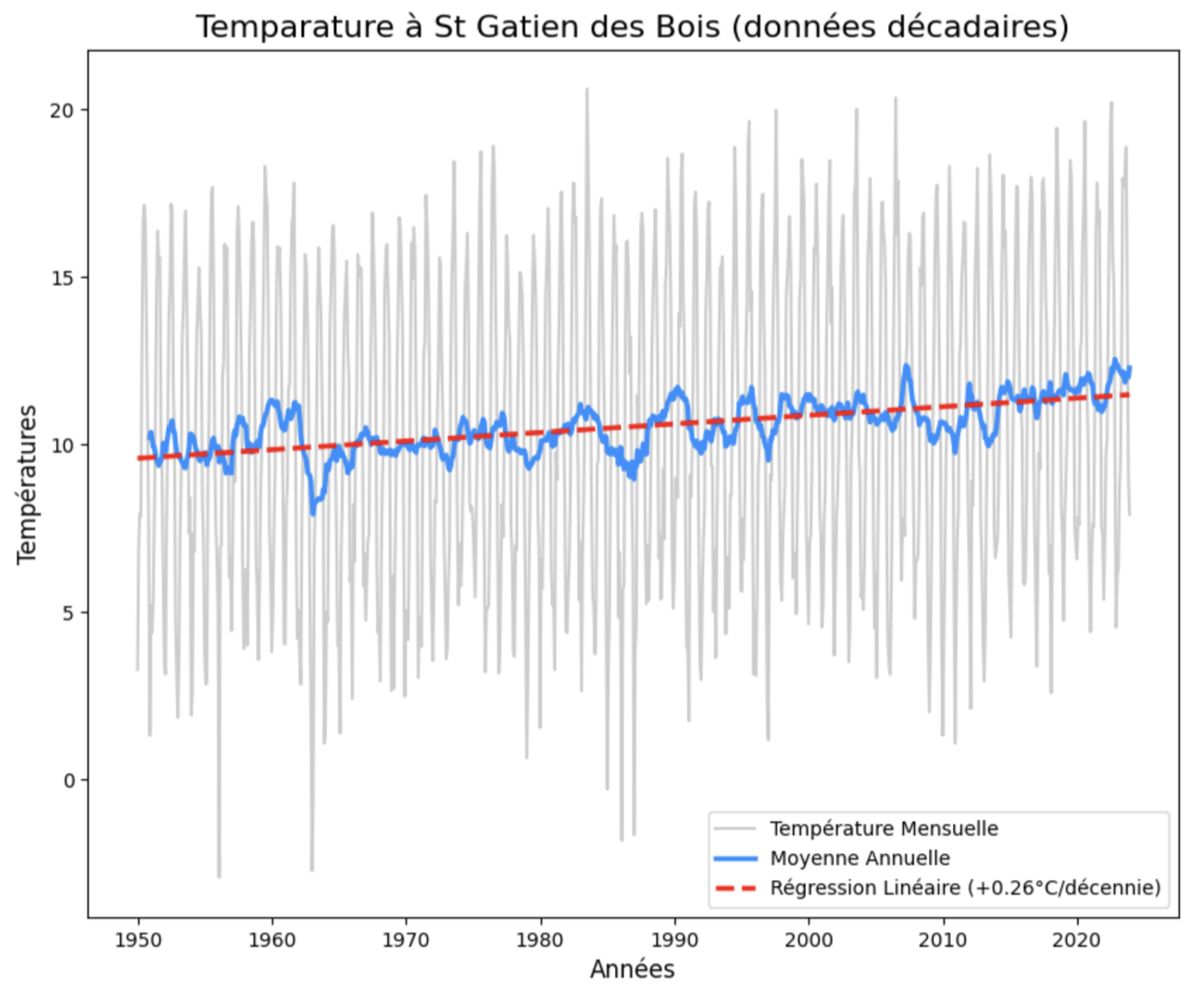
Côte Fleurie temperatures

Global warming in Trouville-Deauville

A chart I made as an exercise to learn the Pandas library (for processing data) in Python (a programming language), using Météo-France's ten-day temperature data for Saint-Arnoult.

You can clearly see the quarter-degree-per-century rise climatologists talk about.

I had already posted it on social media, but now that I can publish longer notes, I'm sharing the code below. If you want to check in your area too, here's how:

The steps are as follows:

  1. If you don't have Python, install it.
  2. Use Pip to download the Pandas (data), Matplotlib (charts), Seaborn (even prettier charts) and Scipy libraries.
  3. Go download the ten-day data from Météo-France.
  4. The Python code:

    # Importing necessary libraries
    import pandas as pd
    import matplotlib.pyplot as plt
    import seaborn as sns
    from scipy.stats import linregress

    # Reading the CSV file of ten-day data
    csv_file = "DECADQ_14_previous-1950-2023.csv.gz"
    df = pd.read_csv(csv_file, sep=";")

    # Converting the date column to datetime format
    df['AAAAMM'] = pd.to_datetime(df['AAAAMM'], format='%Y%m')

    # Filtering data for Saint-Gatien-des-Bois station
    df_sg = df.loc[df['NOM_USUEL'] == 'ST GATIEN DES B', ['AAAAMM', 'TM']]

    # Calculating monthly average temperatures
    df_sg_mensuel = df_sg.groupby(df_sg['AAAAMM']).mean()
    df_sg_mensuel.head()

    # Calculating 12-month rolling average (annual average)
    df_sg_mensuel['TM_MEAN'] = df_sg_mensuel['TM'].rolling(window=12).mean()
    # Preparing data for linear regression
    x_numeric = (df_sg_mensuel.index - df_sg_mensuel.index[0]).days / 365.25
    y_values = df_sg_mensuel['TM']

    # Calculating linear regression to identify the trend
    slope, intercept, r_value, p_value, std_err = linregress(x_numeric, y_values)
    df_sg_mensuel['TM_TENDANCE'] = (slope * x_numeric) + intercept

    # Creating the chart
    plt.figure(figsize=(10, 8))

    # Plotting monthly temperature (in light gray)
    sns.lineplot(x=df_sg_mensuel.index, y=df_sg_mensuel['TM'], 
    label='Monthly Temperature', color="grey", alpha=0.4)

    # Plotting annual average (blue curve)
    sns.lineplot(x=df_sg_mensuel.index, y=df_sg_mensuel['TM_MEAN'], 
    label='Annual Average', color='dodgerblue', linewidth=2.5)

    # Plotting warming trend (red dashed line)
    sns.lineplot(x=df_sg_mensuel.index, y=df_sg_mensuel['TM_TENDANCE'], 
    label=f'Linear Regression (+{slope*10:.2f}°C/decade)', 
    color='red', linestyle='--', linewidth=2.5)

    # Customizing the chart
    plt.title('Temperature at St Gatien des Bois (ten-day data)', fontsize=16)
    plt.xlabel('Years', fontsize=12)
    plt.ylabel('Temperature (°C)', fontsize=12)
    plt.grid(False)
    plt.show()

After the nasty feedback from my climate video, it doesn't hurt to double down.
Comment

Insult-o-meter

As promised, I'm looking at my video stats less.

But a good way to tell when a video is doing well is when I get insulting comments.

My latest little joke about heatwaves and climate has already earned me three insults. Which means the video has spread beyond my tight circle of thoughtful, well-behaved viewers and spilled over to the people who watch Pascal Praud and Cyril Hanouna.

On social media, insults are a sign of success.

Comment

Thinking Is Not The Solution

The mind seeks, finds, and solves problems.

That's its nature. It's all it knows how to do.

Say one day you find yourself on top of the mountain you've always wanted to climb. The view, the light, the temperature are perfect. It's the achievement of a lifetime. Your mind will whisper "Great... now what?"

It will find the flaw in your success. Make you long for the next peak that will be better. Already, you feel the anxiety of lack, dissatisfaction, desire.

You can't blame it: that's just its nature, I'm telling you! Analyze the situation, find the flaws, devise a plan... That's its job! That's why it exists!

Which makes it a terrible foundation for finding peace.

Don't get me wrong: thinking is a wonderful tool – one I'm using right now to write these lines. We put it to work to create, communicate, survive.

But if your goal is to be present and at peace: it's not the right tool at all.

Do you know how to set it down when you no longer need it?

Comment

Two Ways to Solve Problems

When I have a problem, I have two ways to solve it:

  1. Intellectually: I look for a solution. I weigh the pros and cons, I make lists, I put together a plan of action for the future to calm the anxiety in the present.
  2. In presence: I look for the physical manifestation of this anxiety in my body. The knot in the stomach, the obsessive image, the vague obligation. Without chasing it away or holding onto it, I watch it change until it disappears.

Problems are a function of who we are.

By changing our inner dispositions, we transform our relationship to external circumstances. The problem that seemed insurmountable the second before vanishes.

The intellectual solution, on the other hand, often only shifts the difficulty. Once the first situation is resolved, a second one arises, just as problematic, because it comes out of the same crucible.

That's the trap of thinking: it solves problems, sometimes. But nine times out of ten, it creates them.

Which often makes it the wrong tool for growth.

Comment

The Accumulation Trap

If you catch yourself listing anything at all, you're probably on a slippery slope.

I see it in every field:

  • In improv theater, we pile on jokes when we can't find the one that really lands.
  • In sales, we pile on benefits when we haven't found the killer argument that convinces everyone.
  • In interior design, we pile on trinkets when we haven't found the centerpiece that holds the room together.

I could go on and on.

What breaks the cycle? Stopping. Refocusing. Starting over from taste, from instinct.

All it takes is one strong idea, one genuine direction, one carefully chosen piece to stop the mediocrity machine and find your way back.

Just one. Take the time to find it.

Comment