How I Manage LinkedIn (and Everything Else)

I'm allergic to anything that isn't sincere.

I've never been able to stand advertising, ever since I was a kid. ("But some ads are good!" – that's not the point.) I also have a hard time with some TV news, some speeches, some social networks.

My problem: the gap between the stated pretext (I'm entertaining you, sharing a tip, giving you information) and the real motive (I want your money, your attention or your likes). It isn't a conscious decision: I just can't swallow it. A real block.

So when I wanted to grow my business, it became a source of anxiety. Would I have to do the same? Had I been protected until now, and now that I ran a company, would I have to swallow the pill and churn out fluff?

After a long detour, the answer is... NO. (Phew.)

Not only is it not required, it's not, in my view, the right way.

At first I tried to force myself, and it was awful: the emojis, the artificial calls to action, using LLMs to make my posts "more LinkedIn." It was fake. Not my style. And it didn't work.

Then I did some deeper work.

Two or three years ago, I started making videos and writing articles. Not for LinkedIn, not for work, no: for me. That (almost) nobody watched. (It's going better now 🙂)

My only rule: be absolutely sincere. No hiding behind technique, behind humor or behind any kind of obligation. And believe me: nothing is harder than sharing personal ideas in public when nobody asked you anything.

So today I post an article and a video every day (not here). Over time, this has had two effects. First, it reconciled me with the sound of my own voice. I talk the way I talk, and that'll do just fine.

But above all: this content let me connect with people who like what I do naturally. Who share similar doubts, the same humor, overlapping interests. They're my peers, my contacts, my collaborators.

Then it became clear that it wasn't about platforms anymore: I could find these people anywhere. At a cocktail party. In the street. On LinkedIn. So much so that, little by little, the line between my personal content and my professional posts started to blur.

I express myself the same way with a friend, a stranger, a client.

Some of my LinkedIn posts now come straight from my personal blog. Not everyone's into it. That's fine: they're meant for the people who are.

This new way of working has made my communication more aligned, and so easier.

And, in the end, more effective.

"Be yourself so that the people who are looking for you can find you." – Harlan Hamilton
Comment

Arch and Resilience

An architecture professor gave us this quote during a structures seminar at the Ponts.

Once the last stone is in place (the "keystone"), an arch stands on its own. No need for nails, concrete or support. Not only does it stand, it can also carry weight. Hence this quote from Primo Levi:

"Why, I asked myself, doesn't the arch collapse, when nothing holds it up? It holds, I answered, because all the stones want to fall at the same time. This thought brought me great comfort, and I keep it with me until the decisive moment, hoping that I too will be able to hold, when everything in me wants to give way."

– Primo Levi, The Truce

An unexpected application of the stress tensor to human resilience.

Comment

Marc Maron's Final Podcast with Barack Obama

After more than 1,600 episodes over 16 years, American comedian Marc Maron released the last episode of his podcast this week. His last guest: Barack Obama – whom he had already interviewed once before.

I love Marc Maron, his humor, his conversations, and I'm going to be sad to see him stop. He was one of the first to launch this long format, back when podcasts weren't cool yet.

I found strong ideas in this conversation that echo what I've been thinking about lately. Here are a few things Obama said that stayed with me:

  • In the end, you don't need to agree on everything to work with someone.
  • Know what you really believe in. That's the starting point.
  • The period after World War II wasn't perfect. But at least there was a shared story.
  • You have to be tolerant of people. As long as they aren't actively trying to hurt you, you have to be tolerant.
  • Sometimes you win and you're happy. Sometimes you lose and you step back for a while to lick your wounds before coming back. But nobody tries to destroy you because you lost.
  • One of the requirements of liberal democracy is accepting partial wins, not just perfection. The only question is: is it going in the right direction?
  • We're probably going to overshoot the 2-degree Celsius target. Because it's very hard for humans to change their main source of energy in a single generation. But we've made progress.

Learning to work with people we don't much like – or don't like at all – to pursue a bigger shared goal: that's what I'm thinking about right now.

Comment

5 Ideas for Crisis Management

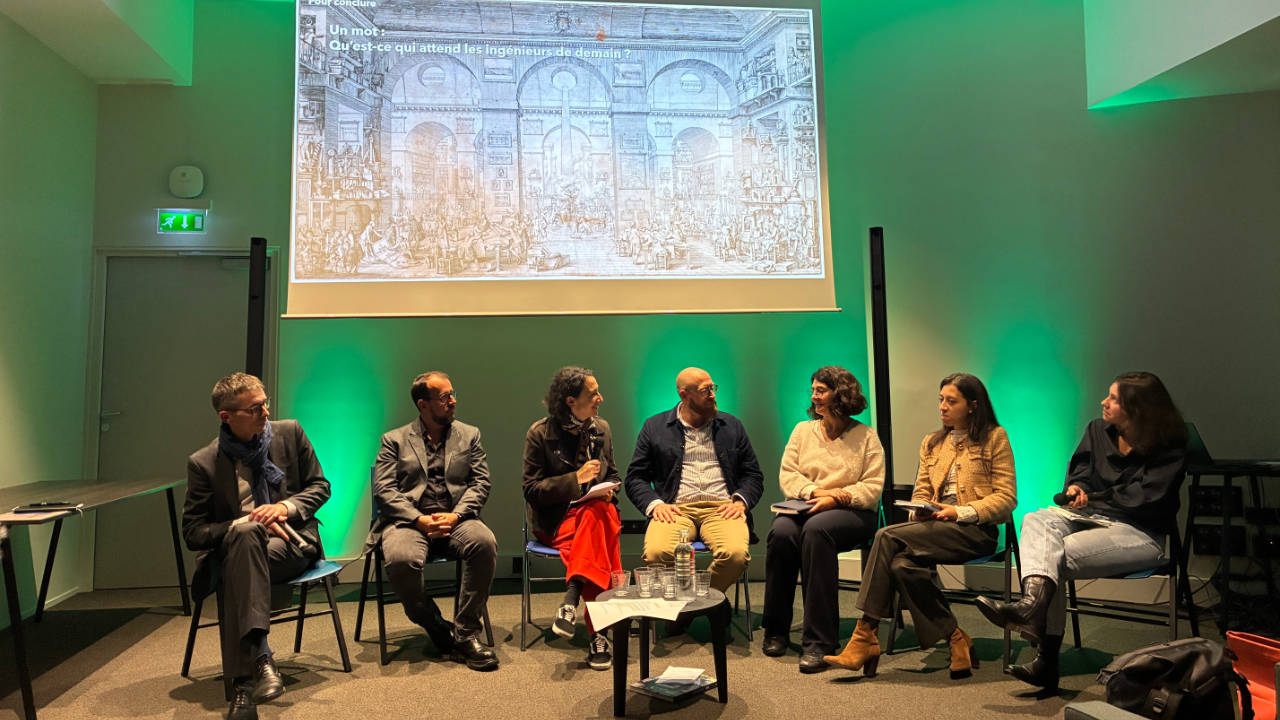
Last night I was at the round table "Facing Crises: How to Prepare Collectively," moderated by Alexandre Florentin with Ziad Touat, crisis management advisor, and Christian Clot, explorer and researcher.

Here are 5 strong ideas I took away:

  • Crisis management used to be mostly a military matter, reserved for trained personnel. Now the aim is to bring in researchers, citizens, children as much as possible. Building the right reflexes in the people who will face the problem can change everything.
  • Your ability to handle a crisis depends on your ability to accept the reality of the situation. The deeper in denial you are ("this isn't true, this can't be happening"), the harder it is to take steps to deal with the crisis as it actually is. Mental preparation can make the difference.
  • The noise level in an ideal crisis room never goes above 80 decibels. People speak calmly; information is received, checked, then processed, the goal being to offer the most relevant options to whoever has to make the decision.
  • Humility is fundamental. Be wary of people who see the crisis as a chance to shine and become the heroes of the story. Be wary too of groups that are too uniform: a crisis room full of engineers will come up with an engineer's solution. Same for the military. Cognitive diversity matters.
  • Social ties are the key. If you watch my videos, you know this question is on my mind. We need to be able to build social ties at the level of the street, the neighborhood, the city. We need to be able to work with people we like less – or not at all – to reach shared goals when those goals are vital for everyone.

And me, am I ready to face a crisis?

Comment

Transitions Don't Exist

Probably one of the main illusions that get in the way of presence.

Transitions: the idea that the current moment doesn't count "for real," that it's only the passage to a future we're waiting for.

For example: the trip before the destination – by subway, by plane, on foot. It isn't a journey, not an experience, no: its only merit is getting us somewhere. Nothing good can happen, nothing deserves attention, apart from the bad surprises that will make us late.

The wait before an event – a meeting, an appointment, a moment we're looking forward to. It's already wasted time, where nothing interesting will happen. We're already in what comes next, in what's supposed to happen.

Because in reality, of course, these moments are just as much "the present" as any other.

They could be just as rich, just as vibrant, just as transformative.

All the more so since the destination is sometimes disappointing. Or never comes.

That's what I tell myself when I put my son in the car to hit the highway: "Our vacation together starts now." The drive is completely part of it.

Who knows? It might be the best part.

Comment

The Ego and the World

This idea may be harder to grasp if you're not familiar with the concept of "emptiness."

But I think about it more and more. I found it in Robert Burbea's book Seeing that frees.

Here it is: what we call the ego isn't a fixed property of a person.

Over a lifetime, a week, a day, the ego moves along a spectrum: it shows up more strongly or almost disappears depending on the situation.

What governs these variations?

As always: attachment.

When I want or refuse something, when I feel desire or aversion toward an object, the object and my ego appear at the same time. Buddhists call this "dependent arising."

A moment earlier, I can be in the flow of the present, moving freely and lightly from sensation to sensation: no center, no subject, no ego. I'm floating.

Then I latch onto a thought. Suddenly I want, I refuse, I ruminate. The ego is nothing more than the relationship that has just formed between this idea of me (which couldn't be found a second earlier) and the idea of this object (which doesn't really exist).

Far from being a flaw, the ego is above all a relationship.

A relationship between two objects that we choose to create ourselves.

Comment

Are You Doing It for Yourself?

That's the key question, and the trick question.

We feel like we're acting for others, to be kind, to help out, but secretly we're working for ourselves, for our image, for our own satisfaction.

For example: I'm often suspicious of people who are too nice to cashiers.

Saying "thank you, have a nice day," of course. But some people lay it on thick: "Thank you, have a really nice day, ma'am. And hang in there, okay? Hang in there." The cashier nods politely; she didn't ask for that much. And I find it hard to imagine the customer walking out without thinking "I'm a wonderful person. Look how I understand and support the little people."

My theory is that, secretly, this person is doing it for themselves. For their self-esteem.

And that the exchange, being so deeply artificial, hasn't lightened the cashier's load in the slightest.

I realize I do it too, of course.

Under the guise of helping, taking part, informing, I'm actually running PR operations to prove I'm a good guy. So people think well of me.

Am I trying to understand this person to help them, or to show them I understand? Am I telling this story to inform them, or because it makes me look good?

As usual, the goal isn't to change but to notice. Once they're brought to light, these habits fade away.

Comment

The Mechanics of Success

If I had to sum up the most important thing I've understood over the past few years, I'd say this:

1. To stand out, you need to set up a system.

Pulling something off once, even brilliantly, isn't enough. It's repeating an action – even a simple one – that brings the transformation we're after – inside us or in the world.

It's true in spirituality (nothing is more repetitive and simple than meditating), in music (we even call it "practice"), in work, in communication, relationships, health...

Sticking to one direction matters more than intelligence, willpower or talent. But:

2. No system without alignment.

Discipline, willpower, good resolutions (...) will never be enough to stay the course. A few days, a few months, maybe. But soon we wear ourselves out, we crack.

The only way to set up a system for the long term is to be perfectly aligned.

Being entirely yourself. Doing what's 100% natural. Following your instinct blindly and dropping everything else.

Except: very few people really know who they are and what they want. Their knowledge of themselves is buried under intellectual ideas and decades of conditioning. Hence...

3. No alignment without self-knowledge.

This is the cornerstone of the whole building: learning to know yourself.

Doing the inner work to take apart the preconceptions we hold about ourselves and the world, so we can reach our own truth.

That truth is the real source of action. The kind that lasts. And so changes things.

"Know thyself." - Socrates
"Become who you are." - Nietzsche

Comment

Construire Screening: Thanks to Setec!

My film To Build, made for the École des Ponts, was screened at SETEC last night, followed by a discussion and drinks.

Construire screening at Setec - discussion

Anthony Briant (Director of the École des Ponts), Vincent Callebaut (architect), Bénédicte Danis and Julien Tanant (organizers of the evening for Setec), Élise Arnoux (architect), Soukaina Sidki (Setec engineer), Stéphany Le Rhun (Setec engineer).

It was a really good evening. The technical problems I'd pointed out on my first visit had been fixed brilliantly, and the screening quality was excellent. I met people who share the same doubts as me. Also: a lot of people in the audience liked the film, even on a second or third viewing.

It recharged me.

Comment

Strategy, strategy, strategy

You can optimize the wrong things.

You can speed up in the wrong direction.

You can be swamped by work that leads nowhere.

Remember: every bit of ground covered in the wrong direction will have to be covered again the other way. That effort won't just have been wasted, it will have taken you further from your goal.

So don't throw yourself into action right away.

Stop for a moment. Feel which way the wind is blowing. How strong the current is.

See what desire drives you. What direction is calling you.

Because once you're on your way, how easy or hard each step is will depend entirely on that first push.

Comment

Migrul - A Few Photos

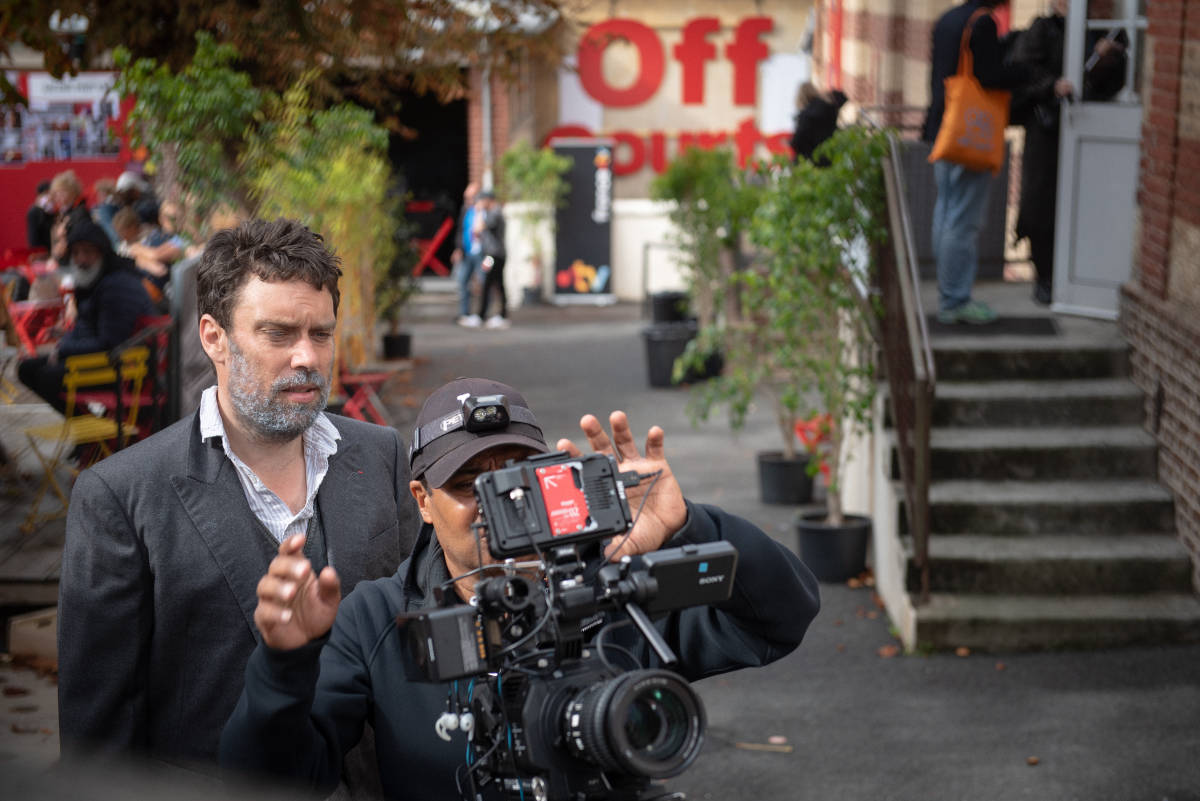
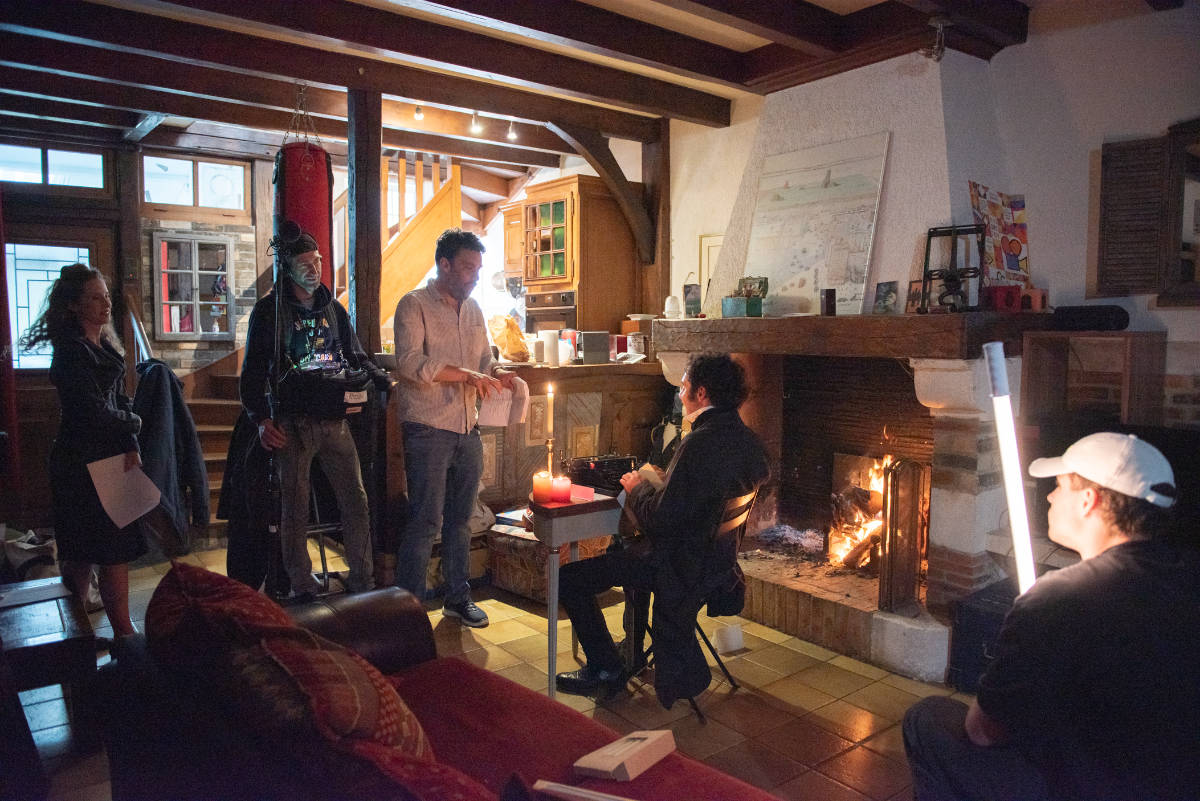
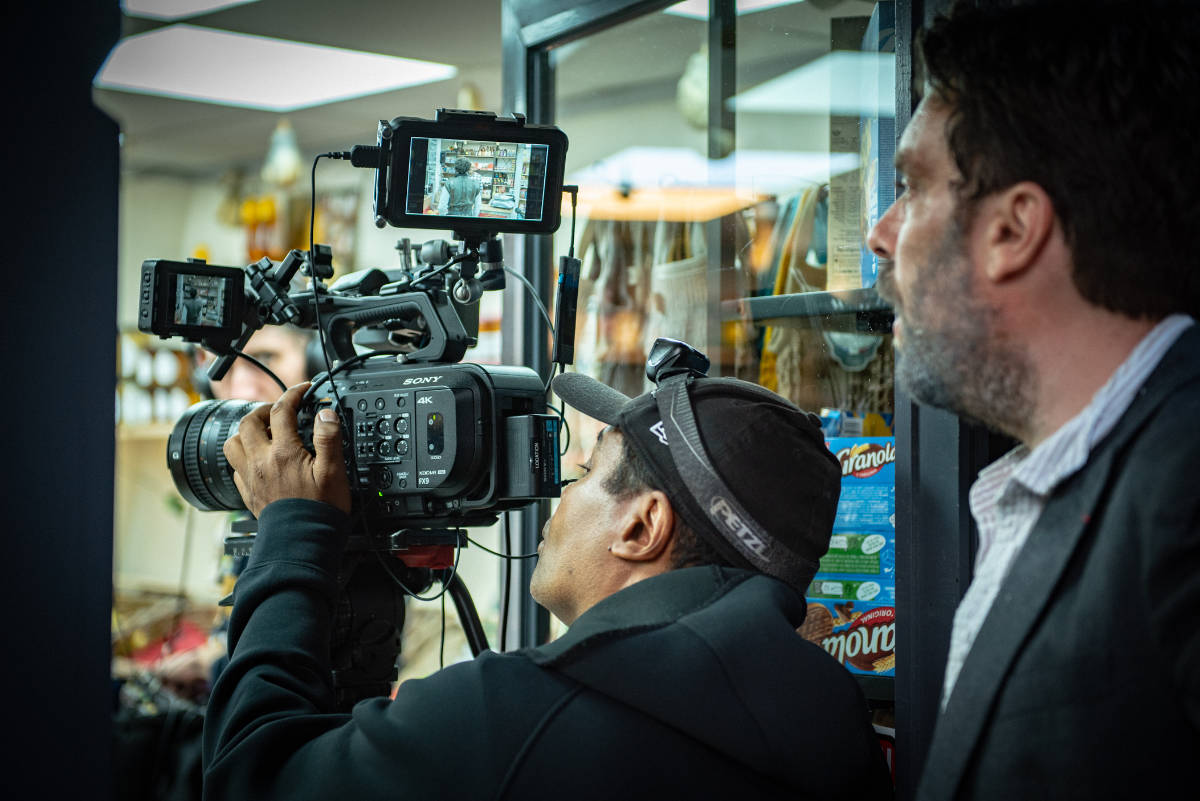
Thanks to Guillaume Cloux for these photos from the Migrul shoot.

Migrul - School festival shoot

When I make a film, I dress up as Spielberg. It inspires me. With Jean Ratsimbazafy, DP.

Migrul - Shoot at the house

Marianne Fisch (actor), Vincent Robidou (sound), Nicolas Boulenger (filmmaker), Léo Grange (actor) and Mathis Recondu (assistant) during the shoot at the house.

Migrul - Shoot at Ahmed's

Jean Ratsimbazafy (DP) and me watching Léo Grange (actor) and Ahmed (shopkeeper) on the screen.

Comment

New office

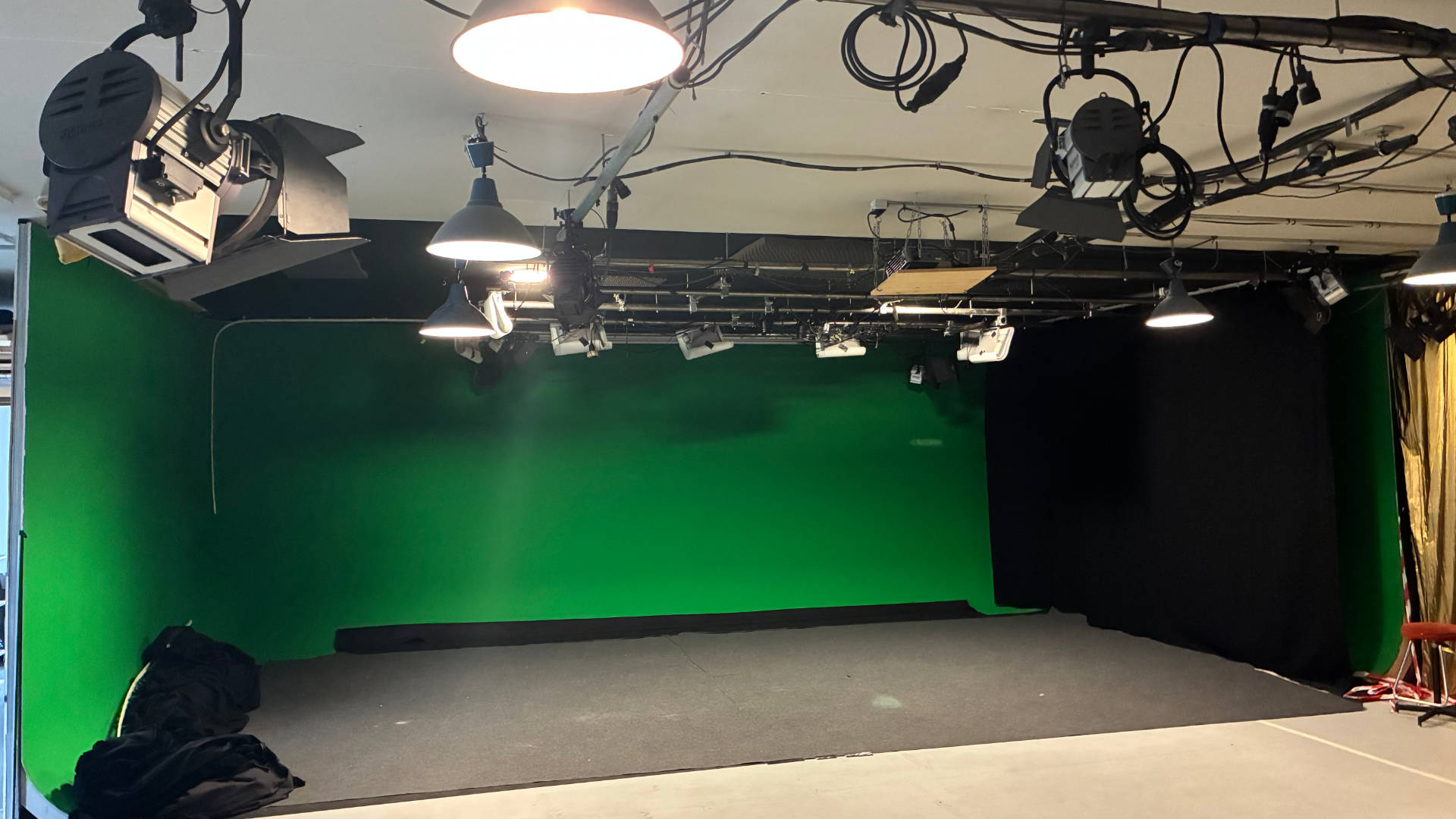
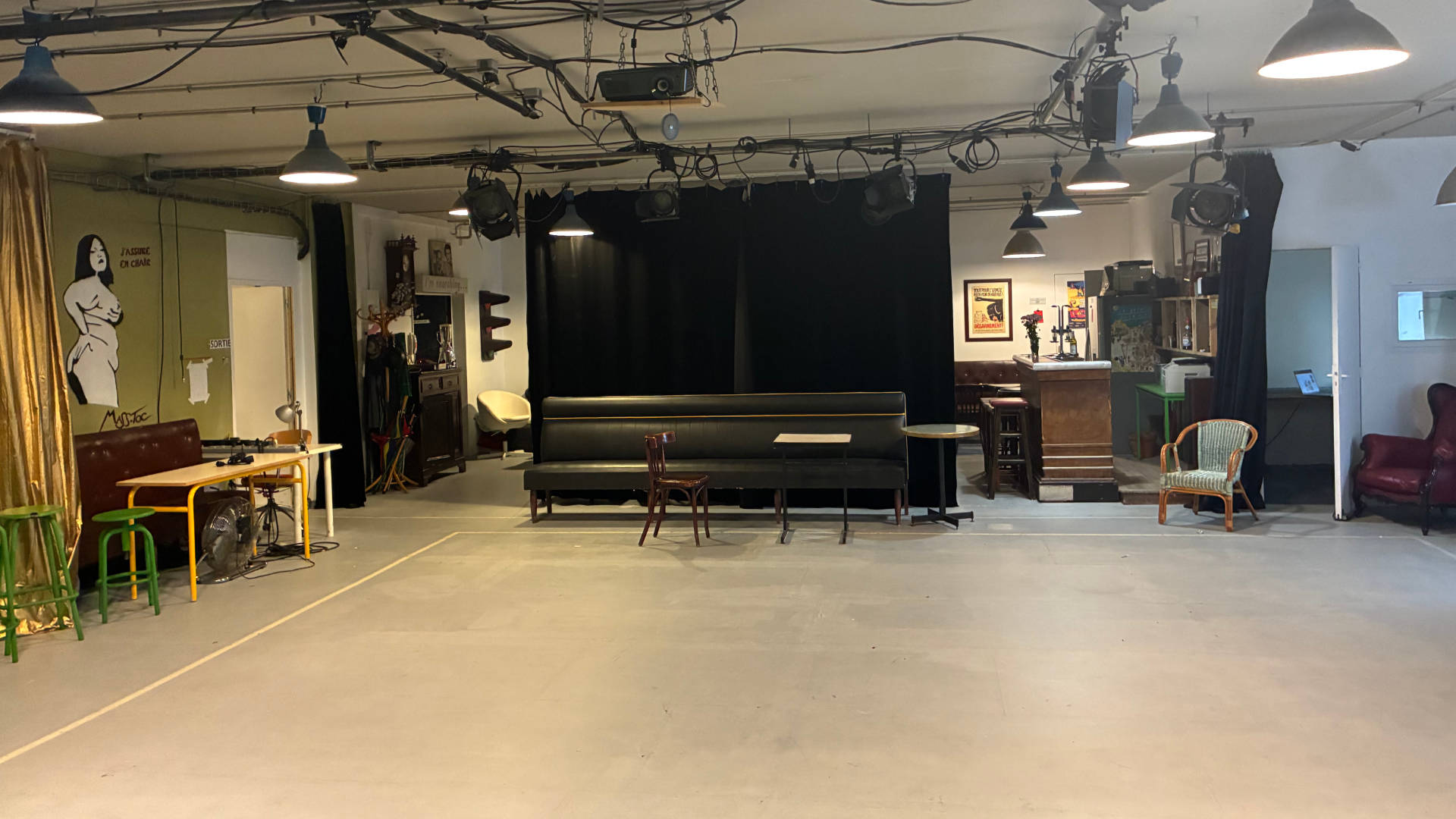
ChezFilms is moving into Télé Bocal's space in Belleville!

TV Bocal - set

TV Bocal - set from behind

Very happy with this new place. All the more so since I've also moved to a new pied-à-terre in Paris and I sleep close by. (I realized it this morning when I walked over and got here much, much earlier than planned.)

Comment

A Bit Depressed by the World

So today, to sum up:

  • The flotilla bringing food and water to people starving in Gaza has been stopped.
  • Trump tells his generals that the enemy within (roughly, the Democrats) will now have to be treated like a foreign enemy.
  • Jancovici explains that the mechanisms regulating the climate are passing points of no return faster than expected.

What makes me sad?

I think it's time to let go of the illusion that we lived in a society of progress where people of good will worked for the common good.

The age of abundant energy that is now ending has left us hooked on a comfort we no longer know how to live without. Now that the ground is shaking under our feet, we turn our anxious eyes to the most unhinged among us to save us.

The time of peace is over.

Comment

Not Even One Drink?

I'd stopped drinking. Almost.

It had tapered off on its own, and then, when I became aware that it runs in the family and how much room it took up in my social life – groups are built on addictions, I realized – I stopped almost completely.

I drink now and then. "For special occasions."

But I'm realizing that even then, it does nothing for me.

The strongest and funniest conversations I've had lately happened without a drop of alcohol.

And if you need to drink to enjoy the people around you, it's the people around you that need changing.

Comment

If You're Setting Up a Screening Room

If you're a company, a school or an organization setting up a small screening room, don't make this mistake I often see.

I've just come out of a test screening of my film in a corporate auditorium, and I saw the same problem there as in many other rooms:

The sound comes from two (or more) speakers placed on either side of the room.

People think this will give stereo sound "like at the movies." But that's forgetting that the main speakers in a movie theater are the "center" speakers: the ones placed right behind the screen, which make voices and dialogue come from the characters. Stereo speakers are a "bonus" – not necessarily present in the smallest theaters. (That's actually the principle of so-called "5.1" sound: the center and the stereo channels are separate.)

When you put speakers on both sides with no center, people on the right and left of the room get sound from only one side (the right ear or the left ear), which quickly gets exhausting. And it's disorienting to hear a voice coming from the side when the character you're watching is in front of you.

So when in doubt: start with the center. Good speakers placed at the front (under the screen, or on either side of it, but always at the front) will give the audience a much more even and pleasant result than stereo with no center.

And I have plenty of films to offer for your room's opening night :)

Comment

Ugh, whatever

That's what I think when I watch the latest videos I've posted. (I post a video a day on social media.)

I'm getting on my own nerves.

It's a good sign: when I can't stand what I'm doing anymore, it means I'm about to move up a level.

It already happened to me with photography: I couldn't stand my pictures anymore, and when I picked the camera back up after a break, I did something radically different. More personal. Better.

I'm already thinking of setting myself some rules:

  • One take. No more retakes.
  • No more intro or conclusion. Just the heart of it.
  • Never "say again" something I've already said – on camera or not.

We'll see how it goes.

Comment

A Project Down the Drain

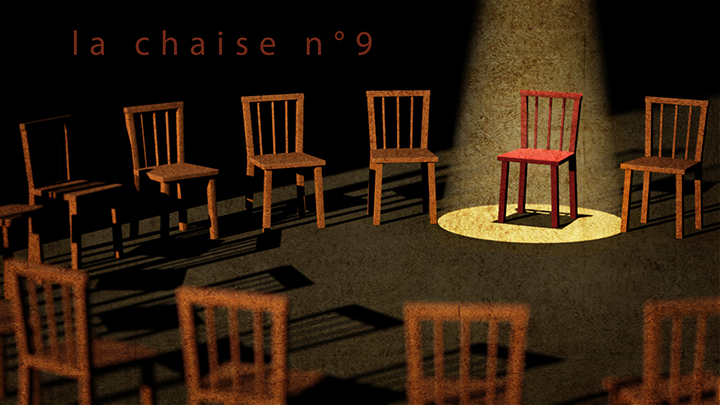
Still rummaging through old hard drives, I found this:

Chair number nine

It's the poster for a short film project that was supposed to be produced – we had France 2 and a co-producer – but it never materialized.

It was based on a true story (?) that I had read in Planète magazine:

In the 1970s, a group is seated in a circle in a community hall for a workshop. At the end of the session, two men enter; nobody is expecting them. They walk toward one of the participants to ask him "were you sitting in this chair?" The participant nods.

The two men then bring in a cart with a television and a VCR to show him a video. They are researchers and, a few weeks earlier, they filmed an interaction with a person in this very same room.

In the video: "Can you tell us something about one of the participants in the workshop that will take place here?" The person, who turns out to be a psychic, goes through all the empty chairs until stopping at one in particular. Voice-over: "The subject has indicated chair no. 9."

The psychic then begins to make revelations about the future occupant of the chair, which the participant in question follows on the television screen, stunned.

In my version, this was only the first layer of the story. The second layer was that the psychic's statements, while impossible to verify, sowed discord between the young woman (sitting in chair no. 9) and her father who was also present, ultimately forcing her to admit a truth she had always hidden.

Or how the false (or the undecidable) can have real consequences.

Down the drain. For now.

Comment

John McSpace - The horrors I uncover

Édouard Pons, who composed the music for Migrul, had brought up this old piece of silliness I shot in one afternoon at Off Courts five years ago.

I just found it on an old hard drive, and it's worse than I remembered.

<script src="https://player.vimeo.com/api/player.js"></script>

Then again, I think it's the ancestor of my web series Panic in Space, which is coming out soon. So maybe it was a necessary evil.

Comment

All in the Body

Yes, it's a very New Age idea.

But lately I've been realizing how true it is.

When you watch how the physical and the mental work together, you realize the body is a kind of notebook for thought.

Look at it this way: thoughts are extremely short-lived. They go by at full speed without leaving a trace. We think about tomorrow, lunch, the present for our mother, the toe that hurts... From association to association, we jump from one concept to the next with no real direction.

A string of brain farts.

But when the brain decides an idea is important, that it's worth coming back to, it makes a reminder. A kind of inner bookmark that forces the thought to resurface. To do that, it ties it to an emotion.

Because it's embodied, an emotion has a much longer half-life than a thought. The knot in the stomach, the grip of stress or anxiety, the adrenaline of fear or joy... All of it lasts several minutes, even several hours.

The emotion works like an anchor that holds the mental boat in the same area. As soon as we drift away, the body reminds us that something's wrong. And the thought comes back.

But sometimes it's the other way around.

When I started meditating a few years ago, I realized the anxiety I felt in the morning came from... my digestion. I had a knot in my stomach, and the first idea that came along would latch onto it. So the problem I was thinking about wasn't the real problem.

I stopped eating before bed, and the anxiety went away.

Comment

Taking Notes to Move Forward

I've taken notes all my life, and it's been almost no use to me. Until recently, because I changed my system.

First, to be clear: I've been using Obsidian for 3 or 4 years (after Apple Notes, Airtable, Notion...), and even though I love it – I'll come back to it – it isn't about the tool. It's about the process.

I used to hoard notes.

Like an obsessive with Diogenes syndrome, I was afraid of losing an idea, of letting the providential thought slip through my fingers. So I piled them up, and piled them up. And once they were in my vault, I did nothing with them.

Over time, I found technical ways to use my notes more – mostly by putting them in front of my eyes – but it wasn't enough.

What was missing? Pressure.

The most important part isn't writing a note: it's the work you do afterward to fold it into a body of knowledge you use every day. Putting pressure on a set of ideas so they fuse and form a diamond.

So now, this is how I do it:

  1. I write a note in a catch-all file (Inbox).
  2. Later, I move it into the relevant file (e.g. productivity, presence, creation, family...).
  3. In that file, I group related notes into large sections, each with a subheading and a summary.
  4. At the top of the file, I write (or maintain) an overall summary of two or three sentences that gives the essence of the subject, often in the form of a clear, concrete piece of advice.
  5. Rinse and repeat.

So the end goal is to produce that targeted advice, which I can apply right away and which I make sure to reread regularly. Having compiled it from several sources makes it personal and concrete.

That was one of the things I did this morning.

Comment

The Battle to Exist

I've noticed that the times I got angriest were when someone acted as if I didn't exist.

As if where I stood, there was no one.

The driver who nearly runs me over. The fellow passenger who plays their music as if they were alone. The colleague who completely disregards what I say.

I've noticed it in others too. The strongest emotions arise when we feel ignored.

So much so that much of what we do seems designed to prove that we exist.

Work, conversation, creation, social media... Everything seems unconsciously orchestrated to prove to the rest of the world that we're really here.

As if our deepest fear were being a ghost. The existential dread of being nothing but a specter that has to thrash about to be seen.

And when someone ignores us, it's as if they were exposing that emptiness. As if, with a gesture or a remark, they wiped out all the effort we put in every day just to be.

Comment

Small victories

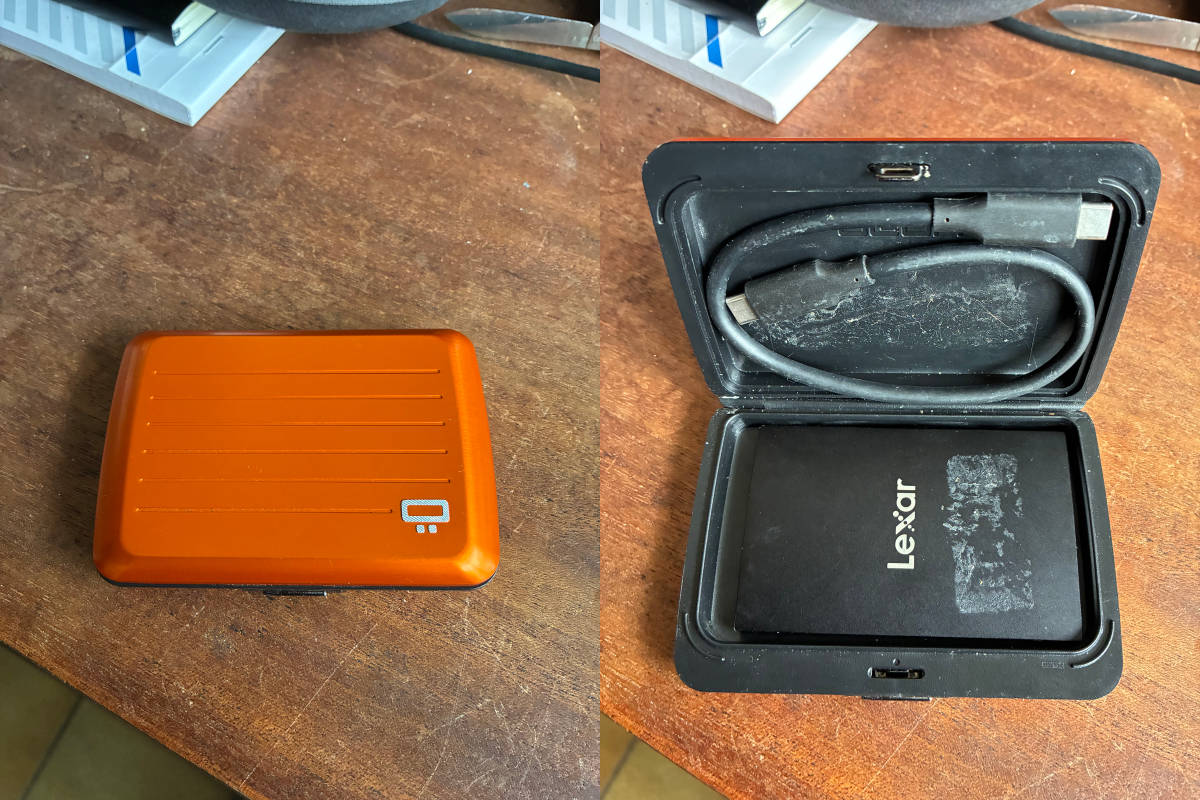
A year ago, I bought an SSD hard drive to edit my films anywhere. But it didn't come with a sturdy case. So I bought this card holder (which cost an arm and a leg) at a stationery store.

I couldn't check the size because it was full of plastic sleeves, which I tore out.

When I discovered that not only was it the perfect size, but the cable fit just right inside to stabilize the whole thing... small victory.

It goes everywhere with me now.

Hard drive holder

(No, that's not dirt inside, it's dried glue residue.)

Comment

Zen & Creation

I think the festival went so well, both in terms of the connections I made and my film, because I was fully available.

I decided I would continue meditating every morning, regardless of my schedule. I stuck to it.

I even meditated at noon the day before the shoot, when I was stuck on the prep. Result: the answers fell out of the sky.

I came with no idea, no script, no crew.

When something resisted, I let go.

When a rejection or an event stung, I noticed the emotion and did my best not to act reactively.

I listened to everyone, all the time. Without forcing it. I was happy to be there.

Every aspect of my film – ideas, locations, crew – came naturally, through chance encounters.

Neither the shoot nor the edit was easy. Yet I can't imagine how it could have gone better.

The difficulties and stress were part of the ideal path.

Comment

Zero Film Ideas

I'm going to shoot a kino (72-hour film) on Tuesday at the Off Courts Film Festival and I have no idea what I'm going to do.

This isn't bad news, quite the opposite.

When I show up butt naked and empty-handed, it means I'm confident.

Confident in the process. Confident that by meeting people, feeling the vibe, seeing the locations, something will come. Or not – and if not, too bad.

Right now, I'm listening to sounds on Ableton. Maybe I'll start with the music.

To be continued.

Comment

Death, death, death!

If we worried less, death would be the great liberator.

I'm not talking about suicide. I'm talking about how we see life.

A large part of the anxiety we accumulate comes from our tendency to take everything seriously. As if every action were important and serious.

Except that it all ends on an equal footing.

The billionaire and the homeless person, the beautiful and the ugly, the pleasure-seeker and the worrier, all end up the same way, and a few decades later no one remembers them. At best (or at worst), a few stories remain that have little to do with who they really were.

Everything matters less than we expected.

Nothing is as serious as we think.

The point was never to last.

Let's be free.

Comment

Dogs on the Beach

When I walk on the beach holding something in my hand, there's always a crazy (but happy) dog who runs up to me and asks with his eyes:

Hey, what've you got there?
Is it a ball?
Is it a treat?
Is it a rock?
Is it for me?
Ok bisou gotta go!

And off he goes. 🤷‍♂️

Comment

Seeing the System

Tabloid newspapers wouldn't exist if nobody bought them.

Fanatical TV hosts wouldn't stay on the air if they didn't represent anyone.

Corrupt politicians wouldn't rise to power if their rhetoric didn't resonate with a large portion of the population.

Getting angry at the figurehead means forgetting about the entire ship floating behind it – which wasn't built overnight.

Yes: it feels good to get angry, sometimes. And it's convenient to be able to focus your anger on the visible, obvious part of the problem. But by overlooking the underlying system, we only have a very partial understanding of the situation.

And we indirectly become part of the problem.

Comment

Typing Faster

I now type relatively fast, around 70-80 words per minute, with good accuracy.

For someone who spends all day writing, that's handy: I can almost "dump my thoughts" onto the screen without looking at my fingers or falling behind.

The best site I've found for practice: keybr.com. It introduces letters one by one and lets you practice with punctuation, capitals, etc.

My advice:

  • Set it to French with capitals and punctuation.
  • Don't try to go fast. The goal is accuracy. Stay above 95% accuracy with the right fingers.
  • Don't look at your fingers. When in doubt, slow down.
  • Ten to fifteen minutes a day.
  • For variety, you also have 10fastfingers and Monkeytype.

It's quite a zen activity that clears the mind when you need to step back (from a piece of writing, from work). I recommend it.

Comment

What do you do when you're doing nothing?

That's the million-dollar question.

For most of us, I can answer: we stress.

We think about what we should be doing. We accept a few hours or a few days of inactivity (what we call "rest"), but very quickly, if the inaction persists, guilt takes over.

Then we switch to "reactive" action: the kind whose sole motivation is to silence the guilt.

We act "for the sake of acting," to avoid being seen as a slacker, to dissolve anxiety through movement.

People often joke that "if they could, they would do nothing, always on vacation!" But that's not true. Most would be unable to face the anxiety created by this void and would be back at work within the week. Not out of financial need: out of internal and social pressure.

So we always skip the most important step: idleness. The real kind. The kind that allows for introspection.

Keep doing nothing. Embrace the anxiety and guilt that rise up. Look them in the eye. Then watch them quietly fade away. Followed by a gentle feeling of emptiness. Then, when you least expect it...

Action. The real kind. The kind that builds something.

Comment