Zero Film Ideas

I'm going to make a kino (72-hour film) on Tuesday at the Off Courts Film Festival and I have no idea what I'm going to do.

This isn't bad news—quite the opposite.

When I show up empty-handed, with nothing but my wits, it means I'm confident.

Confident in the process. Confident that by meeting people, feeling the vibe, seeing the locations, something will come. Or not—that's fine.

Right now, I'm listening to sounds on Ableton. Maybe I'll start with the music first.

We'll see.

Comment

Death, death, death!

If we worried less, it would be the great liberator.

I'm not talking about suicide. I'm talking about perception of life.

A large part of the anxiety we accumulate comes from our tendency to take everything seriously. As if every action were important and momentous.

Except that everything ends on equal footing.

The billionaire like the homeless person, the beautiful and the ugly, the pleasure-seeker and the worrier, all end up the same way and you only need to wait a few decades for no one to remember them anymore. At best (or at worst), what remains are stories that have little to do with who they actually were.

Everything is less important than expected.

Nothing is as serious as we think.

The point was never to last.

Be free.

Comment

Dogs on the Beach

When I walk on the beach holding something in my hand, there's always a crazy (but happy) dog who runs toward me and asks me with his eyes:

Hey, what's that?
Is it a ball?
Is it a treat?
Is it a rock?
Is it for me?
Never mind gotta go bye!

And off he goes. 🤷‍♂️

Comment

Seeing the System

Tabloid newspapers wouldn't exist if nobody bought them.

Fanatical TV hosts wouldn't stay on the air if they didn't represent anyone.

Corrupt politicians wouldn't rise to power if their rhetoric didn't resonate with a large portion of the population.

Getting angry at the figurehead means forgetting about the entire ship floating behind it – which didn't build itself by magic overnight.

Yes: it feels good to get angry, sometimes. And it's convenient to be able to focus your rage on the visible, obvious part of the problem. But by overlooking the underlying system, we only have a very partial understanding of the situation.

And we indirectly become part of the problem.

Comment

Typing Faster

I now type relatively fast, around 70-80 words per minute, with good accuracy.

For someone who spends their time writing, it's quite handy: I can almost "dump my thoughts" onto the screen without looking at my fingers or falling behind.

The best site I've found for practice: keybr.com. It introduces letters one by one and allows you to practice with punctuation, capitals, etc.

My advice:

  • Set it to French with capitals and punctuation.
  • Don't try to go fast. The goal is accuracy. Stay above 95% accuracy with the right fingers.
  • Don't look at your fingers. When in doubt, slow down.
  • Ten to fifteen minutes a day.
  • For variety, you also have 10fastfingers and Monkeytype.

It's quite a zen activity that clears the mind when you need to step back (from a text, from work...). I recommend it.

Comment

What do you do when you're doing nothing?

That's the million-dollar question.

For most of us, I can answer: we stress.

We think about what we should be doing. We accept a few hours or a few days of inactivity (what we call "rest"), but very quickly, if the inaction persists, guilt takes over.

We then trigger "reactive" action: the kind whose sole motivation is to silence the guilt.

We act "for the sake of acting," to avoid being seen as a slacker, to dissolve anxiety through movement.

People often joke that "if they could, they would do nothing, always on vacation!" But that's not true. Most would be unable to face the anxiety created by this void and would be back at work within the week.  Not out of financial need: out of internal and social pressure.

Thus, we always skip the most important step: idleness. The real kind. The kind that allows for introspection.

Keep doing nothing. Embrace the anxiety and guilt that rise up. Look them in the eye. Then watch them disappear quietly. Followed by a gentle sensation of emptiness. Then, when you least expect it...

Action. The real kind. The kind that builds something.

Comment

Time and Productivity

Strangely enough, it's easier for me to make one video per day than one video per week.

In the first case, I get into a flow that makes the process easier and easier. Ideas flow freely, my workflow is well-oiled, my brain has internalized the deadline. Everything clicks.

Today, for instance, I'm almost five videos ahead. And I did it effortlessly.

Whereas with weekly videos... I forget. It becomes just another constraint on top of everything else. I never find the time.

I'd already noticed this counterintuitive link between time and productivity: sometimes, a more intense task is easier.

For example, when I'm procrastinating on work that bores me, I ask myself "could I get this done in fifteen minutes?" I'm not talking about some tiny task—no, I mean writing a report or editing a video, something that would normally take several days.

But my brain says "yes, let's do it in fifteen minutes!" and this unrealistic idea changes my relationship with the task. It suddenly seems more manageable, less daunting.

And easier to start. That's all that matters.

Comment

What does it mean to "meditate"?

We picture a Buddhist monk sitting in lotus position in a quiet room with candles and running water.

In reality, you can meditate while walking through a construction site.

Meditation is simply bringing your attention to the present moment rather than to your thoughts.

Now, there's always something happening in the present. The sound of a car. The light from the sky. A breeze on your face. The sensation in your foot, in your torso, in your neck.

Like many people, I started meditating by focusing on my breathing.

We tell ourselves "easy"! But quickly, we realize we're bombarded with thoughts, ideas, anxieties. The game is to acknowledge their existence and greet them without letting ourselves be carried away.

And when a thought wins and we "wake up" after five minutes lost in our head, calmly return to breathing. This isn't a failure, quite the opposite.

It's this back-and-forth that builds presence, like a muscle we're working.

Comment

99% of a Machine

We work in one direction. We fail. We give up.

We tell ourselves "this wasn't meant for me, I'd be better off focusing on what I know how to do."

But some machines aren't resilient. A single missing part, wire, or gear, and nothing works. It won't even start, like a device with a blown fuse.

So it's possible to build 80, 90, or even 99% of a machine and, because of one oversight, get 0% of the result. Dead in the water, as if we'd done nothing (or done everything wrong).

It's true: the last few percent are often the hardest to achieve. And many systems aren't linear: they either work or they don't, regardless of how close you are to the result.

That's why there are far fewer "overnight" successes than we imagine. In reality, the creator has been working on it for a long time. They were about to give up. But at the last moment, they thought "what if I replaced this fuse?"

And the machine roared to life.

Comment

You Write Too Much

Three well-chosen words pack more punch than a page of fluff.

Who are you trying to reassure with all that text?

Simplify.

Comment

It's Warming Up on the Flowery Coast

You too can verify that climate warming isn't some big joke by looking near your home:

Côte Fleurie temperatures

Climate warming in Trouville-Deauville.

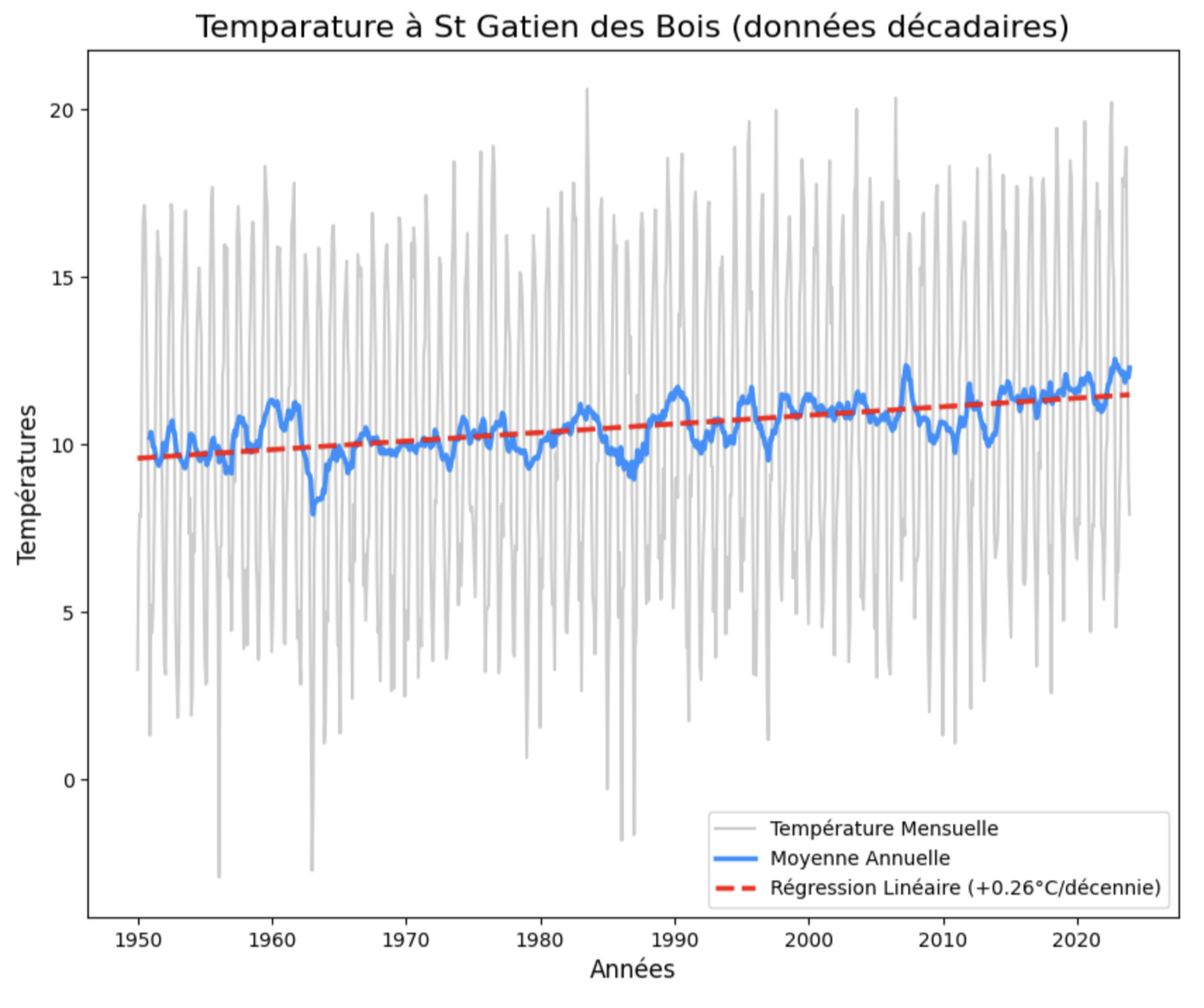
A chart I produced as an exercise to learn how to use the Pandas library (for data processing) in Python (a programming language) from Météo-France's ten-day temperature data at Saint-Arnoult.

You can clearly see the quarter-degree per century increase that climatologists tell us about.

I had already posted it on social media, but I'm taking advantage of being able to publish longer notes to share the code below. If you want to check in your area too, here's how:

The steps are as follows:

  1. If you don't have Python, install it.
  2. Use Pip to download the Pandas (data), Matplotlib (charts), Seaborn (even prettier charts) and Scipy libraries.
  3. Go download the ten-day data from Météo-France.
  4. The Python code:

    # Importing necessary libraries
    import pandas as pd
    import matplotlib.pyplot as plt
    import seaborn as sns
    from scipy.stats import linregress

    # Reading the CSV file of ten-day data
    csv_file = "DECADQ_14_previous-1950-2023.csv.gz"
    df = pd.read_csv(csv_file, sep=";")

    # Converting the date column to datetime format
    df['AAAAMM'] = pd.to_datetime(df['AAAAMM'], format='%Y%m')

    # Filtering data for Saint-Gatien-des-Bois station
    df_sg = df.loc[df['NOM_USUEL'] == 'ST GATIEN DES B', ['AAAAMM', 'TM']]

    # Calculating monthly average temperatures
    df_sg_mensuel = df_sg.groupby(df_sg['AAAAMM']).mean()
    df_sg_mensuel.head()

    # Calculating 12-month rolling average (annual average)
    df_sg_mensuel['TM_MEAN'] = df_sg_mensuel['TM'].rolling(window=12).mean()
    # Preparing data for linear regression
    x_numeric = (df_sg_mensuel.index - df_sg_mensuel.index[0]).days / 365.25
    y_values = df_sg_mensuel['TM']

    # Calculating linear regression to identify the trend
    slope, intercept, r_value, p_value, std_err = linregress(x_numeric, y_values)
    df_sg_mensuel['TM_TENDANCE'] = (slope * x_numeric) + intercept

    # Creating the chart
    plt.figure(figsize=(10, 8))

    # Plotting monthly temperature (in light gray)
    sns.lineplot(x=df_sg_mensuel.index, y=df_sg_mensuel['TM'], 
    label='Monthly Temperature', color="grey", alpha=0.4)

    # Plotting annual average (blue curve)
    sns.lineplot(x=df_sg_mensuel.index, y=df_sg_mensuel['TM_MEAN'], 
    label='Annual Average', color='dodgerblue', linewidth=2.5)

    # Plotting warming trend (red dashed line)
    sns.lineplot(x=df_sg_mensuel.index, y=df_sg_mensuel['TM_TENDANCE'], 
    label=f'Linear Regression (+{slope*10:.2f}°C/decade)', 
    color='red', linestyle='--', linewidth=2.5)

    # Customizing the chart
    plt.title('Temperature at St Gatien des Bois (ten-day data)', fontsize=16)
    plt.xlabel('Years', fontsize=12)
    plt.ylabel('Temperature (°C)', fontsize=12)
    plt.grid(False)
    plt.show()

After the nasty feedback from my climate video, it's good to double down on it.

Comment

Insult-o-meter

As promised, I'm looking at my video stats less.

But a good way to tell when a video is doing well is when I start getting nasty comments.

My latest little joke about heatwaves and climate has already earned me three insults. Which means the video has spread beyond my tight circle of thoughtful, well-behaved viewers to spill over into the crowds who watch Pascal Praud and Cyril Hanouna.

On social media, insults are a sign of success.

Comment

Thinking Is Not The Solution

The mind seeks, finds, and solves problems.

That's its nature. It's all it knows how to do.

If you ever find yourself at the summit of the mountain you've always coveted; the view, light, and temperature are perfect; it's the accomplishment of a lifetime. Your mind will whisper "Great... now what?"

It will find the flaw in your success. Make you covet the next peak that will be better. Already, you feel the anxiety of lack, dissatisfaction, desire.

You can't blame it: that's its nature, I tell you! Analyze the situation, find the flaws, devise a plan... That's its job! That's why it exists!

Which makes it a terrible foundation for finding peace.

Don't get me wrong: thinking is a wonderful tool—one I'm using right now to write these lines. We put it to work to create, communicate, survive.

But if your goal is to be present and at peace: it's absolutely not the right tool.

Do you know how to set it down when you no longer need it?

Comment

Two Ways to Solve Problems

When I have a problem, I have two ways to solve it:

  1. Intellectually: I look for a solution. I weigh the pros and cons, I make lists, I devise an action plan to implement in the future in order to calm the anxiety in the present.
  2. In presence: I look for the physical manifestation of this anxiety in my body. The knot in the stomach, the obsessive image, the vague obligation. Without chasing it away or holding onto it, I observe it transform until it disappears.

Problems are a function of who we are.

By changing our inner dispositions, we transform our relationship to external circumstances. The problem that seemed insurmountable the second before vanishes.

The intellectual solution, on the other hand, often only shifts the difficulty. Once the first situation is resolved, a second one arises, identical, because it springs from the same source.

That's the trap of thinking: it solves problems, sometimes. But nine times out of ten, it also creates them.

Which often makes it the wrong tool for growth.

Comment

The Accumulation Trap

If you catch yourself listing anything at all, you're probably heading down the wrong path.

I see it in every field:

  • In improv theater, we pile on jokes when we can't find the one that really lands.
  • In sales, we pile on benefits when we haven't found the killer argument that convinces everyone.
  • In interior design, we pile on trinkets when we haven't found the centerpiece that commands attention.

I could go on and on.

What puts an end to this flight forward? Stopping. Refocusing. Starting over from taste, from instinct.

All it takes is one strong idea, one genuine direction, one carefully chosen piece to stop the mediocrity machine and find your way back.

Just one. Take the time to find it.

Comment

Making Connections in Enemy Territory

Not a fan of cocktail parties / social events / meetups? Terrible at networking? Perfect.

Whether it's finding love, friends, or a collaborator, I now always apply the same technique that transformed my relationship with groups:

Start by talking to the first person next to you.

Right away. Whoever it is. About anything.

Don't scan the room for the ideal conversation partner. Don't filter by attraction or compatibility. Don't wait for a particular topic or common interests.

Dive into the conversation, then naturally continue with the "next first person" – if they haven't already joined the conversation. And so on.

Before you know it, the person you were looking for (sometimes unconsciously) will be right beside you. And you won't have to figure out what to say because, when you realize it's them, you'll already be in the middle of a conversation.

You're welcome.

Comment

Being yourself isn't a luxury

We often feel that to advance, especially professionally, we have to pretend. Say the right words. Put on the right smiles. Hide our true thoughts.

That's the wrong approach.

Your personal and professional success depends entirely on your ability to integrate who you really are into every aspect of your life.

It's the source of your inner peace. But also the source of your productivity, your value, and therefore your usefulness to others. No one will pay you very much for being just like everyone else.

The good news is that this can be learned. All the people you admire have at some point gone through these stages in one form or another:

  1. Discovering who you are on your own. Identifying what external gazes weigh on you. Exploring and embracing your vision, your taste, your ambitions.
  2. Learning to maintain this identity in public and under pressure. Developing strategies and safeguards to avoid conforming and preserve your value.

"Being yourself in a freakish environment, that's the real skill." – Conan O'Brien

Comment

What I Learned from Leading an Improv Workshop

This year, I led a weekly improv workshop that just had its first public performance.

People often tell me "I could never do that."

  • I'm afraid to go on stage
  • I'm not spontaneous enough
  • I'm not funny enough

But what became crystal clear to me this year is that improv has NOTHING to do with any of that.

You don't need to "be funny", or have witty comebacks.

To build an unscripted story that captivates an audience, you just need to follow three simple rules:

  1. Accept what your partner offers. Even if it's crazy or unexpected. If it's said, it's real. You start from there.
  2. Build on that offer. You can't ignore it or go in another direction. You add YOUR brick on top of the one that was just laid down. (That's the famous "YES, AND...")

I added a third rule, the most important one for me:

  1. Throw away the idea in your head. Before going on stage – or asking for a raise, or confronting a loved one – we often already know what we're going to say. We have a plan.

Next time, try this experiment: plan as much as you want, but at the last second, throw it all away. Enter the arena with an empty mind.

Three things will happen:

  • You'll no longer be "in your head," so you'll actually be listening.
  • You'll be surprised by your own reactions.
  • You'll feel more alive than usual.

Experiencing this spontaneity and presence in a "safe space" within a group built on trust and laughter is a chance I was lucky to have this year. I recommend it.

Comment

Big Dog

Grand Chien and Alan

Lynch is dead.
Trump is going to be president.
The world is changing.
My father died when I was five.
One day, in front of a shop window, he asked me to choose a stuffed animal.
I wanted the big gray dog.
"Don't you prefer the monkey?" – he'd had a monkey when he was young.
I said no, the dog.
So, the dog.
It's always stayed with me, almost by accident.
I never took special care of it.
It wasn't the first thing I packed when moving. I almost forgot about it.
But somehow, it followed me.
Like a dog.
And recently, I rearranged my room, and it's still there, sitting on a bench.
My room is almost empty, you see:
The bed, a few books, a wardrobe with not much in it.
And the dog.
When my son sleeps over, often in the morning, he comes into my room and shouts, "Big Dog!"
He picks it up in his arms.
He takes it to his room to play with his other stuffed animals.
After a while, I tell him, "Big Dog is tired; he needs to go back to bed."
He says okay and puts him back on the bench.
He puts a bandage on him "because his leg hurts."
He turns him the right way "so he can see."
It makes me smile every time.
But tonight, thinking about it all, I'm in tears.

Comment

How I Broke TikTok

In my New Year's resolutions, becoming a TikTok influencer was nowhere on the list.

To tell you the truth, three months ago, I put TikTok in the same category as Pokémon, Minecraft, and manga: things young people do that are probably great for them but not for me.

But now, I've become a (mini) TikTok star.

A short video I posted three days ago has reached ~~nearly~~ more than 200,000 views; my follower count has skyrocketed, and all my other videos are gaining traction. Things are also picking up on Instagram. Here's the video in question (YouTube version), which, honestly, had no reason to succeed:

Link to the video #notrain

If you recall, I mentioned in the previous post that I had started posting short videos again (what YouTube calls "shorts" and Instagram calls "reels"), originally to share "philosophical musings" on YouTube. The philosophy fell by the wayside, replaced by questionable humor. To make the effort worthwhile, I forced myself to post on Instagram and TikTok as well. Naturally, that's where it went viral.

It's another world. If I put my phone down for five minutes, I always come back to 99+ notifications: likes, comments, shares, new followers. It never stops, not even at night. And to my surprise, all the comments so far have been... incredibly funny. People get my humor and play along. Except on Instagram, where... things are a bit more complicated.

I talk about it here.

Initially, it was about quickly giving shape to ideas I have every day, ones I don't plan to do anything major with. Not everything is meant to become a proper "Film." So I shoot in under twenty minutes—usually while out on a walk—edit on my phone, and bam, I publish. There's also a desire to find an audience that shares my quirks, my sense of humor, and who will happily come to screenings when I release more ambitious films. Bypass the gatekeepers.

So I'm continuing to post videos. We'll see where it leads. For now, I'm happy to exchange little jokes with the people who found them funny while I take a break.

You can follow the videos I post on TikTok, Instagram, or YouTube.

UPDATE: I now have several videos that have gone viral, and I've become aware of a troubling phenomenon.

I roughly get three types of comments on my videos: 1) People who find them funny and build on the jokes, 2) those who don't understand it's humor and are more or less insulting, and 3)... bots.

I can't explain it any other way. When a video reaches a certain threshold (about 50k views), I see coordinated attacks of extremely alarmist and negative messages posted by highly suspicious accounts (no posts, no profile picture, or AI-generated videos). For example, when I joke about fog being "proof we're in a video game that hasn't finished rendering the background," I'm faced with an army of eerily similar anecdotes (same expressions, same wording), responding to one another, and leading to extremely dark conspiracy theories involving poisonings, illnesses, and fear of anything foreign.

I feel like I'm reading the seeds of the silly remarks I hear at certain dinners from people who say, "Do your research." But it's true that, en masse, these comments color everything and can leave a bitter taste.
Comment

I'm Back!

In 2022, I filmed a 10-minute improvisation video every day and posted it on YouTube. In 2025, I'm starting again!

Why color grading is useless.

Maybe not every day and not 10 minutes long: I'll create shorts between 1 to 3 minutes, quickly edit them on my phone, and upload them... everywhere! YouTube, Instagram, and TikTok. Pick your favorite platform!

At the same time, I'm creating a Notes section on this site where I'll add ideas, quotes, and sources that inspire me, linked to the video I've posted. This is something I've been doing on Obsidian for years, with over 2,000 notes. The key is that they're interconnected, allowing deeper exploration of a single topic.

Here's an example of a note/video pair about My Dinner with André by Louis Malle:

My life in one film with Louis Malle

But the corresponding note has disappeared.

Comment

Juste Nous Impro (Just Us Improv)

Since the start of fall, I've been trying something new:

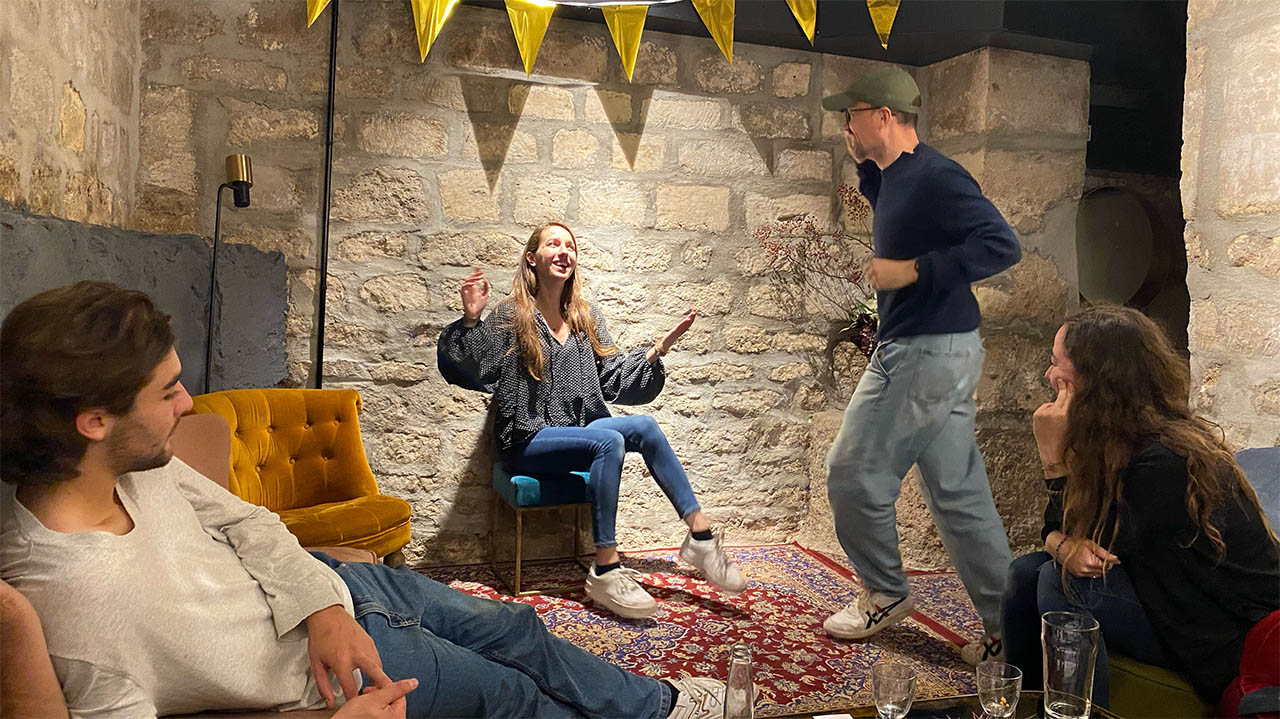
Every Monday evening, along with some improv friends, we invite anyone interested to join us in the basement of Barlone for an improv workshop. Then, once a month—one Monday out of four—we record sketches with a live audience in front of a green screen. Entry is free as long as you order a drink.

So far, we mostly have professionals (actors, directors), but everyone is welcome. We haven't fully nailed down the rules yet.

Juste Nous Impro

Improv session with Nino, Noémie, Stéphane, Constance and, behind the camera, Antoine and Nicolas.

What we're aiming for is a new way to create fiction, where performance—not writing—is at the heart of the process. We invent, build, and rehearse on the spot, without going through the script stage.

First filming session tonight. Theme: "The Catastrophe." Nothing is ready. I'll let you know how it goes.

Thanks to Barlone for hosting us with genuine warmth, as they do with all their events. And thanks to Cynthia Pedrosa for the illustration.

If you're interested in the adventure or want to join in, check out more info on our Facebook and Instagram pages.

Comment

Between Two Doors

The method we're taught in school is bogus.

While you're busy researching and working on the fundamentals to avoid mistakes or rash actions (and not getting a bad grade because "you didn't work hard enough"), the sly ones have already taken action to grab everything up for grabs.

These folks understand that the jury doesn't deliberate after the closing argument: decisions are already made in the hallways, in the antechambers, between two doors, driven by those who didn't stay home to calmly ponder the problem.

Besides, what's the point of thinking? When the world boils down to "me against the others," there's no subtlety left to consider. You can just act.

Thomas Piketty explains this well in a paragraph from Capital in the Twenty-First Century:

Sure, there is a simple economic principle to balance the process: the law of supply and demand. If a good is in short supply and its price is too high, then demand for that good must decrease, which will help stabilize the market. In other words, if real estate and oil prices rise, just move to the countryside or ride a bike (or both). But aside from the fact that this can be unpleasant or complicated, such an adjustment can take several decades, during which the owners of the buildings and oil can accumulate so many claims against the rest of the population that they will end up permanently owning everything worth owning, including the countryside and the bikes.

I think the consequences of this idea are clearly seen in the testimony of Jean-Baptiste Rivoire, former deputy director of Special Investigation, who recounts how Vincent Bolloré worked to strip Canal+ of real journalism (French only):

Jean-Baptiste Rivoire before the investigative commission regarding Vincent Bolloré's editorial influence over Canal+

It's a note I remember writing in my notebook a long time ago: "It's not the deserving who rise to the top." Or, as Keynes said:

"Capitalism is the extraordinary belief that the nastiest of men for the nastiest of motives will somehow work together for the benefit of all."


John Maynard Keynes

UPDATE: Another example from the New York Times. The lead Google has amassed by abusing its monopoly can't be caught up by its competitors, despite the recent ruling against it.

Comment

Wow, A Talking Fish!

A.I. didn't invent anything new!

If you have 7 minutes, I recommend watching this Armenian animated short film from 1983. Starting at 1:30, you'll see that the psychedelic transformations of the demon Ekh closely resemble the current nightmare-inducing deep dreams of A.I.:

Moral of the story: always be kind to talking animals.

Comment

The Mermaids from Dieppe

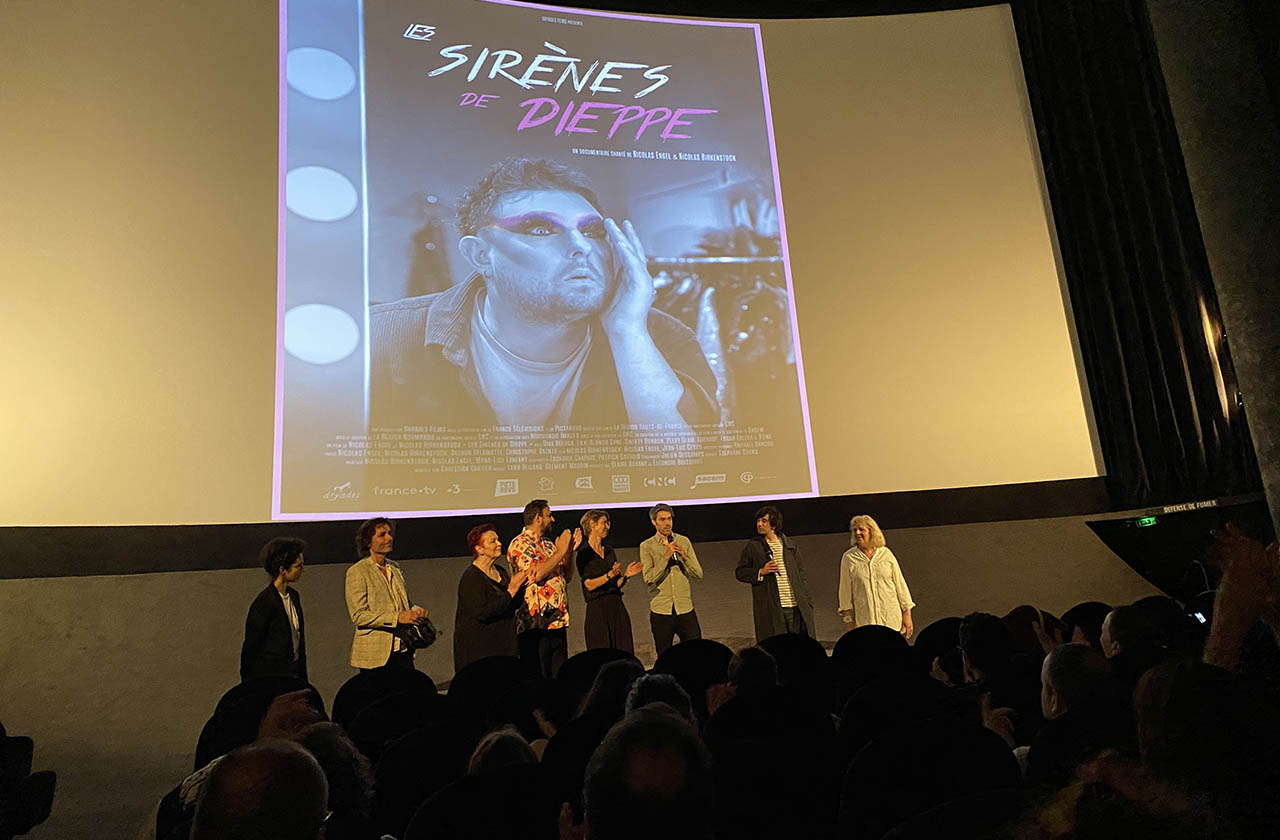
What a pleasure it was to attend the premiere of the documentary Les Sirènes de Dieppe at the Max Linder yesterday morning! An hour in the company of the drag performers from La Sirène à Barbe (The Beardy Mermaid Cabaret): the backstage, the camaraderie, the financial struggles, the fight against intolerance, and a bit of musical comedy. A truly well-made film.

Les Sirènes de Dieppe

From left to right: Claire Babany (producer), Raphaël Bancou (composer), Fabienne Thibeault (patron), Diva Beluga (performer and owner), Lily (performer), Nicolas Birkenstock and Nicolas Engel (directors), and I can't remember the rest.

My composer friend Raphaël Bancou —whom I reconnected with after 10 years at this event— composed the music. More on him soon.

If you're interested, the film by the two Nicolas (Birkenstock and Engel) will be available on replay starting September 19th on France TV. Don't miss it. And if you're in Dieppe, go see them live!

Comment

Son of My Father

I'm belatedly exploring the works of Giorgio Moroder, aka Giorgio, who seems to have influenced every electronic artist on the planet. Recently, I've been listening to this 1972 track on repeat:

The simplicity, the repetition, the crescendo. That's all it takes.

Comment

Valence Screenwriters Festival

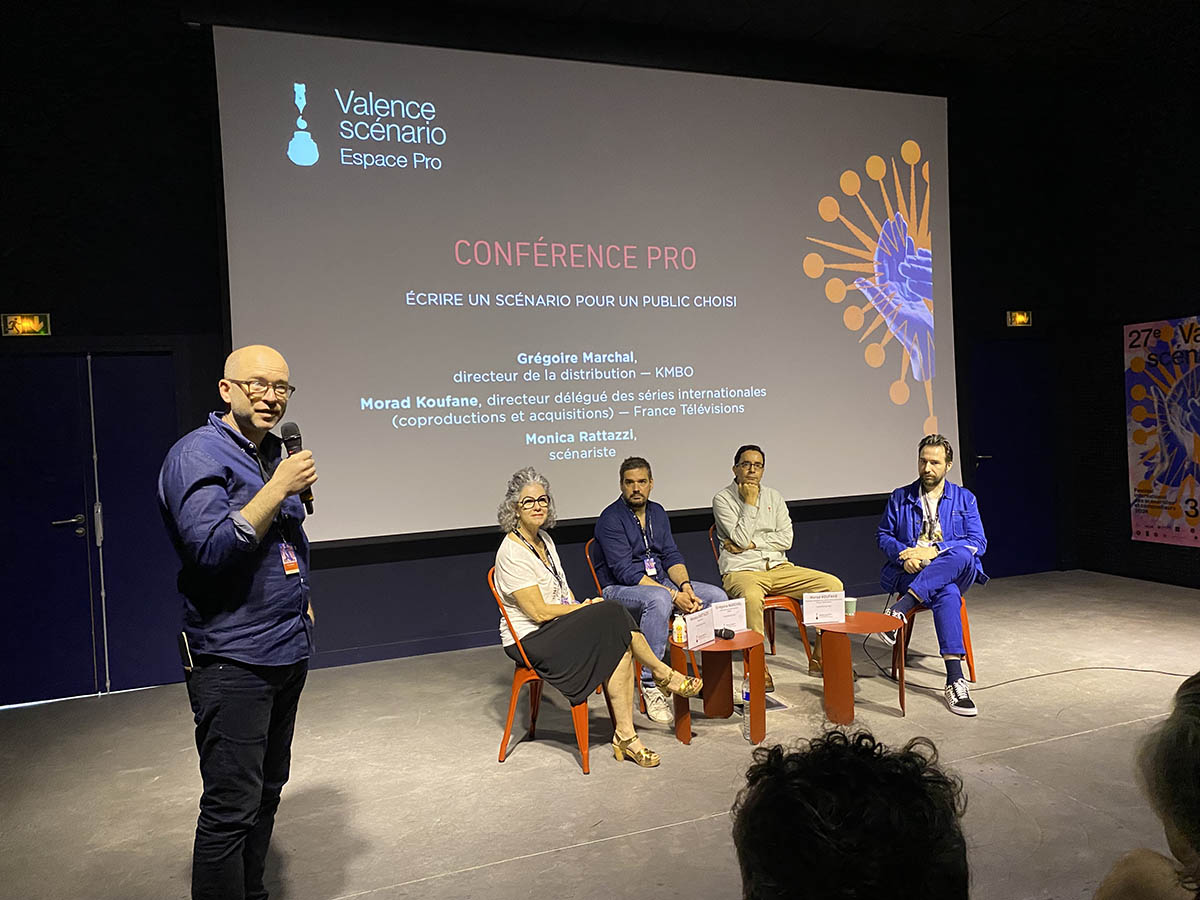
I registered after the deadline, so I couldn't schedule my meetings as well as I would have liked. Despite that, I caught up with friends, met some very nice people, attended some truly enlightening conferences, and had a few drinks—it's been a while.

Valence screenwriters festival

This festival is very well organized for networking—with pre-arranged meetings and an app for connecting. And Valence—I forget this every time—but it's quite nice.

Comment

Holy shit, what a rush!

If you had asked me the day before yesterday, I would have told you I'm not really into concerts.

The music is too loud. There's too much commotion. It's too long.

But that was before my buddy Jackie Berroyer (who, let's not forget, was a music columnist for Hara-Kiri) invited me to see Fat White Family last night at La Cigale. Never heard of them. I wasn't expecting much. "You'll see, they're pretty good, you might like them," he said.

OK, now I get why people love concerts.

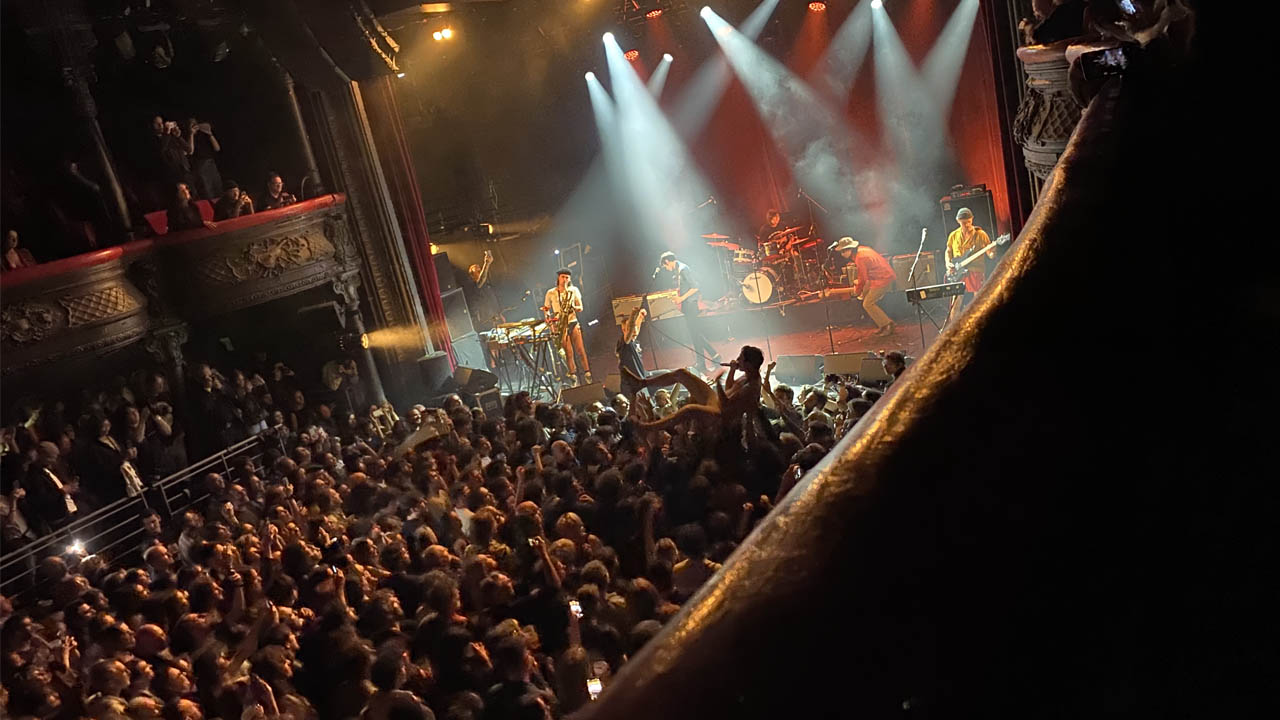
Fat White Family - La Cigale concert

Incredible experience. Yes, the music was wild, hard-hitting rock with a sense of progression and some unexpected instruments (flute, baritone sax). Then there's the lead singer, Lias Saoudi. He's in shorts. By the second song, he's down in the pit singing in the middle of the crowd—setting the tone. For the rest of the concert, he sings (sometimes screams, but always in tune) balanced on amps, in a fetal position on the edge of the stage, or crowd-surfing.

From above, the pit pulses. It's a collective experience. But you can tell it's all masterfully controlled by a seasoned band: you catch the subtle, precise gestures the band members direct to the technicians; behind the wild personas are professionals who have crafted a structured and generous show. And the space of La Cigale, where you can move around freely, offers the freedom and intimacy to truly enjoy the experience.

I can see how people who've experienced this once can become concert junkies, chasing that initial high. And why some old-timers endlessly reminisce about a show they saw in their youth: "Oh, you know, when I saw that band back in '76..."

"A concert like that, you remember it for the rest of your life," Jackie told me as we walked out.  Yup, probably.

Comment

"Be Yourslef, No Matter What They Say"

If Sting repeats it three times in his song, it must be important.

It seems crucial to me, but also extremely difficult. All the authors (and people) I admire have, at some point, found "their" voice, their way of being, their vision of the world; while others continue to "imitate" by poorly copying their idols. Note: I think this is an essential stage. Admiring is being moved. Wanting to "be like" someone is recognizing something sublime in them that you wish you had; it shows a sensitivity that marks the beginning of everything. But to reach the next level and be considered an "author," "artist," or whatever, the second step is not optional: you have to find that quality within yourself. Develop your own tools. Shape your character from your inner material.

The main obstacles are always the same, it seems to me: fear and ignorance.

Fear of not being interesting enough. Fear of not being cool, strong, intelligent, or tormented like those we envy. Fear of not having the right past, the right life, the right look, the right mind. Fear that it's too early or too late.

Layered over all this: a coating of ignorance. Ignorance that these fears are natural, shared, collective. That they are often the driving force behind the talent and careers of those we admire. That, regardless of success, they will never leave us and are, when harnessed, an intimate and inexhaustible source of creation.

"What they criticize you for, cultivate it; it's you." – Jean Cocteau

Comment