I'm a Victim of This Song

Originally the soundtrack to a video installation by Pipilotti Rist, it's a cover of Wicked Game. Despite (or thanks to) its strangeness, I find myself listening to it regularly:

"I'm a Victim of This Song," music and recording of the installation.

It starts off normally, then it goes off the rails. Just like my projects.

Comment

Why Write a Journal?

For me, keeping a journal comes down to a single activity: describing the obstacle.

What's blocking me now? What's stopping me from being free, happy and creative right away? What hidden snag is getting in the way of the next step?

Two things matter:

First, it's only about describing. Not finding a solution. Not trying to fix myself. I dig up the obstacle and look at it from every angle. I trace where it reaches inside me. I ask myself why it bothers me now, and in this particular way. And that's it. Once the problem is out in the light, I let other forces inside me take care of solving it.

Second, it's an immediate obstacle. Something that's keeping me from moving forward right now. I'm not trying to settle the situation forever. So the effort is neither theoretical nor intellectual. I deal only with what's in front of me, assuming the next difficulties will be handled the same way: in the present, when they come up – if they come up. We'll deal with the future when it gets here.

That's why the journal has been part of my daily routine for almost 3 years, and why it's an essential exercise for staying present.

Comment

Poetry in the Cellar

Another surprise culture night (SCN):

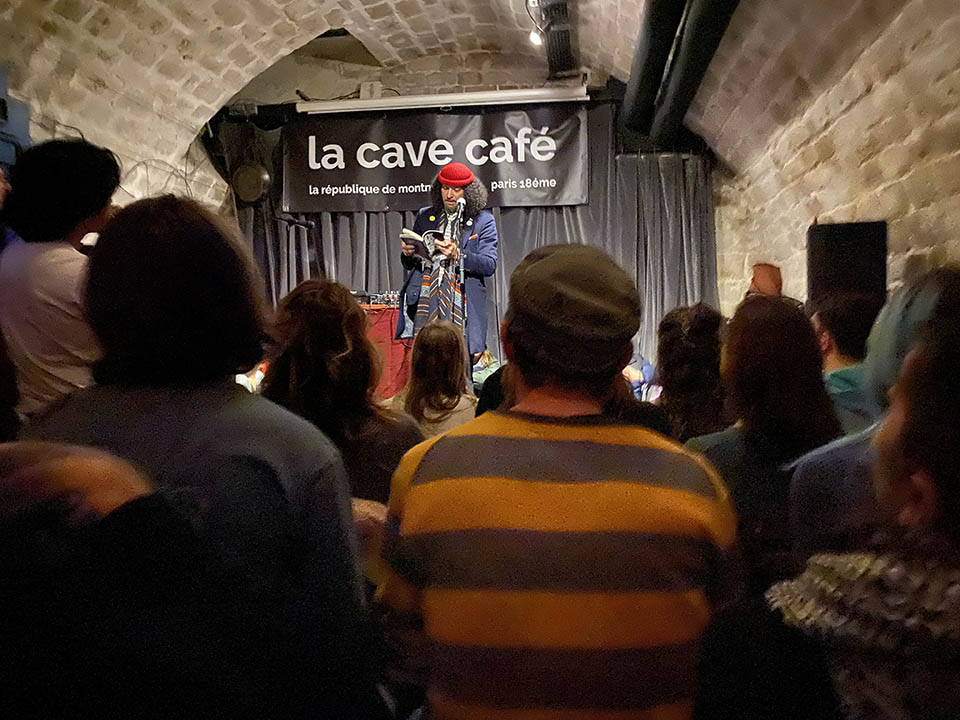
I found out that the café I go to regularly, called "La Cave" ("The Cellar"), has... a cellar. Where people read poetry on Monday nights. Lots of people, mostly English speakers. Poems, songs, stand-up, "anything goes." Great atmosphere.

I got on stage to recite this short poem by François de Cornière in French and English (translated by ChatGPT) because you have to start somewhere.

Then came the special guest of the evening: Bonafide Rojas, a poet from the Bronx who came to read excerpts from his book Excelsior. So funny. So charismatic. They call it poetry, but it's very personal trains of thought bursting out on stage.

Bonafide Rojas - Cave Café

Bonafide Rojas reading excerpts from his book "Excelsior".

He signed his book for me. I've only skimmed it so far, but here's what I like: every poem is loaded with notes explaining the cultural references. In case you're not a hip poet from the New York scene yourself. Smart.

Comment

Palais de Tokyo

I don't go there often, but every time I do, I come out transformed.

I never read the blurbs: the author, the artistic approach, the family traumas that led them to make ceramics on cows, I couldn't care less. I switch off my brain.

And every time, I'm overflowing with gratitude to live in a country where, for €9 (SACD author rate, €11 otherwise), you can feel so much freedom in a public place where human beings are welcome. At a time when train stations have more billboards than benches, that's no small thing.

Three things I liked – among many others:

1. No need for an audience

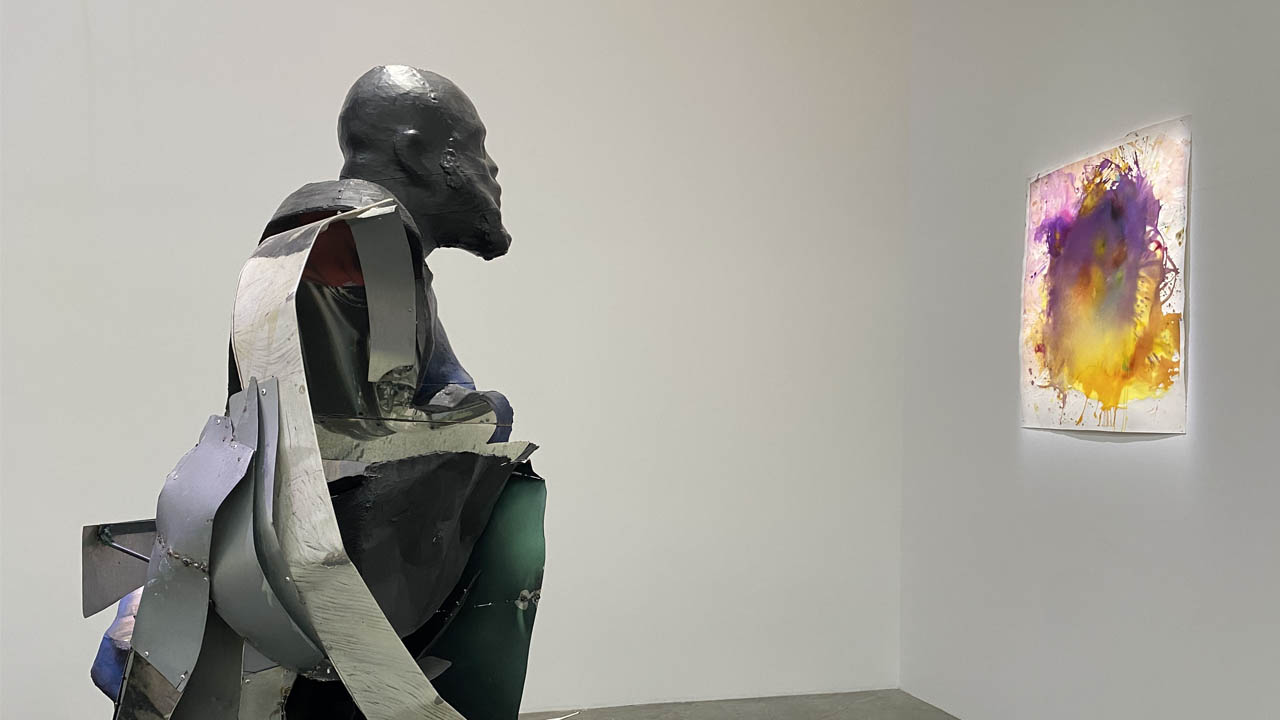
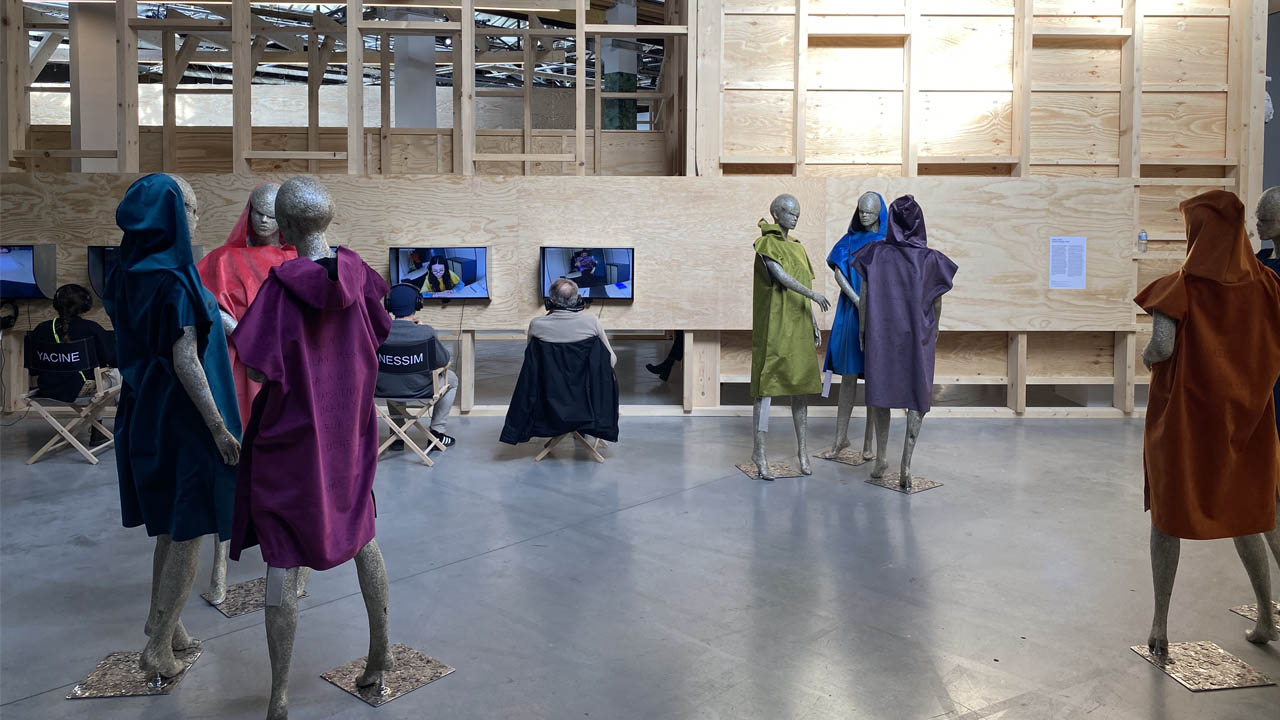
The statues look at the artworks while the mannequins discuss the exhibition. Makes you wonder what the audience is for.

Palais de Tokyo - Lenin

Lenin contemplates the painting that will inspire Sovietism.

Palais de Tokyo - Mannequins

Mannequins in ponchos discussing the relevance of modern art.

2. It's meta

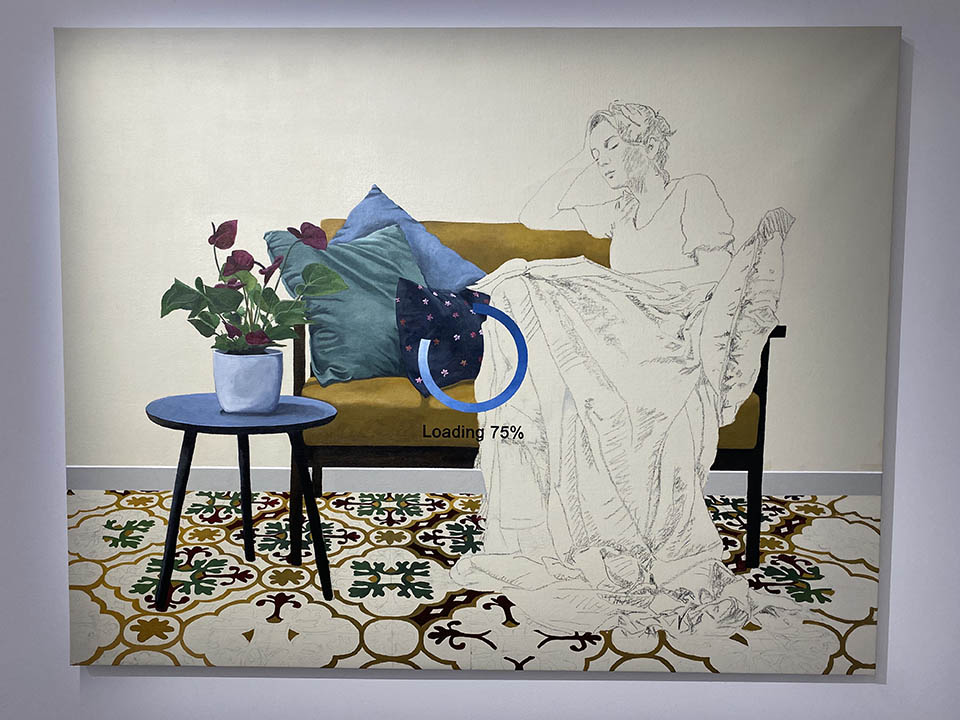
There's always some thinking about the medium. You don't just paint on paper, you think about the limits of paper, how it relates to ink, how it relates to the viewer. And every time, you think: "Wait, you're allowed to do that?"

Palais de Tokyo - loading painting

Painting Loading, by May Murad.

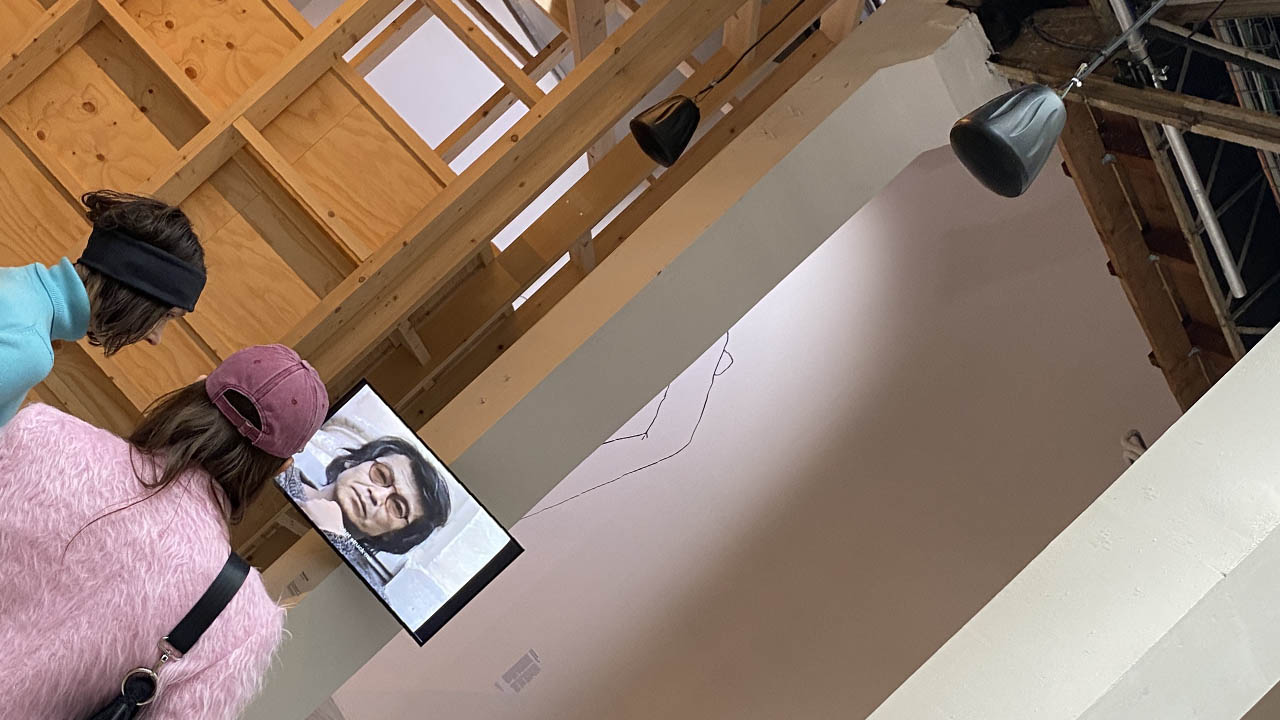
Palais de Tokyo - video showers

I've dubbed it "video showers": the speaker only sprays sound on the people underneath, so you can have several films in the same space.

3. The bookstore

Every time, I pick a book at random by looking at the pictures or reading a paragraph in the middle. Over ten years ago, I picked up "On the Inside of Jokes" by Nik Christiansen.

This year, I picked up "The Waterfront Journals" by David Wojnarowicz – apparently, he's quite well-known. I'm halfway through. This book blows my mind.

An afternoon... and everything changes.

Comment

Natural Blues

I liked the original and – once again – nobody thought to tell me about this new version, which you all know by heart and which I only discovered this afternoon:

I took the chance to read the lyrics, which I'd never understood, and which are a bit reminiscent of Nobody Knows while keeping an almost childlike simplicity, especially:

Went down the hill, the other day
Soul got happy and stayed all day

My eyes well up every time I hear that part.

UPDATE: I made a film with rockets flying backwards too. And we won an award.

Comment

Thank You, Science

I was about to write an exciting article about the psychological component of effort based on my experience with the rowing machine at the gym: some days, it's a breeze; other days, on the same machine set at the same level, it feels like it weighs a ton.

Of course, I was going to explore in detail the psychological, neurological, and physiological origins of this discrepancy, and everyone would have found my article funny, well-researched, and so well-written.

Except that this morning, I figured out what was really going on.

When I lay my towel on the roller, the fabric prevents the moving air from escaping, and the suction maintains the rotation – or something like that – so that the exercise becomes much, much easier. But as soon as I put my towel somewhere else... Welcome to the Roman galleys.

All of this to say that the laws of physics have spared you another stupid article.

Thank you, science.

Comment

Contre-Temps

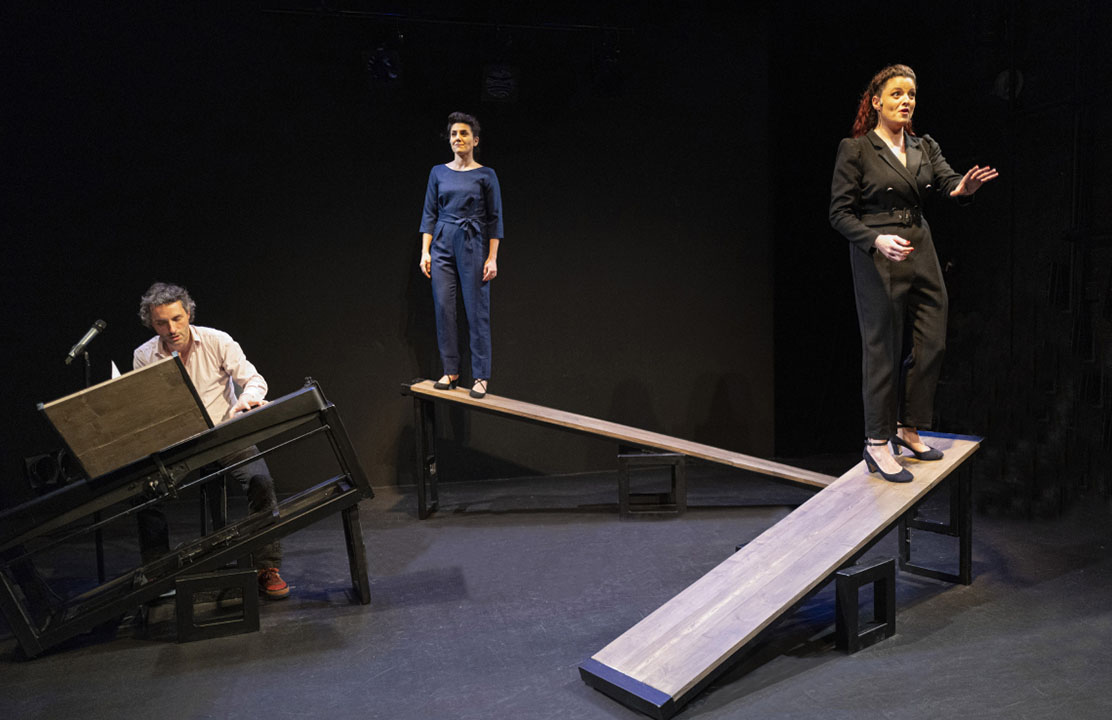
Another surprise trip to the theater last night, where I saw "Contre-Temps" by Samuel Sené. Fantastic!

Contre-Temps at the Franciscaines

Julien Mouchel (piano), Marion Préïté, and Marion Rybaka in "Contre-Temps".

Like a documentary but on stage: instead of archival footage and a voice-over, everything is narrated in the present by two singers and a pianist who recount the – exhilarating – life of the composer François Courdot by performing his main works.

At the heart of the show, there's a magnificent rendition of Purcell's "Cold Song". Here's Klaus Nomi's version again:

On the way out, I looked into this piece: everyone knows the melody, but often not the lyrics – which could come straight out of Game of Thrones:

What power art thou, who from below
Hast made me rise unwillingly and slow
From beds of everlasting snow?
See'st thou not how stiff and wondrous old
Far unfit to bear the bitter cold,
I can scarcely move or draw my breath?
Let me, let me freeze again to death.

Another amusing detail: I realized that the music for the show had been arranged by Raphaël Bancou, a pianist friend I hadn't seen in ten years. I sent him a message, and I'm going to see him on Tuesday at the Rond Point in "Je suis Gréco." Life, sometimes.

Comment

My New Approach to Social Networks

It might sound like a New Year's resolution, but it's not at all. It's the culmination of a rebellion I've been brewing for a while.

Last year, quietly and without fanfare, I (almost) abandoned Facebook, LinkedIn, Twitter, and the like. My problems with social networks were many:

  • You don't choose/know who sees what, or when,
  • No control over the site's appearance or layout,
  • Everything can change overnight without warning,
  • The content they push doesn't interest me,
  • I hate ads,
  • People end up producing content "for the algorithm",
  • It enriches companies I don't admire,
  • I'm tired of the reflex to check my phone.

Meanwhile, I'd created this blog.

My idea was simple: I would post here everything I posted elsewhere. On a site I manage, whose appearance I choose, that isn't controlled by a third party or an algorithm. And that doesn't enrich anyone (except my web host – and even then, not by much).

Of course, in doing so, I lost some advantages:

No more likes. No more shares. And, honestly: no more visitors.

This last point should have been a dealbreaker – after all, we publish to be read – but strangely, I kept going. For a year, I posted content on a blog that almost no one came to see.

Then something unexpected happened.

As the months went by, what I posted changed. My articles got longer, closer to what really matters to me. I started doing photography again, writing dialogue, publishing drawings, creating more.

I also began to improve the site – appearance, navigation, features – so that it quickly became a "home." A place where I feel good. That inspires me the way a studio inspires an artist.

But most importantly, despite the lack of visitors, each publication brought me more satisfaction. Oddly, I enjoyed creating for no one more than for the elusive, shapeless audience of social networks.

A year on, I'd say I've learned three things from this experience.

First, personally, I realized that the shelf where I put my pottery matters more than I thought. I need places to put what I make – even the little things – otherwise the creative process stalls upstream.

Second, you create for yourself first.

Rather than a clumsy explanation from me: I recently came across two videos of artists I admire who put it much better – and with more authority – than me:

"Never play for the gallery. Never work for other people."

David Bowie, in this video.

"The audience comes last. And I believe that. I don't do it for them; I do it for myself."

Legendary producer Rick Rubin, in this short.

(Not forgetting this video I've already mentioned: Create or Be Consumed.)

Finally, of course, you still have to share. Otherwise, it's just masturbation.

That's why I've recently started posting on social networks again. With one important difference: now, creating and sharing are separate.

Everything first goes on my shelf. Which imposes no rules, puts no pressure, plays no games. It's an engine that asks a single question: "Do I really like it?"

Only then do I put it in the window.

Comment

The Face of Love

During this holiday season, a song that celebrates love. (Not the possessive, syrupy love of American romantic comedies, but the pure and immediate love of Eastern wisdom.)

As a teenager, I had missed out on Pearl Jam, and I didn't know much about Eddie Vedder except that my musician friends idolized him. Then, I discovered the soundtrack of Into the Wild), especially No Ceiling and Society. Then I realized he was also behind the soundtrack of the wonderful Dead Man Walking).

So recently, I've been revisiting this song:

A blend of country and traditional chants that I would have loved to see live. The cry at the end should be enough to trigger a spiritual awakening when it hits you head-on.

Comment

Death by the Pros

For English speakers, three articles I read years apart, about death as described by healthcare professionals. I've already mentioned the first two, but after reading the third, I thought a little roundup was worth it.

Kicking things off, in 2011: "How Doctors Die" or how doctors at the end of life tend to avoid the aggressive treatment they've seen far too often in their patients.

The second, which I recently found among Scott Alexander's wonderful essays, dates from 2013: "Who By Very Slow Decay" or how medical staff lose their illusions in palliative care.

Finally, the last one, published very recently in the New York Times – if you only read one, I recommend this one: "A Hospice Nurse on Embracing the Grace of Dying". A hospice nurse describes her work and her patients' last moments in a book, "The In-Between: Unforgettable Encounters During Life's Final Moments." The stories and analogies she shares in the article are deeply moving.

The point isn't to depress you. Quite the opposite: the truth sets you free. A sharp awareness of our own finitude is the first antidote to a life lulled by illusions.

Comment

Nuit des Ponts: 51300€ pour le Film!

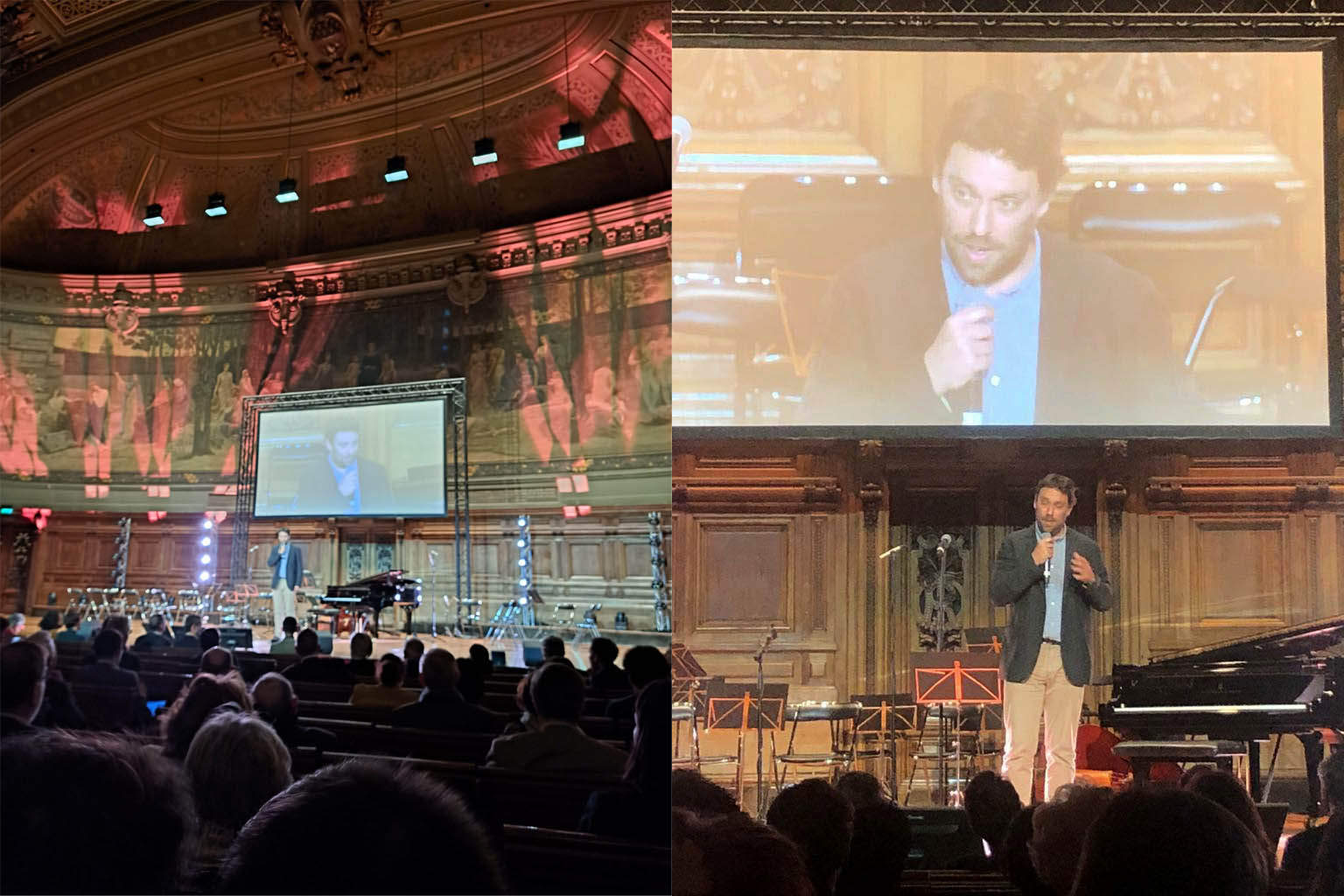
During the "Nuit des Ponts" organized for the 25th anniversary of the Fondation des Ponts, 7 projects were pitched at a special fundraiser in the Grand Amphitheater of the Sorbonne.

I was the last on stage, asking for money for the post-production of To Build, the feature-length documentary I'm producing and directing with ChezFilms for the École des Ponts.

Nuit des Ponts - Nicolas

On the right: a magical photo where my eyes are closed on stage but open on the screen.

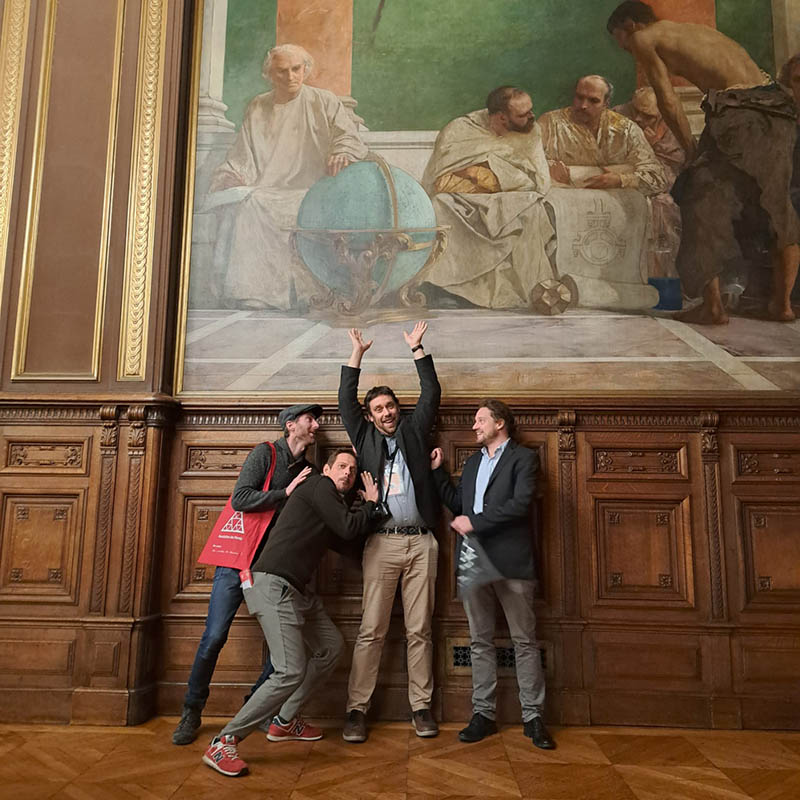
Happy to announce that, thanks to the generosity of donors, we secured over €50k for the post-production of our film. Thanks also to the sound team, who came to support me:

Nuit des Ponts - Sound team

Vincent (sound), Dom (mixer), me, Mathieu (sound) hard at work. Photo Cristina.

Premiere coming soon. I'll keep you posted.

Comment

AI: What Alignment Problem?

I find it quietly hilarious.

A lot of commentators seem very worried about the "AI alignment" problem, namely: if we ever reach the famous "A.G.I.", or Artificial General Intelligence – one that could solve all kinds of problems better than we can, including ones it was never trained for – how do we make sure it would use its intellect in the service of values we share?

The example people use most is toothpicks.

Say we ask it to "maximize toothpick production" at a factory. Who knows whether this intelligence, in its computer urge to carry out an order that means nothing to it (it doesn't have teeth, does it?), might not set off a mechanism as diabolical as it is irreversible, ending, before our stunned eyes and despite all our attempts to stop it (remember: it's much, much smarter than we are), with every forest on the planet razed and the whole population enslaved to make the little sticks we asked for.

After all, it knows nothing about the human values that matter to us: freedom, dignity, sharing, etc.

Anyway, that's the argument.

Remind you of anything?

I'd like to point out that money started out as a simple accounting tool, meant to make trade easier. Then, over the decades, maximizing profit for shareholders became the excuse to colonize continents, start wars, impoverish the masses and destroy the planet.

So an artificial intelligence that started doing the same thing faster would in fact be perfectly aligned with our current values.

The only real misalignment would be if the A.G.I. answered: "What the hell are you going to do with all these toothpicks? Wouldn't you rather go play in the park with your kids?"

Needless to say, that version would be reprogrammed the same day.

UPDATE: It inspired this script.

Comment

Pick the Fruit When it's Ripe

I don't choose what I write.

One morning, I realize my dramedy script has stalled. The new scenes are labored, predictable. Even the fixes I make here and there don't seem to go in the right direction. It's all going to crap.

Meanwhile, without even looking: three ideas for a comedy.

Everyone knows writing (creating in general?) is 10% inspiration and 90% work. So if you wait for the divine spark to get going, you'll never do anything. Sometimes you have to push yourself a little. Get the machine running and see what comes out. Right?...

I'm less and less sure.

Of course, the writing process itself – the work it takes to get the idea down on paper, to revise, to reread, etc. – can hardly be shortened. I'd even say it tends to get longer with experience. In many ways, what makes a professional, a craftsman, is knowing how long their work takes. Unlike me with music, for example, getting offended that I can't crap out a track in an hour like the musicians I follow on YouTube. (The word "crap" isn't chosen at random, as we'll see.)

But when it comes to pure creation, the mental process of making new ideas, of pulling them out of nowhere, my theory is that the time it takes, like the quality of the ideas themselves, varies exponentially with the circumstances.

The line you come up with in one go as you walk out of a meeting where you got pushed around a bit, say, which you build on with a comeback you didn't dare say in the room, then a whole exchange that could have happened, until you've invented an entire scene that could go in a courtroom drama or a crime film: you could never write the same thing the following week, sitting at your computer. Not with the same energy, the same wit.

Same with the nonsense your brain can't seem to stop producing after an improv session with other creators sharing the same old joyful silliness: none of it would come easily on a Tuesday morning at the office.

And finally: the nostalgia that colors everything after a painful breakup, the sadness of the world, the shittiness of things, you never express it better than at rock bottom.

The best comparison I have for this idea involves toilets and number two – here we go. Not out of a love of vulgarity (though used well, it rarely bothers me) but because I couldn't find anything clearer or more universal:

Picture an office worker whose job is to produce... shit. Literally. He's paid to deliver one quality turd a day, so he's not allowed any blessed laxatives, which would contaminate his sample.

His day can go two ways:

  1. Walk into the bathroom at 9 a.m. – to show he's serious, disciplined – and then for hours... Push. Push. Breathe out, rub his belly, rock his hips and thighs. Sweat. Not dare to come out for fear of being taken for a slacker. Feel the panic rise: "Am I doing it wrong? Maybe I'm not committed enough? Not motivated enough? Not focused enough? What if I never shit again? Am I a dilettante, a fraud, a loser? Have I wasted my life?"

Or:

  1. Spend the day at the park with his kids and his dog. When the urge comes, go to the bathroom, do his business, wash his hands and poof: workday over!

Put that way, everyone agrees.

And yet, how often do we try to force things instead of letting nature take its course and picking the fruit when it's ripe? Count them over a day. It's often much, much more than we think. When the job itself isn't built on constantly violating the natural timing of the world.

That said, it depends. I made progress on my novel by writing very regularly every morning for long stretches. So it can be done. But usually, those writing sessions only serve to arrange, into nice compositions, the fruit already picked up by chance along the way. And nothing says it'll be a quality turd in the end.

UPDATE 1: The sociologist Niklas Luhmann, not exactly known as a slacker, says it better than I do:

"I only do what is easy. I only write when I immediately know how to do it. If I falter for a moment, I put the matter aside and do something else."
- Niklas Luhmann

UPDATE 2: Since we're on the subject of toilets and creation, go watch this (very) short film I just put back online, which is about exactly that. One of my first films.

Comment

Edmond and a Flea in her Ear

Lately, I've been going back to the theater.

Yeah, I don't know what's gotten into me: must be the start of a depression.

I've seen some fantastic stuff – including I Wish I Were Jeff Bezos which is currently playing, go check it out!

And then I saw... Edmond.

It's the hugely successful play by this wildly successful playwright who only produces hits. Honestly, I was thrilled at the idea of sharing the love for a popular show with the rest of France. I was going to laugh, be moved, then join the conversations in cafés shouting "I saw it too!!" and we'd reminisce about the best moments, laughing together. I might even have made some new friends.

And then... flop.

That said, it's always tricky to speak ill of a play that so many people have loved. To keep it measured, I'll just say this:

This play is garbage and everyone who liked it is an idiot.

Oh well, no new friends for me.

To keep it brief: I found the writing labored, the humor lowbrow, relying on overdone accents and heavy-handed jokes. It's yet another remake of "Shakespeare in Love" except the connections between the author's life and his work are artificial and anecdotal – a clumsy device that serves as an excuse for cheap twists.

All of this is performed by actors – all very talented, I'm sure – who rotate from show to show in what has become industrial theater.

On the "plus" side: yes, the staging is dynamic, very cinematic, the scenes flowing like in a film, with music that sounds like a soundtrack. Cinema recreated on stage. Why not.

Then I went to see A Flea in Her Ear at the Comédie-Française.

The play is long – over two hours – but a real delight. You can feel a company that has had time to work every scene, every exchange, every line to get the most comic effect out of it – that's what public theater is for, after all. You're surprised by unexpected shifts, gestures, sometimes even stunts that emphasize and invigorate the text, making it lively, accessible, and modern.

And the venue. I had forgotten how beautiful it is.

Okay, maybe I'm being a bit mean to Edmond. It's still well-constructed, well-directed, and visually pleasing. It's a show. If you go with friends, you'll probably have a good evening. And above all, when you leave, don't forget to delete my number.

Comment

What Shines in the Future

A small touch of the blues on the highway.

For no reason. Nothing hurting. No new abyss in my life. Nothing that should worry me more than usual.

Then I understood: nothing exciting was waiting for me in Paris. Not when I arrived, not that evening, not in the week ahead. Not an unpleasant week coming up – not at all – but nothing I was looking forward to.

Which made me realize two things.

The first: my happiness depends almost entirely on anticipating happiness to come.

Something has to be shining in my future.

Either a small spark in my immediate future: a pastry, a meeting, a distraction. Or a big sun in my distant future: the success of a long-term project, a life change, the promise of a brighter tomorrow.

Strangely, the actual size of the star doesn't matter, only its apparent size. If it's small, it has to be close – I want it now. If it's far away, it has to be big – worth the wait. So its diameter, seen from the present, always stays roughly the same: I need a certain amount of brightness on the horizon.

This way of seeing things helps explain certain behaviors, I think.

People with no long-term prospects, for example, those who have lost faith in the future (who have no distant sun), often make up for it with a multitude of short-term sparks. That's the first step toward addiction: wallowing in immediate pleasures to forget the lack of an overall direction.

Conversely, it's easier to keep up a discipline day after day when you're aiming for a dazzling light on the horizon. The reward shining in the distance makes the daily sacrifices easier to bear.

And that was exactly it: in the car, nothing was shining. And I felt... weary. Listless. Almost depressed. That was the second realization:

What if this is my baseline? My emotional resting state?

Is the state I call "depressed" actually my "everything's fine" state, which I misread because I depend too much on the future?

Have I become like an addict too obsessed with his next fix to notice the sources of joy right in front of him? Do I really need a reward on the horizon to enjoy the moment? Is it possible that I've organized my life (and for how long?) so that I'm always waiting for something, even if I have to make it up? Even if it means spoiling what's here and now? Have fantasies of what's coming dulled my palate to the subtler emotions within reach?

But above all: can I recalibrate my brain to be less hypnotized by the future and the junk it keeps dangling in front of me?

(Answer: yes, very easily. Bisou.)

Comment

Sophie Le Cam: It's Good, Dig In!

I used to joke that only my mom read this blog.

Recently, I got proof that not even she does.

So when I promote an artist here, it's not like it does much good or brings in the crowds. But still: this is a kind of journal. I write down what I like.

And Sophie Le Cam's concert – like her previous one – I liked a lot. A lot.

I love this new period of my life where I go see shows by people I know, and I think it's wonderful. It was funny, gentle, lively, sincere, with an offbeat edge that adds personality without swallowing the emotion. And a few hits.

The music videos are great too – but if you have the choice, go see her live.

And her website is here.

Comment

Smells Like Teen Spirit de Patti Smith

Of course, you've been listening to this on repeat for years, while I, foolishly, have been doing nothing but listening to the original – which is very good too, don't get me wrong.

But this version has something... charming. And rebellious at the same time.

I would so love to make a music video for a song like this. Actually, I'd love to make music videos again, period. Adding it to my to-do list.

Comment

Presence and Action

I'm coming to think that only presence matters. That there is, ultimately, no right or wrong action, no right or wrong decision: only good or bad reasons to act.

But what does it mean, exactly, to "be in the present"?

Physically, of course, we can't be anywhere else. No one has yet set foot in the past or the future. So technically, we're all "in the present." But we can be in the present without being "in the flow" of the present.

Being in the flow of the present means taking in what happens at each moment and letting it change us.

When all goes well, events, sensations, and thoughts arise, run their course, then disappear. This short cycle keeps us constantly open to what comes here and now. We can take in the next ray of sunshine, the next idea, or the next conversation because we haven't stayed stuck on the previous one. Everything keeps renewing itself in interaction with the context.

Yet often, we get stuck.

We "cling" to an idea, a thought, or an anxiety that we keep replaying, consciously or not. This vortex fills all the mental space: the rays of sunshine and the next conversations are shut out. The present keeps unfolding but we no longer take it into account; we no longer let what comes change us. We are "stuck" at the point in the past where the thought we keep feeding was formed.

Buddhists call this an attachment.

I'm "attached" to mental content the way a boat would be tied to the shore. The result is the same: I'm no longer carried by the current.

A few examples of attachment. One: I need to get to a certain place for a certain reason. The trip is just an unimportant transition between me and my goal. Anything that delays me is an obstacle. I'm too attached to the destination to be open to what's happening. Two: I've decided to say a certain thing to a certain person. The conversation is just a hoop to jump through to get the reaction I want. I'm too attached to the outcome of the exchange to be open to the human being in front of me. Three: I've decided that a certain event has to go a certain way. Any deviation from my predictions is a failure. I'm too attached to my vision to be open to what's actually happening – including the good surprises.

In each case, I put the idea ahead of reality; I'm too attached to my mental construction to take in – and so deal with and make the most of – what actually happens.

Now, I'm coming to think that nothing is more important than being in this flow of the present. It's probably more important than the action itself.

By that, I mean it's impossible to judge the quality of an action without real presence. If I'm stuck in a mental space that isn't being updated, all the indicators I look at to make my decisions are out of date. I'm reacting to a picture of the world built in the past rather than the one unfolding in front of me.

Conversely, when I'm in the flow, there's no decision left to make. The gesture, like a reflex, adapts to the situation. There's no longer a right or wrong decision. Only action.

So my role is not to think through what should be done, nor to look for the perfect solution. It doesn't exist. My role is to gently untie, one by one, each attachment I come across. Then let the current do the rest.

UPDATE: If you have doubts, here's a nice confirmation by Francis Sanzaro in this New York Times article.

Comment

I'm Conducting an Experiment

You probably don't know this, but for over a year (or a little under a year, I haven't done the math), I've been keeping a journal.

Every morning, and often several more times during the day, I dump words onto the page with no literary ambition whatsoever. My goal: to figure out what state I'm in. To untangle the anxieties hanging over me. To "describe the obstacle," as I often put it: instead of staying stuck or putting things off, I try to describe what's blocking me in the flattest, most detached terms I can. And often, that gets me unstuck.

Now, when I reread my journal – which isn't often – I find it's... how can I put this... not unpleasant to read. In any case, less awful than you'd imagine. Less rambling and less painfully personal than you'd think. It's... readable. Sometimes even, to my great surprise, fairly interesting. With realizations, ideas, and as much humor as in what I write for other people.

I tell myself everything should be this easy.

All the more so since I recently read this post about writing 1,000 words a day. A challenge the author set himself, which had a huge impact on his life, personal and professional alike. And there I was thinking, "But... I already do that!!!" Except I don't publish it, obviously.

And today I'm thinking: fuck it. It's probably a good exercise.

First, there's that idea of learning in public ("working with the garage door open," as they say in the United States): not waiting until the product is finished or the learning is complete to share what you're doing. Otherwise, you never share anything. Austin Kleon talks about it a lot in Show Your Work.

Second, it makes what I write more immediate, more intimate, and more personal. Because, you see, the reason I never run out of things to say in my journal is that I'm writing to explore concrete problems involving my favorite character: me. Everything is serious, everything is urgent, since these are the problems I'm trying to solve right now. I can't find the same energy and flow on a subject that doesn't feel as pressing to me, however interesting it may be in itself. And I think that urgency is somewhat contagious.

Finally, it's the same approach I took with the improvised videos last year. Remember? A ten-minute video every day, come rain or shine. The goal was to shed the weight of technique and be more spontaneous. It's a similar spontaneity I'd like to reach in my writing.

So I wrote this post start to finish in about ten minutes, without correcting, without rereading, without overthinking it. I'll do one editing pass – just one – to remove a few repetitions and a swear word or two. And that's it.

I'm not saying it's amazing. But it's there.

UPDATE: OK, I did two editing passes. That's progress, still.

Comment

Truth par Alex Ebert - It Relaxes Me

Swamped before the V1 screening of the Ponts film in early September. But between two editing sessions, I stumbled on this track – yes, I know you've heard it already, you know everything.

It starts like a Western that's ending. Then it keeps going.

See you soon, once I've come up for air.

Comment

The Profane and The Sacred

First, let's be clear: I'm not the least bit religious.

I may have been baptized, taken first communion and been confirmed, but I dropped it all around the age of twelve, and the years have only hardened my rejection of all organized religion.

When people ask, I say I'm agnostic and atheist – which may sound contradictory. Agnostic because I haven't been around the universe, and there may well be something out there, for all I know. A meaning, an equation, a metaphysics that we might choose to personify and call God. Why not. But deep down, I think we can't know, and we might as well not worry about it – which is the strong version of agnosticism. But – and this is my atheist side – even if there is something up there, I'm convinced it has nothing to do with what religions, past or present, have been trying to sell us for centuries. To me, the Bible, the Torah, the Quran and the rest are bad fiction used to keep people under control.

That's where we're starting from.

And yet, over the past few years, I've found a certain spirituality in myself.

For me, spirituality would be a connection with something bigger than yourself – not necessarily a god.

It could be a connection with nature, for example.

I mean nature in the broad sense: the great whole that has existed since the big bang, probably before, that gave birth to galaxies, stars, planets, which in turn allowed life to emerge in all its forms: bacteria, plants, animals. This gigantic, ever-changing soup that, through laws we're only beginning to understand, is the source of everything we know. That some parts of this whole develop a consciousness of their own and can experience themselves and the world, that all this physical, chemical and biological complexity gives rise to an experience as simple as "I am", which lets each of us live out our life without having to understand the gears underneath, I find there's magic in that. A mystery, at the very least. Beauty, without a doubt.

But above all: this little bit of spirituality is enough to draw a line between the profane and the sacred.

The profane view of the world would see nothing here but a heap of matter and physical laws to be seized and cashed in on. No mystery anywhere, no questions, no wonder, and so nothing to respect. Only resources to exploit. Living things would then be just one more fuel for our idea of comfort and progress.

The opposite view, which Bernard Stiegler defends so well in a video I came across recently, also brings me back to what Alan Watts said on the subject.

Namely, that our relationship with nature rests on a double mistake. The first: that our role is to dominate nature. To fight and master the elements and impose our will. The second: that we're in a position to save it. That the planet – or parts of it – would need us in order to go on being. These two positions, far from having the same effects, both come from missing the same basic truth:

We are nature.

We humans are as much nature as cows, trees, ants or dolphins. We're made of the same matter, shaped by the same evolution – physical and biological – and bound to disappear in similar ways. (For example: by changing our ecosystem beyond the limits of our own survival – which, in the history of species, is nothing new.)

That doesn't mean there's no difference between humans and other species. Of course there is. But when you get down to basics – living, surviving, finding meaning – it seems to me that the fact that we belong to the living world is a better lens than what sets us apart from it.

Because if we are nature, nothing we do can be against nature.

We're part of the great whole. The difficulties we run into are part of the great game. And the mystery and magic at work in the universe express themselves through us too.

Comment

What The Heck Is Art Anyway?

I discovered this guy the day before yesterday in this video. He's become my favorite human being. (I hope I don't find out he's a crook... He doesn't look like one. You'll let me know.) French only, sorry.

The example of the Sámi hunter caught my interest, and then he won me over: art as lavish spending, the role of aesthetics in society, its link to the divine, to politics, to industry. I found all of it fascinating. Worth watching, and thinking about.

UPDATE: I'm told he went to prison in his youth for robbing banks. Few philosophers live their philosophy all the way...

Comment

Why It Seems Everything We Knew About the Global Economy Is No Longer True

An article on the front page of the U.S. edition of The New York Times this weekend, the kind that would have been hard to imagine a few years ago.

To sum it up: the faith placed in the market and in liberalization after the fall of the USSR – a time when some were talking about the "End of History" – is showing its limits more and more plainly. Not only has globalization failed to bring peace, turn dictatorships into democracies, or end poverty, but we are living in one of the most unequal eras in history, and the changes ahead – in energy, in the climate, in society and politics – are likely to widen that gap on a scale that's hard to imagine.

Nothing very new, then, for anyone who keeps up.

What's new is that it's on the front page of The New York Times.

Comment

Emptiness and Fabrication

Two pillars of Buddhism I've been exploring lately: by reading the wonderful Seeing That Frees by the late Rob Burbea, by listening to talks by James Low, whom I discovered recently, and, tirelessly, through the recordings of Alan Watts, who never stops amazing me.

Emptiness doesn't mean there is nothing.

And for good reason: we see, we hear, we feel. We imagine. Whatever the origin of these perceptions and the nature of the reality that produces them, we can agree on this much: we are experiencing something. So no: it isn't nothing.

On the other hand, as soon as you look at one thing in particular – a tree, a chair, a passerby – you find that it's extremely hard to define anything independently of everything else.

Take the tree. What makes a tree a tree?

Easy! Let's see... A trunk. Branches. Leaves. Roots... And that's it?

Question: is the soil around the roots part of the tree? Answer: no! Soil is soil; the tree is the tree – they're two separate things. Very well. But have you ever seen a tree without soil? And if there's no such thing as a tree without soil, does it really make sense to leave one out of the definition of the other? Along the same lines, is the air part of the tree? Before you answer, remember that wood comes from carbon in the air, captured through photosynthesis. ("Trees don't grow out of the ground," Feynman said, "they grow out of the air.") And to take the reasoning all the way, since there's no tree without photosynthesis, and no photosynthesis without the sun, shouldn't the sun be part of the definition too?

And the shape itself, the color of the leaves, the smell of wood and chlorophyll, the roughness of the trunk: would any of it mean anything if the same world didn't hold beings with sight, smell, and touch to experience it? So do these features belong to the tree, or to those who perceive them? Is green a property of leaves, or a property of our visual cortex when we look at a leaf? And if so, does it really make sense to leave us out of the definition?

tree (n.): A piece of the universe made of soil, air, and sun, whose leaves are green when certain animals look at them.

That's why for Buddhists, especially in the Dzogchen tradition, nothing exists independently of everything else.

To think of the tree without the soil, the object without its context, the part without the whole, is to create concepts that hide the true nature of things. Of course, sometimes that's very handy. Our brains can't stretch forever; we have to simplify. When I pick my socks in the morning, I don't think every day about the cosmic bond tying each fiber of the fabric to the rest of the universe. I take the striped ones because they smell less.

The problem comes when we forget that concepts are concepts.

My sock, like the tree, has no essence of its own, no defining feature you could isolate from the rest, no "sockness" existing independently of the world and of those who observe it. That's what Buddhists call "emptiness": the absence of an essence of its own. So when, for convenience, I treat my sock as a separate entity, I'm creating a concept. And why not: if it makes life easier, great. But when I mistake that concept for reality, that's when it all goes wrong. I forget that the word "sock" is only an internal representation of a piece of the whole which, at every level – physically, biologically, historically – can't be separated from the rest. In doing so, I create an object that doesn't exist. Out of nothing, I've added to my reality a new element that shapes how I see the world and how I act. That's "fabrication."

The trouble with fabrication? It isolates.

When every phenomenon is conceived as a separate entity, everything seems cut off from everything else. Objects from one another. People from one another. Self from others. The world from self. We forget that this separation between things is just an idea we manufactured ourselves to grease the wheels of daily life. Out of it come a certain loneliness, competition, a desire for control.

The aim of meditation, especially in the practice of non-duality, is to take these concepts apart one by one so as to see the world again as it is: Whole. One. Present. And something we are an integral part of, just like trees and socks.
Comment

And Chip Wickham, Do You Know Him?

Of course you do. Because you're cool. And nobody ever tells me anything.

I found him through this video about a sampler I use (Roland SP404 mkII), posted by Ricky Tinez, whom I mentioned here. But you know him too, obviously.

Comment

The Large and the Small

Two videos watched several years apart, which struck me in a similar way.

The first, "Journey to the Andromeda Galaxy," made me realize how big the universe is. Like any good engineer, I knew it was big... but not that big. Watch it, it's a fascinating mini-documentary that turns our sense of scale in space and time upside down.

For the infinitely small, a very short video: a protein "walking" along a microtubule. As I speak, billions of proteins are strolling along inside your cells.

As Pascal said: here we are, lost between these two infinities. Good night.

Comment

On Maternity

We're too quick to forget the people who make our lives easier.

We spend too long thinking about the ones who cause us problems.

Those who smooth the path, give us a leg up at the right moment, quietly help when we need it most – they tend to fade behind the others: the ones who create drama, complicate things, pose a threat. A problem solved, they say, is one less thing to think about. By the same token, the helping hand is easily forgotten along with the problem it solves, while the devil lives on in the complications he creates.

The brain fades away in favor of the world, Alan Watts said. If I can hear the sound of the river and see the sunlight, it's because I'm not constantly fixated on the existence of my nervous system and the activity of my neurons. The machine disappears behind the experience.

In many respects, maternal instinct works the same way. By quietly providing for vital needs, the mother lets the child focus on the world rather than on hunger, thirst, or fear. She herself can't stay the center of attention for too long, at the risk of creating an attachment that hinders awakening. Her role is to fade behind everything else.

Comment

The Camera Effect

Often, when I watch a documentary, I wonder how people who claim to be so damaged, so depressed, sometimes so malicious, can seem so open, so sincere, and have so much perspective when telling their story. The hysteric is perfectly calm. The compulsive liar tells the whole truth. People described as having intellectual or emotional delays show extraordinary clarity and intelligence when they look inward.

It's not staging, or manipulation. It's the camera effect.

One day, in the middle of their daily routine, a filmmaker called them and took an interest in them. He asked them questions, wanted to know more about their lives. There seemed to be no price to this interest, no trap, nothing to give back. Trust was born. Then, on the day of the interview, a whole crew got moving: lights and gear were set up, furniture moved and, at the right moment, all that machinery went quiet to take in what they had to say. The filmmaker, the cinematographer, the sound engineer, the assistant: all these people were listening.

We're all trying to prove that we exist.

In many ways, the fear of not being seen is the mother of all fears. On a small scale – the irritation of being bumped by someone who isn't paying attention – or on a deeper level – the feeling of being ignored by your parents, by your friends, by the world in general.

During an interview, that fear goes quiet. The lights, the camera, the whole crew's attention are on you. There's time. You feel heard. The walls you put up to protect yourself, the reflexes you built to prove you're there, to get attention, all of it can be put on hold.

You reveal the wonderful person you would be at every moment if the world were paying attention.

Comment

What Is Reactivity (And Why It Might Not Be Good for You)

In business, of course, it's a quality. Everyone wants it, at every level.

In essence, reactivity is the ability to analyze and respond to a situation that falls outside the original plan. When a plan you've drawn up clearly isn't working anymore ("is it normal for the basement to flood like this?"), you have to be able to set aside outdated solutions ("so we don't turn the power back on?") and start taking action better suited to the actual problem ("maybe we should tell the kids to come upstairs?").

So if you're asked in a job interview: yes, you're reactive. Totally.

In Eastern philosophy, it's a more mixed quality. Becoming less reactive is even a measure of progress: a Buddhist who isn't proud of how they behaved will say "I was reactive" or "I was caught up in reactivity."

In this context, reactivity means acting immediately on your thoughts and emotions. No buffer, no pause, no chance for them to change.

For the sages, thoughts and emotions are transient. Like everything in this world, mental contents appear, run their course, then disappear. Wisdom lies in watching this dance without getting trapped by every passing mood.

Because often, they tell us, we give our thoughts too much credit. We assume every idea is the mental representation of an underlying reality; that every emotion stirring inside is the result of something happening outside; that there's a one-to-one match between the physical world and our picture of it. Seen that way, it's essential to act right away, since thoughts are reality – or are, at the very least, its faithful ambassadors.

Except that a minimum of introspection quickly undermines this idea.

When you don't artificially keep them going, you have to admit that thoughts... pass. Emotions pass. Everything passes. And usually quite independently of the reality you thought they were tied to.

In fact, the same reality can look very different over the course of a day: worrying in the morning, of no concern at noon, more motivating in the evening. Three perceptions of the same thing. But to witness this change (what Buddhists call impermanence, or anitya), you have to avoid rushing into action in the morning. By jumping straight into action, by being reactive, you don't give yourself the chance to see that first emotion fade and give way to the next, then the next, and so on, revealing the essentially fleeting nature of our mental contents.

This matters all the more because, as Acharya Prashant writes in Advait in Everyday Life (don't judge it by its cover, this book is a gold mine): the seed and the fruit of action are one.

In other words: action taken in anger only brings more anger. A business built on fear only leads to more fear. The emotion at the root of an action is the one you find at its outcome, whether the project succeeds or not.

Think about it: do you know many millionaires who quit business after their first big win? Politicians who don't want more power once they've landed their first office? Mobsters who give up violence once their first rivals are out of the way? Far from neutralizing it, action validates and feeds the original emotion.

That's why action is rarely the right way to handle your emotions.

Changing the outside world won't end this sadness. Accepting or turning down this offer won't neutralize this anxiety. Verbal or physical violence won't stop this anger. On the contrary, action is likely to make worse the very negative emotions and troubling thoughts it was meant to end.

So what do you do? This is both the paradox and the solution: there's nothing to do. If you don't artificially feed them with an urge to act, thoughts arise and vanish on their own, with nothing required on your part. Because, as the saying goes:

"Whatever has the nature to arise will also pass away."

Buddha

So: when I'm worried, sad, or anxious, I deal with the emotion first – by doing nothing – and only then do I act. But often, by that point, action is no longer needed. Which leaves me time to write all these crappy articles.

Comment

Be Bored! (Essence of Productivity)

When I find the time, I'll write a recap article on my approach to productivity and how far I've come in this area.

Contrary to what I used to think, productivity is not the art of doing more ("Oh, I've got a free hour between the gym and my cooking class, I'll learn the trumpet!"). Productivity is the search for alignment between who we are – what we believe, what we want in life, what matters most to us – and the way we spend our time day to day. Too often, the hours, then the days, then the years are swallowed up by routine, urgency, fatigue. We end up on autopilot, serving a job, the daily grind, or personal goals that are out of date.

Finding a direction of our own, then making sure that direction seeps into every minute of every day: that's the essence of productivity.

But since I don't have the time – irony! – I'll share this video from Pursuit of Wonder, a channel I used to follow back when I was on YouTube a lot. If you skip the sponsors at the start, you'll get a glimpse of a philosophy I share: the importance of emptiness, of idleness, of boredom.

A channel I recommend. I like the topics they pick – philosophical essays rooted in Stoicism and Zen, bordering on science fiction – I like the guy's hypnotic voice, I like the simple but clear illustrations.

Other videos I liked: on the science fiction side, there was The Machine. As more of a moral tale, there was The Nova Effect. And more of a story: Every person is one choice away from everything changing. Enjoy.

Comment